Stones and the Foundations of Ancient Egyptian Medicine
from Imhotep to the Smith and Ebers Papyrus
Abstract
Ancient Egypt, a civilization of grandeur, left behind not only immortal stone monuments, but also the first conceptual building blocks of medicine. At the heart of this genesis is Imhotep, the man who built the Pyramid of Djoser in stone and, by extension, elevated the science of the body to an art form. The role of mineral matter was essential, appearing in concrete ways from the sharp edge of obsidian for surgery to the antiseptic malachite incorporated into ointments.
However, the Egyptian medical legacy cannot be reduced to this empiricism alone. It unfolds through two fundamental documents that crystallize its duality: the Edwin Smith Papyrus and the Ebers Papyrus. The former, a manual of traumatology with a disconcerting clinical rationality, reveals a surgical approach based on observation and prognosis, directly linking it to the practical mind of Imhotep. The latter, a veritable encyclopedia of internal medicine, complements this vision with extensive use of pharmacopoeia and magical incantations, invoking the gods of the Nile to ward off disease.
This article explores the constructive tension between science and mysticism: by tracing the initial impact of minerals on medical practice, and then by comparing the surgical methods of the Smith Papyrus with the magico-religious medicine of the Ebers Papyrus. This study will reveal how, from the age of Imhotep to the great compilations of the New Kingdom, the Egyptians laid the complex foundations of healing, blending the tangible presence of stone with the power of the sacred word.
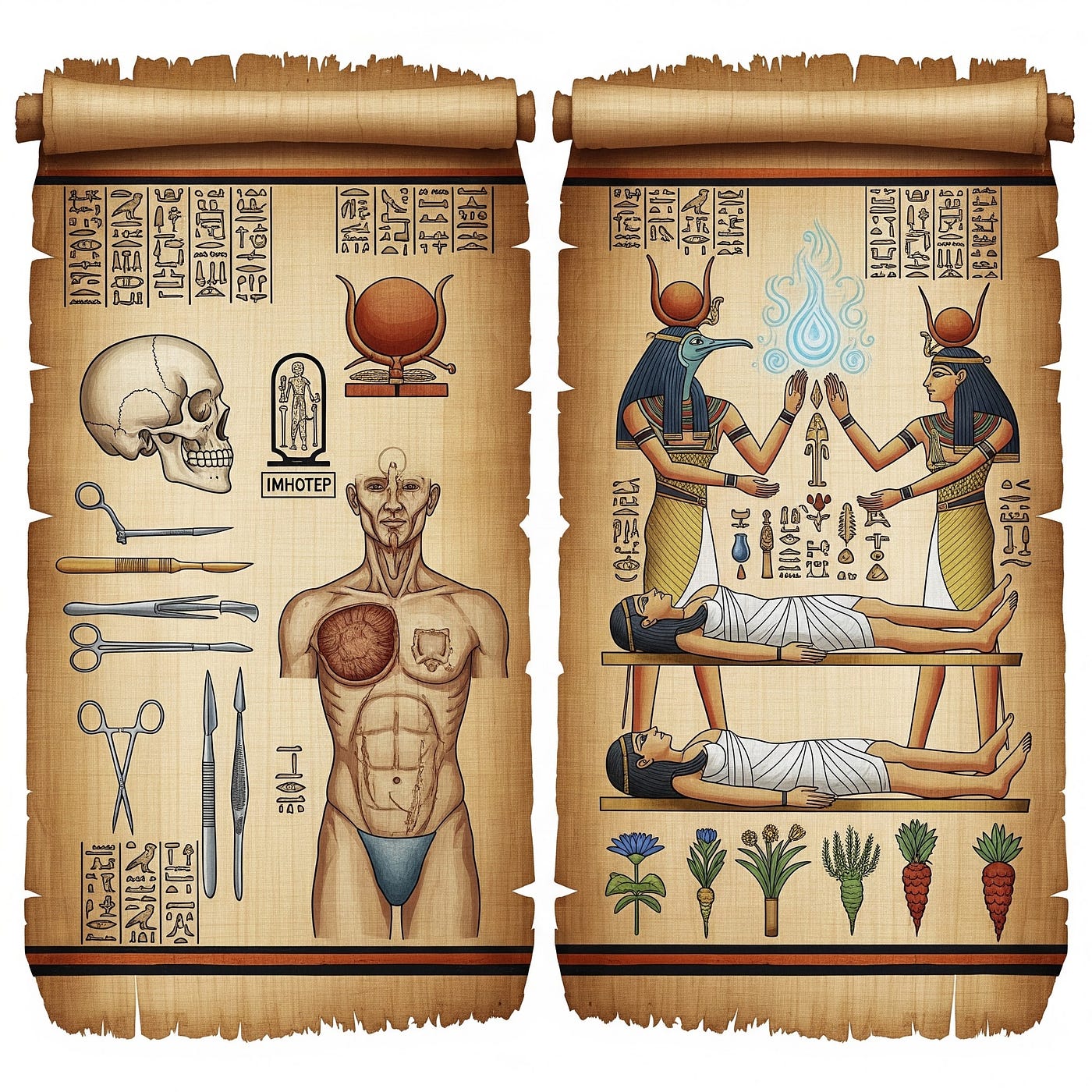
Table of Contents
Imhotep, from the Pyramid to the Remedy: the practical approach of stone
Imhotep, vizier to Pharaoh Djoser in the 27th century BC, is a doubly monumental figure of ancient Egypt: the architect who elevated construction to the level of the eternal stone and the founding father of medicine. While modernity sometimes associates stone with esoteric practices such as crystal healing, the study of Imhotep’s work reveals a scientific and practical approach.
In ancient Egyptian medicine, of which he is the founding father, “stone” was used in three concrete and scientific ways to heal: as tools, remedies, or places of healing.
Proof of the historical existence of Imhotep
For decades, historians had doubts: Was Imhotep real, or was he a legendary figure invented by the Egyptians much later to personify wisdom?
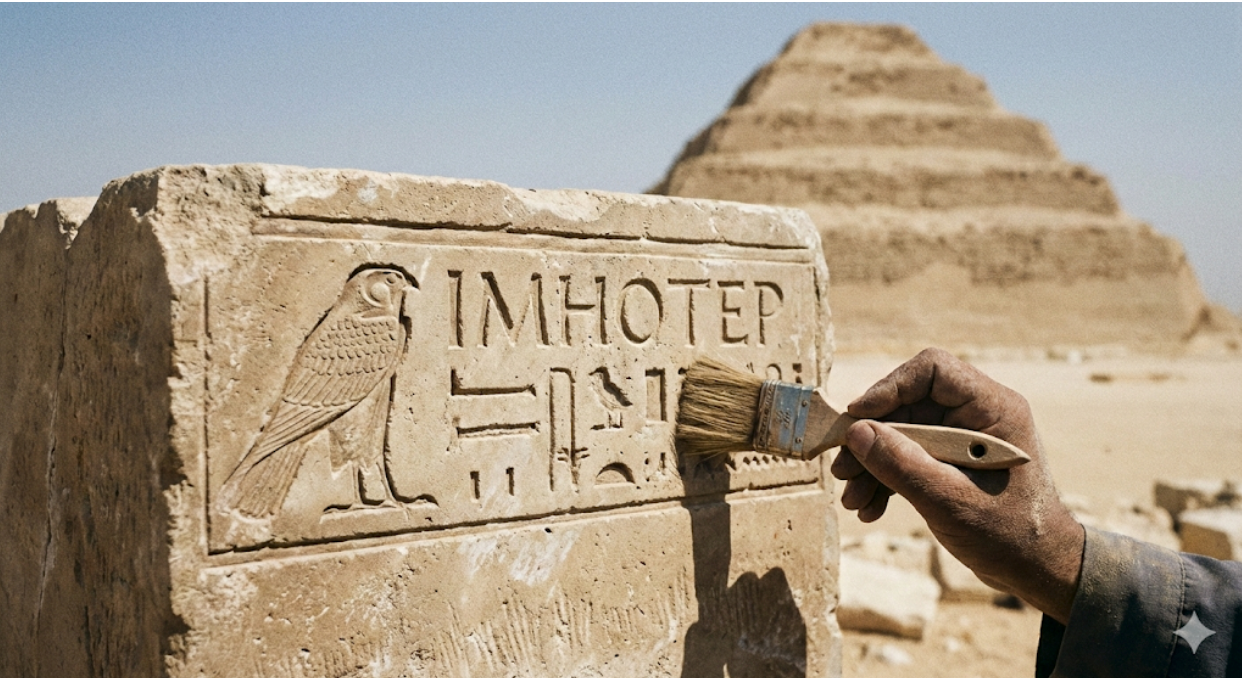
The answer came in 1926, during excavations led by archaeologist Cecil Firth in the step pyramid complex.
Here’s why this simple block of stone changed everything:
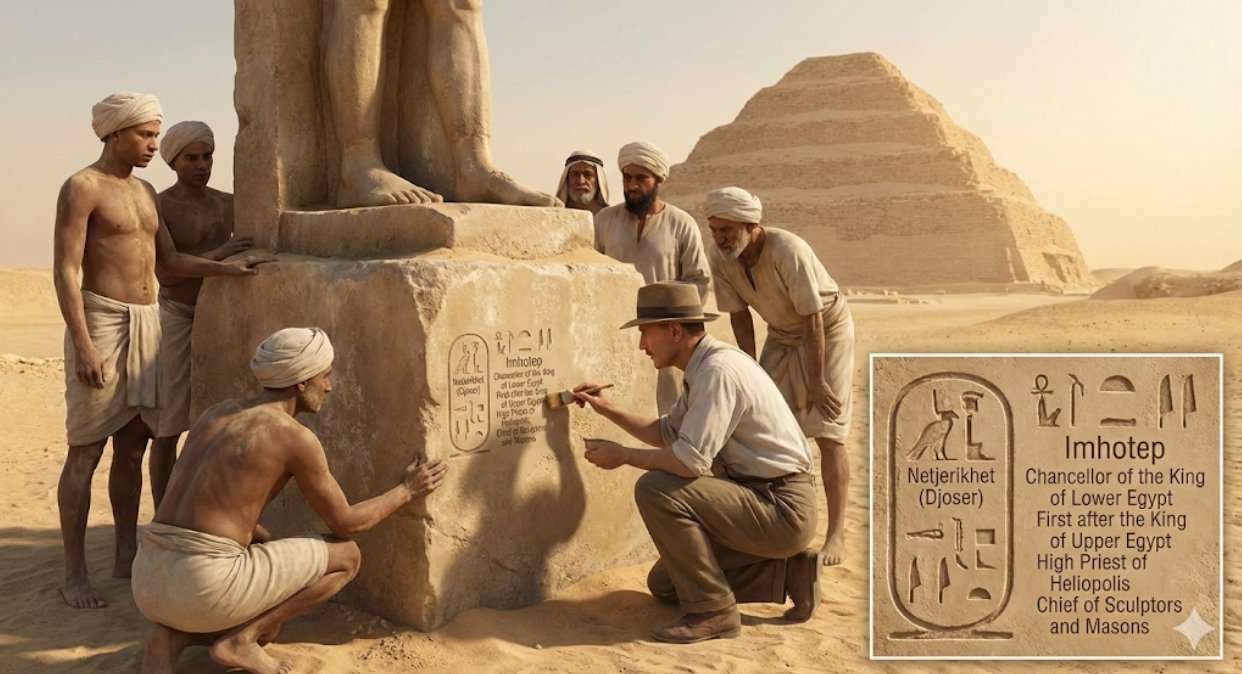
The discovery: Archaeologists found, near the entrance of the pyramid, the pedestal of a royal statue (the statue itself had disappeared, only the king’s feet remained).
The incredible inscription:On this base, one could read the pharaoh’s Horus name (Netjerikhet, another name for Djoser). But right next to it, something unheard of for the time, was engraved the name of a non-roi : Imhotep.
The inscription not only gives his name, but also lists his official titles during his lifetime, confirming his immense power and his role as a builder:
Chancellor to the King of Lower Egypt
First after the king of Upper Egypt(which makes him the equivalent of a Prime Minister)
High Priest of Heliopolis
And most importantly: Chief of the sculptors and masons,
This contemporary inscription (engraved during Djoser’s lifetime, around -2650) proves that Imhotep did indeed exist, that he was the pharaoh’s right-hand man, and that he was the one who directed the stonework (chief mason). This list of titles constitutes the absolute proof of his existence.
It is an extremely rare honor: in the Old Kingdom, it was exceptional for a mere mortal to have his name inscribed on the statue of his sovereign. This shows how highly King Djoser regarded his architect.
Stone as a place of healing: Sanatoriums
It’s the direct gateway with Imhotep as architect and doctor. He invented architecture in eternal stone, he created places that became, after his death, care centers.
Centuries after his death, Imhotep was deified as god of medicine.
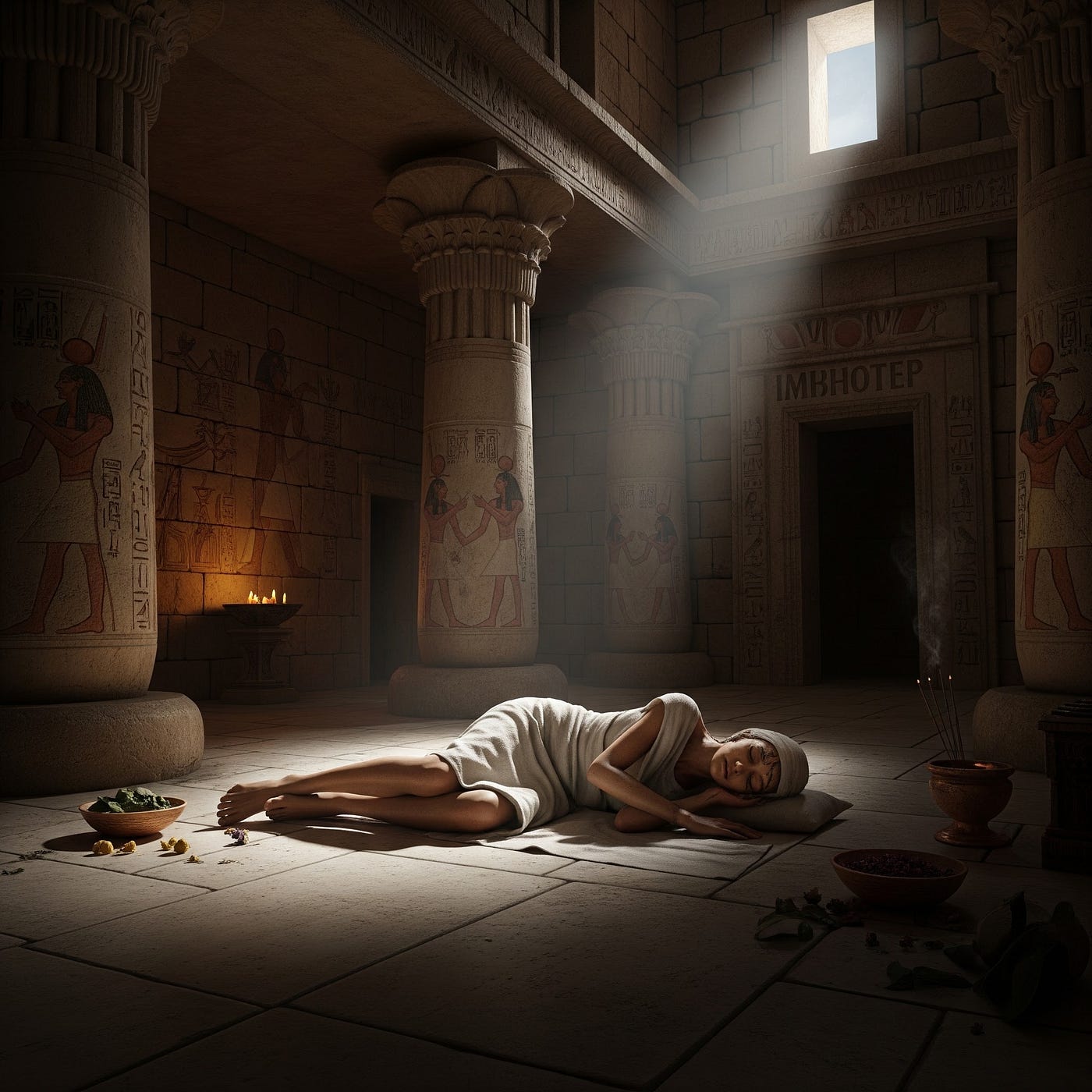
The stone temples built in his honor (such as those at Memphis or Philae) housed sanatoriums.
The sick would come to sleep directly on the temple stone to practice the incubation: they hoped that Imhotep would appear to them in a dream to give them the remedy or cure them.
Imhotep is often credited with the creation of the Papyrus Edwin Smith. This is the oldest known treatise on surgery. Unlike magical texts, this papyrus is very rational: it describes the observation, diagnosis, and treatment (often manual or mineral) of bone injuries.
The Edwin Smith Papyrus: A Surgical and Anatomical Revolution
Historical context and discovery
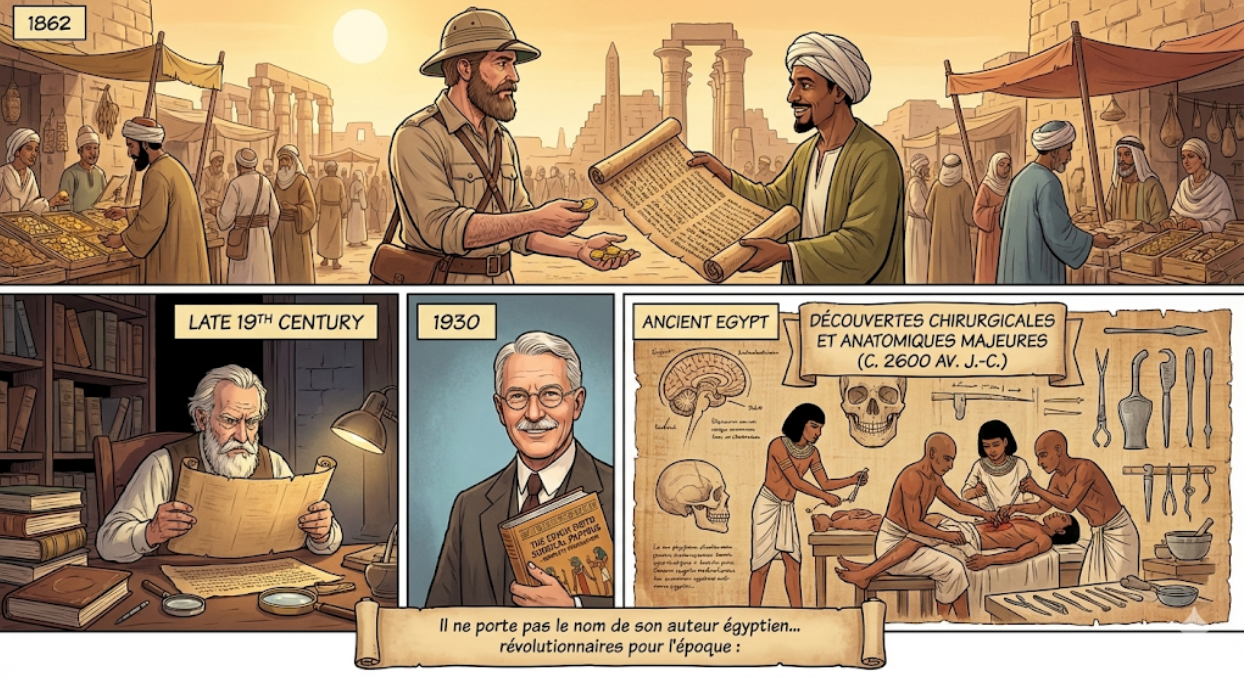
It does not bear the name of its Egyptian author, but that of Edwin Smith, an American adventurer and collector who bought this papyrus in 1862 in Luxor, from an Egyptian merchant (Mustapha Aga).
Edwin Smith tried to translate it all his life without fully succeeding. It was only in 1930 James Breasted published the complete translation, revealing to the world the medical genius of ancient Egypt.
The Papyrus Edwin Smith is an exceptional document. Unlike other medical texts of the time, which often mix remedies and magical incantations, this text is of scientific rigour astonishing for such a distant era (around 2600 BC for the original text).
Some plates from the Edwin Smith Papyrus are kept in the rare book room of the New York Academy of Medicine (Plates VI and VII).
Scientific rigor and structure
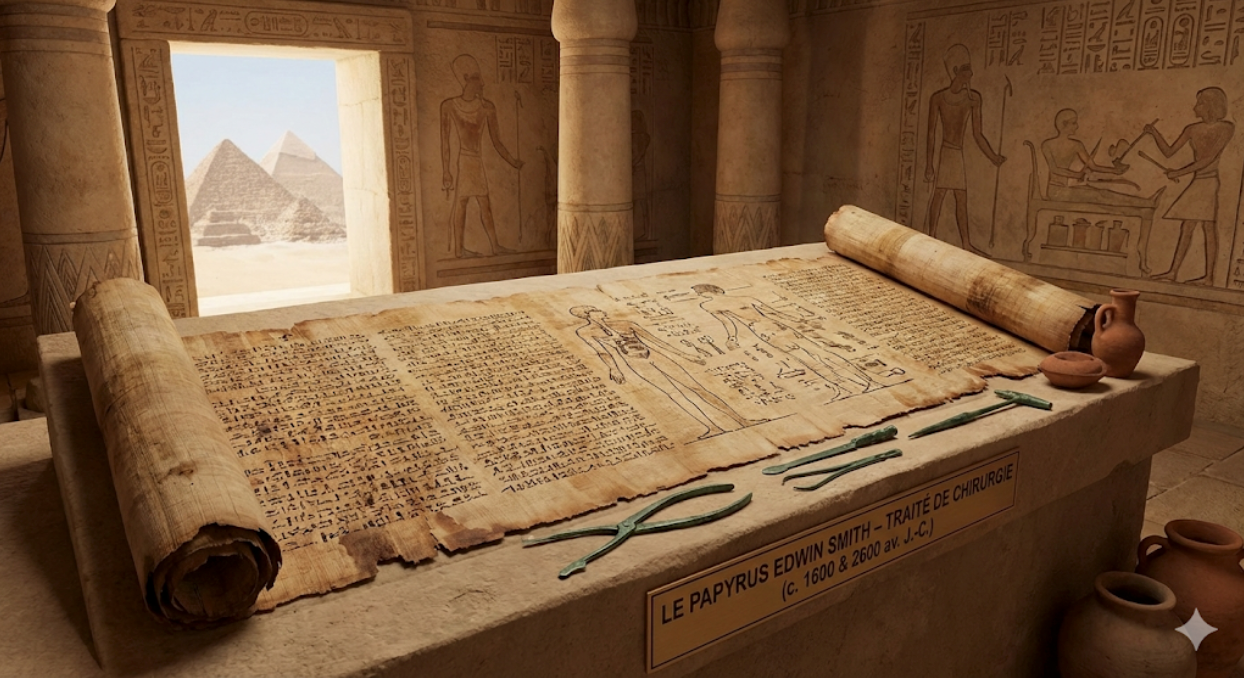
The Papyrus Edwin Smith is considered the oldest treatise on surgery and traumatology known to date. It is a foundational document in the history of world medicine.
It is a papyrus scroll 4.68 meters long, dating from around 1600 BC (New Kingdom), but linguists are adamant: the text it contains is a copy from a much older work, written during the Old Kingdom (the age of the pyramids, around 2600 BC), which reinforces the idea that it is the work of Imhotep. According to many Egyptologists and historians of medicine Imhotep would be the author of the original text.
The Foundations of Rational Clinical Judgment
The papyrus describes 48 clinical cases (typical patients), classified anatomically and according to a rational diagnosis system, still used in practice today:
“An illness that I will treat” (Pronostic favorable).
“An illness I will fight”(Prediction reserved, we’re taking a chance but without guarantee).
“A disease that is not treated”(Fatal prognosis; intervention would only shorten life or is useless).
Modern scientific rigor
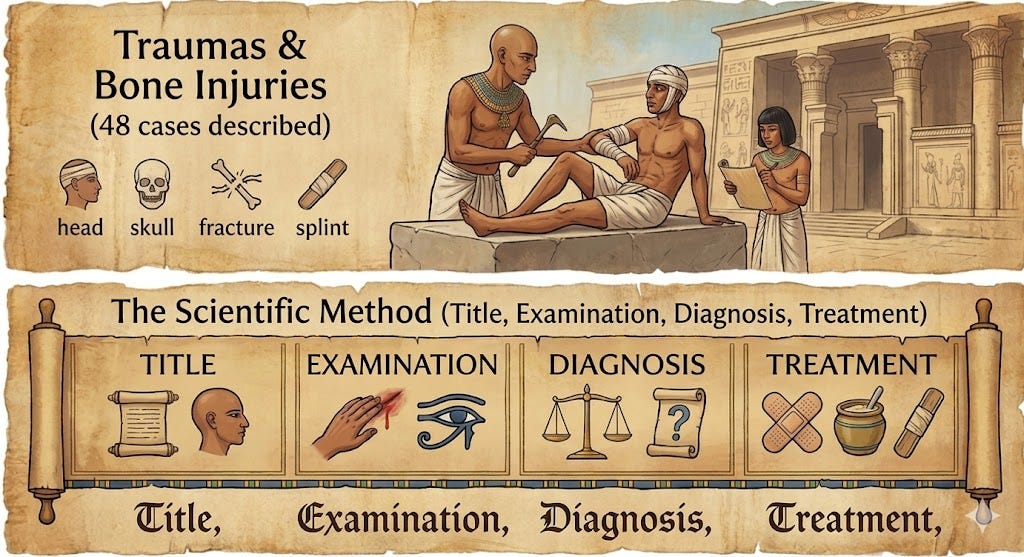
For each case, the papyrus follows a rigorous structure that is still used in emergency medicine today:
Title :”Instructions concerning a wound to…”
Examination (Observation):”If you examine a man who has…” (Palpation, observation of movements, pulse, color of the wound).
Diagnostic :”You will say about him: he is a man with such and such a wound…”
Verdict (Pronostic) :The famous three-level classification (I will deal / I will fight / I will not deal).
Treatment :Bandages, stitches, fresh meat (for coagulation), honey (antiseptic), immobilization.
Advanced surgical techniques
The papyrus details precise technical procedures for repairing the body:
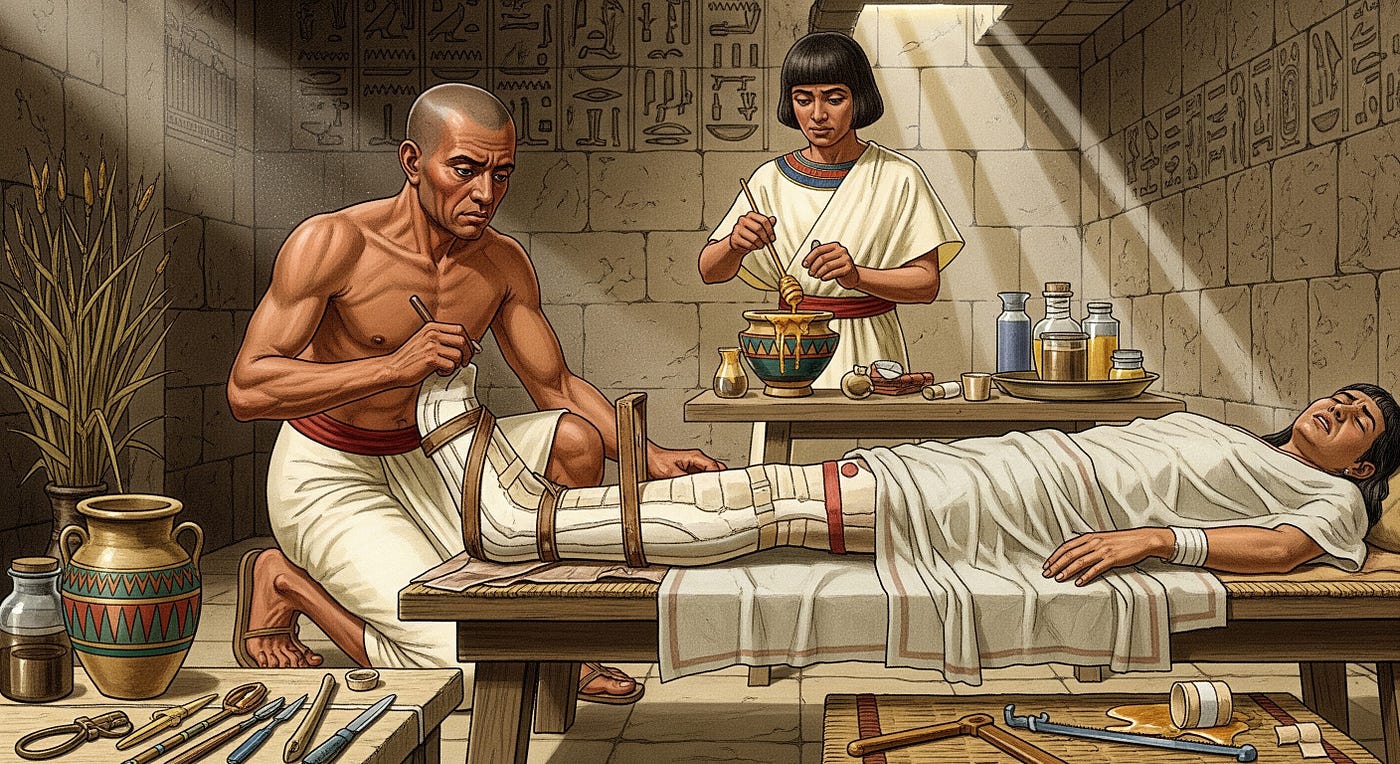
Fracture reduction: He explains how to manually put a bone back in place.
Splints: He describes the use of bark or flax stiffened with plaster or resin to immobilize a limb (the ancestor of the modern plaster cast).
The stitches: He mentions the use of thread to close wounds.
The antiseptic: Honey is ubiquitous. We now know that honey is a powerful natural antibacterial agent. Applied to open wounds, it prevented infection.
Major discoveries: the first mention of the brain
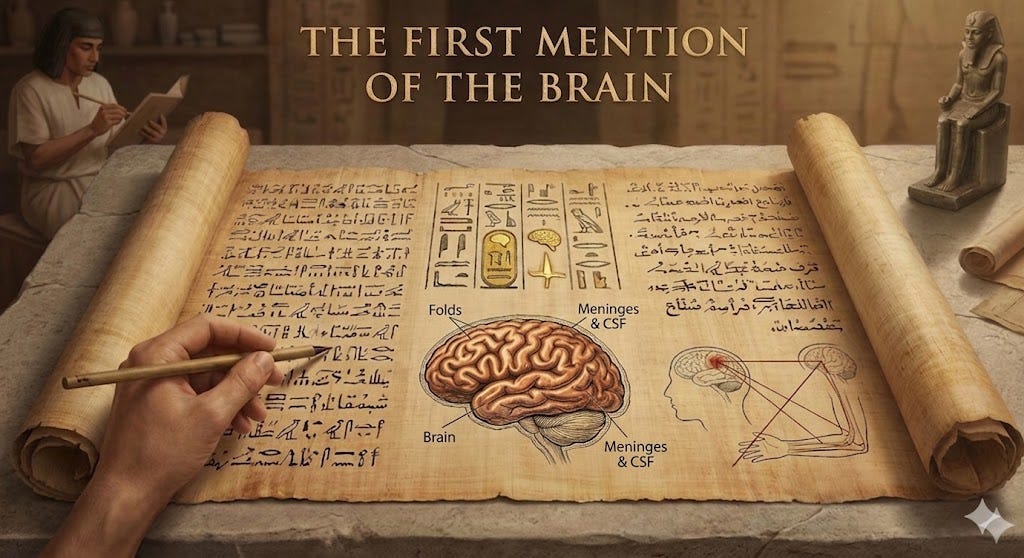
This is the most famous fact: this papyrus contains the very first written occurrence of the word “brain”of the history of humanity.
But Imhotep (or the author) did not simply name it; he understood how it worked:
Anatomy: He describes the brain as having “wrinkles” similar to those that form on “molten copper,” thus describing the cerebral convolutions.
Meninges and CSF: He mentions the membrane that surrounds the brain (the meninges) and the fluid inside (cerebrospinal fluid).
Neurology: This is the crucial point. He understood the connection between the brain and the rest of the body. The text explains that a head injury can lead to paralysis of a limb or loss of speech. Understanding this cross-brain connection (right brain controlling left side and vice versa) was an absolute feat for antiquity.
Minerals with medicinal uses found in the Edwin Smith Papyrus
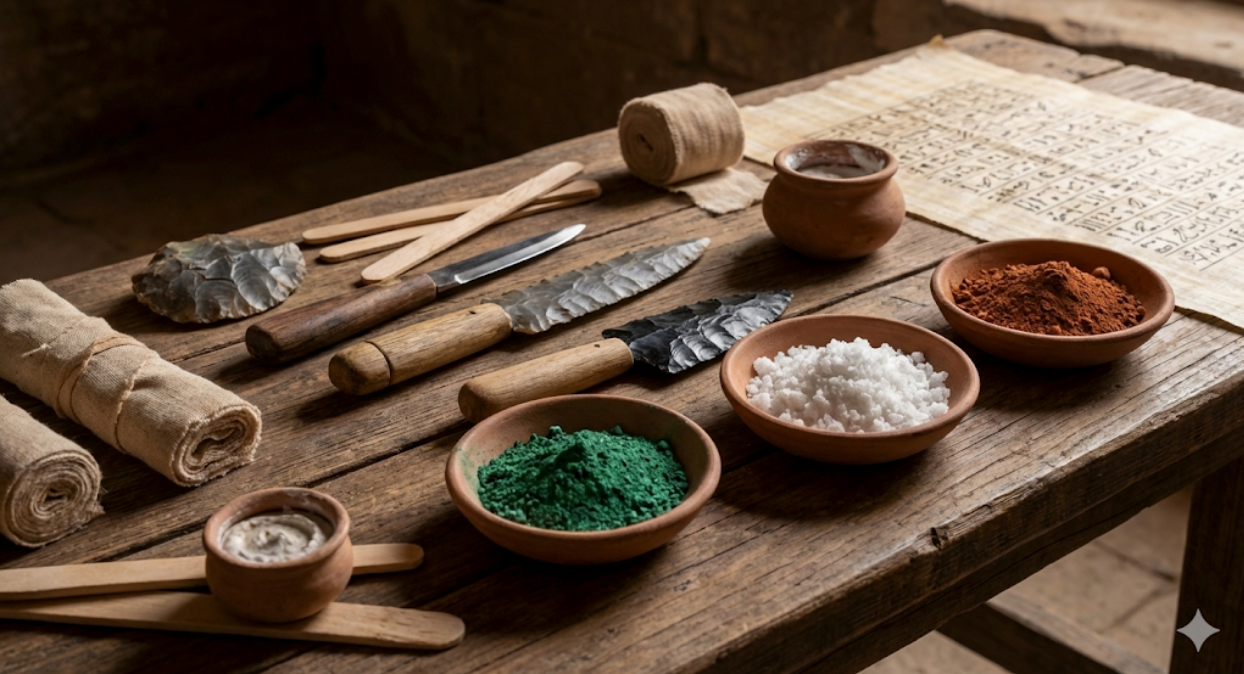
The stones are mainly used in two ways: technical (tools) and chemical (antiseptics).
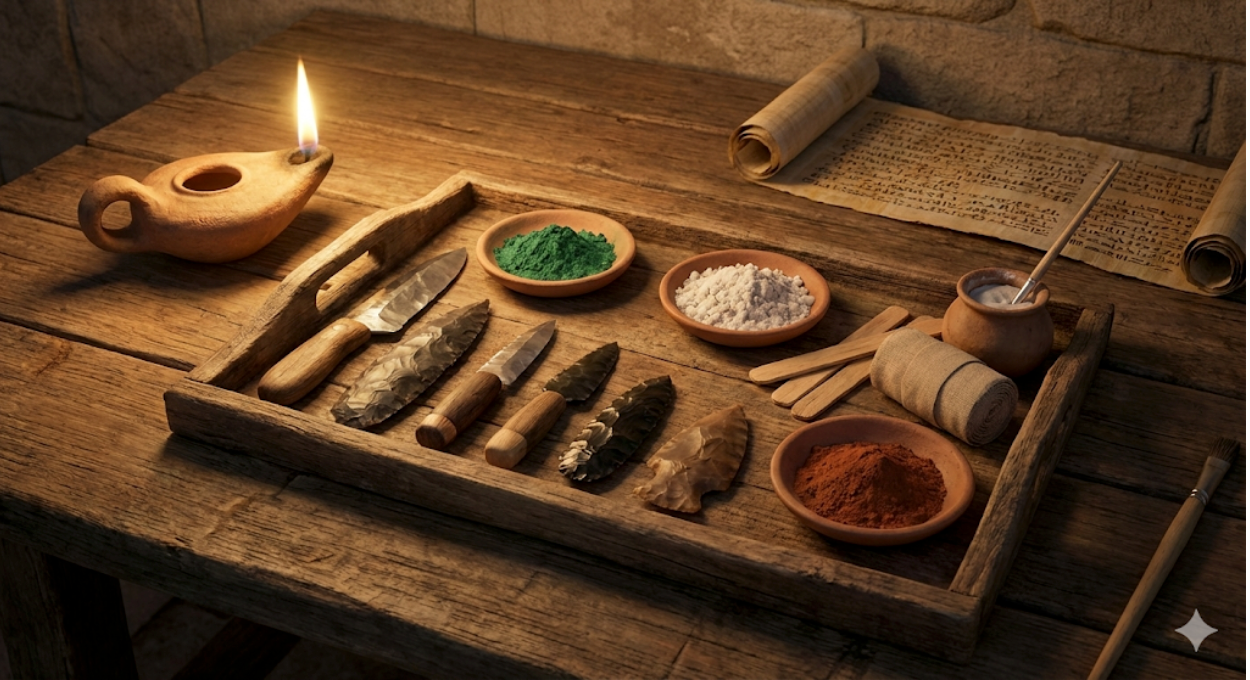
Stone as a “Scalpel”: Flint and Obsidian
This is the most important use. Although metal (copper/bronze) existed, Egyptian surgeons often preferred stone for incising flesh.
Flint and obsidian:The blades in obsidian or those made of chipped flint were much sharper than the copper knives of the time. They allowed for clean and precise incisions to drain abscesses or clean wounds, minimizing pain and scarring.
“Chemical” Stones: Crushed Minerals
The papyrus mentions minerals reduced to powder for their actual chemical properties (drying or disinfecting):
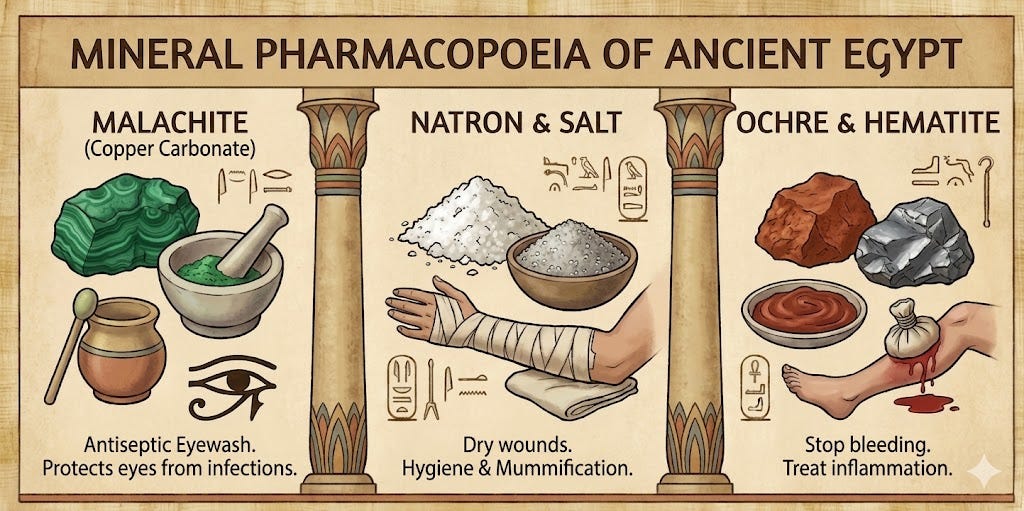
Malachite (Copper Carbonate):It’s a green stone. Once ground, it was applied to wounds. The Egyptians had noticed that it prevented infection. Modern science has confirmed that copper is a powerful antibacterial and antifungal agent.
Natron (Mineral Salt):A natural mixture of salts (sodium carbonate) found in dried-up lakes. It was used to clean wounds, dry up secretions (pus) and reduce inflammation thanks to its osmotic power (it absorbs water).
Ochre (Ferrous Clay):Sometimes used for its astringent properties (to tighten tissues) and hemostatic properties (to stop small bleeds).
The reconstituted stone : Plaster casts
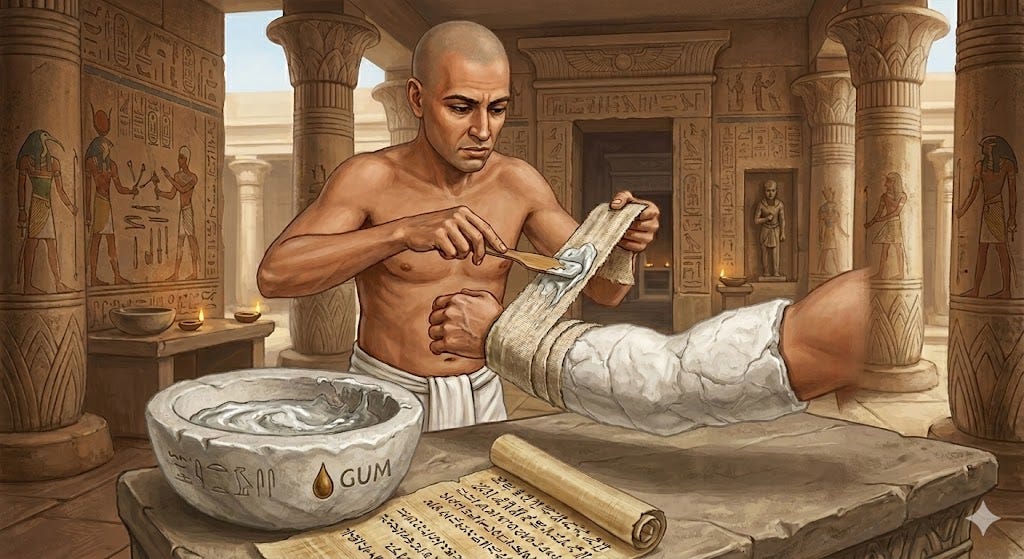
For fractures, the papyrus describes the use of gypsum or lime mixed with gum arabic and water. Once applied to strips of linen, this paste hardened like stone, creating the ancestor of modern plaster for immobilizing a broken limb.
The Ebers Papyrus
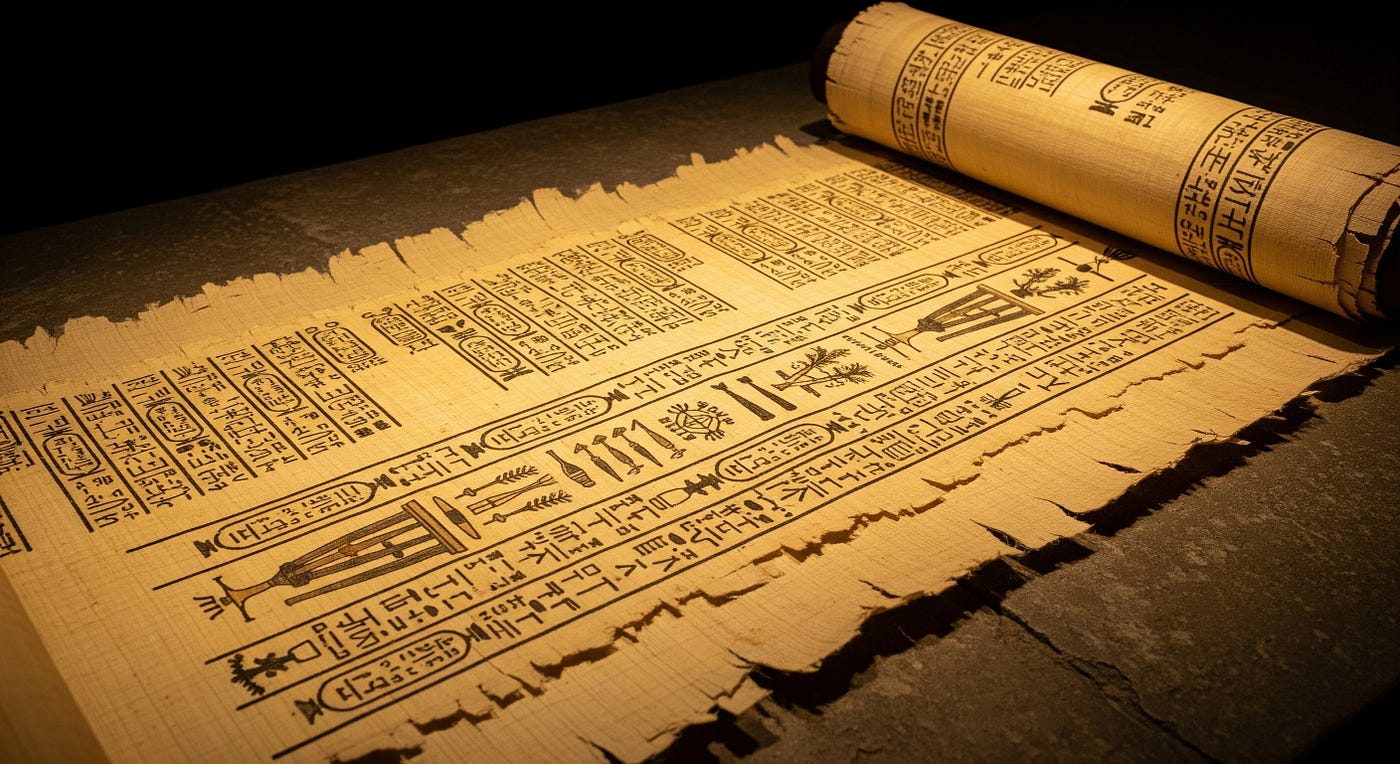
The Ebers Papyrus is one of the oldest, largest, and most comprehensive medical treatises from ancient Egypt. Written around 1550 BC, it presents itself as a vast encyclopedia that perfectly illustrates Egyptian medicine, built on a mixture of empirical observations and magico-religious beliefs.
Also discovered by Edwin Smith in Luxor in 1862, it was sold to the German Egyptologist Georg Moritz Ebers, to whom it owes its name and its first translation. It is currently kept in the library of the University of Leipzig.
The scroll is approximately 20 meters long and contains 110 pages of text in hieratic script (a simplified form of hieroglyphs). It includes more than 700 magical formulas, prescriptions, and medical remedies. Although it dates from the early New Kingdom, Egyptologists believe it to be a compilation of much older medical knowledge and texts.
Medicine and Incantations: When the Gods of the Nile Activate the Remedy
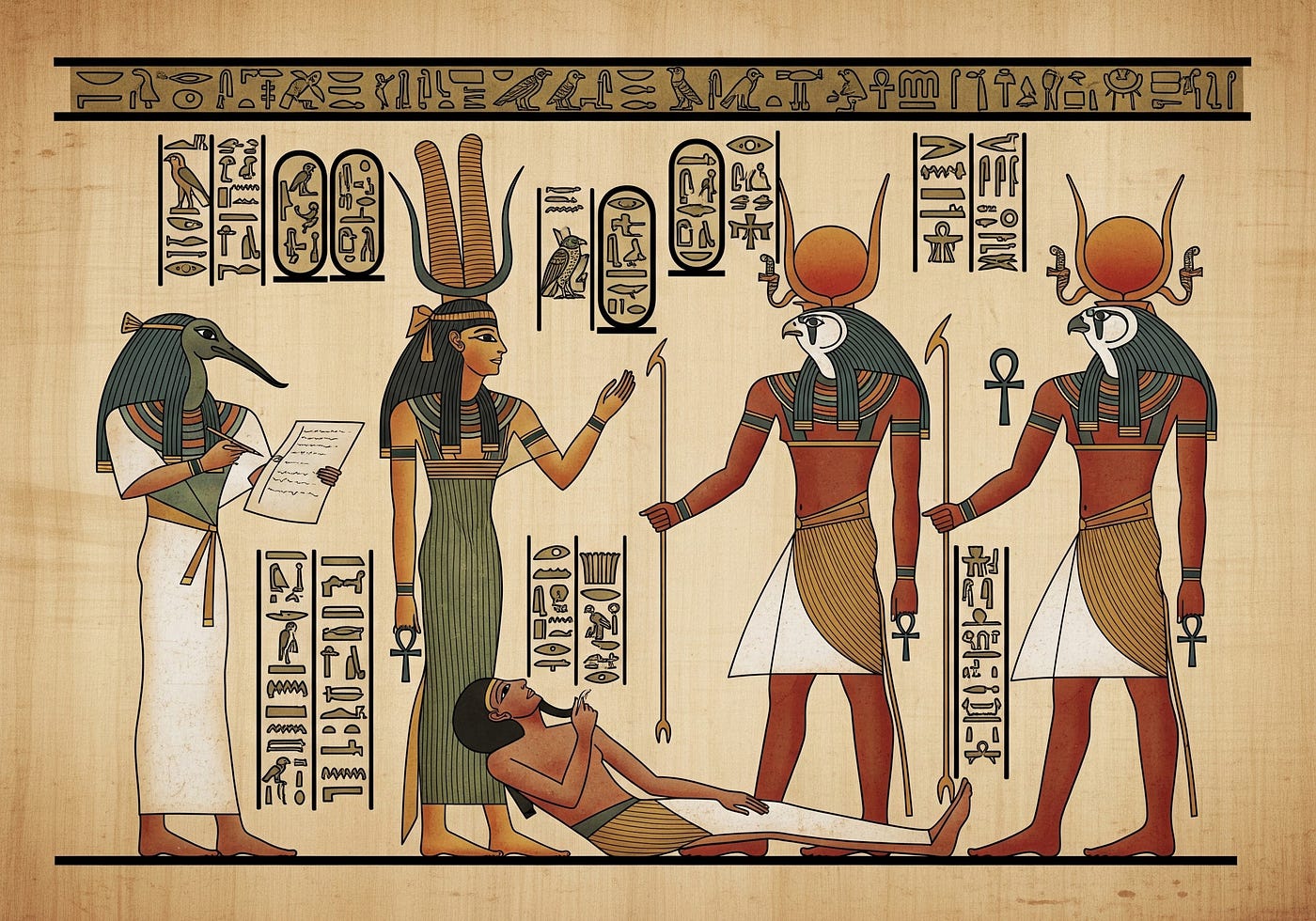
To fully understand how these incantations worked, it is important to know that the magic of the Ebers Papyrus did not call upon historical doctors or mortals, but rather the divine pantheon.
The names that appear most frequently in these magical incantations are those of the gods, invoked to drive out the demons responsible for illnesses or to “activate” the power of medicinal plants. These include, in particular:
Thot: The god of wisdom, writing, and the patron of physicians, often called upon to strengthen remedies.
Isis: The goddess of magic and protector par excellence, renowned for her immense healing powers.
Horus: Often invoked, particularly through the myth of his wounded and then healed eye (the Eye of Horus, or Oudjat), which has become a symbol of plenitude and health.
Rê: The sun god, regularly invoked to repel the forces of darkness and evil spirits.
The medical fields covered
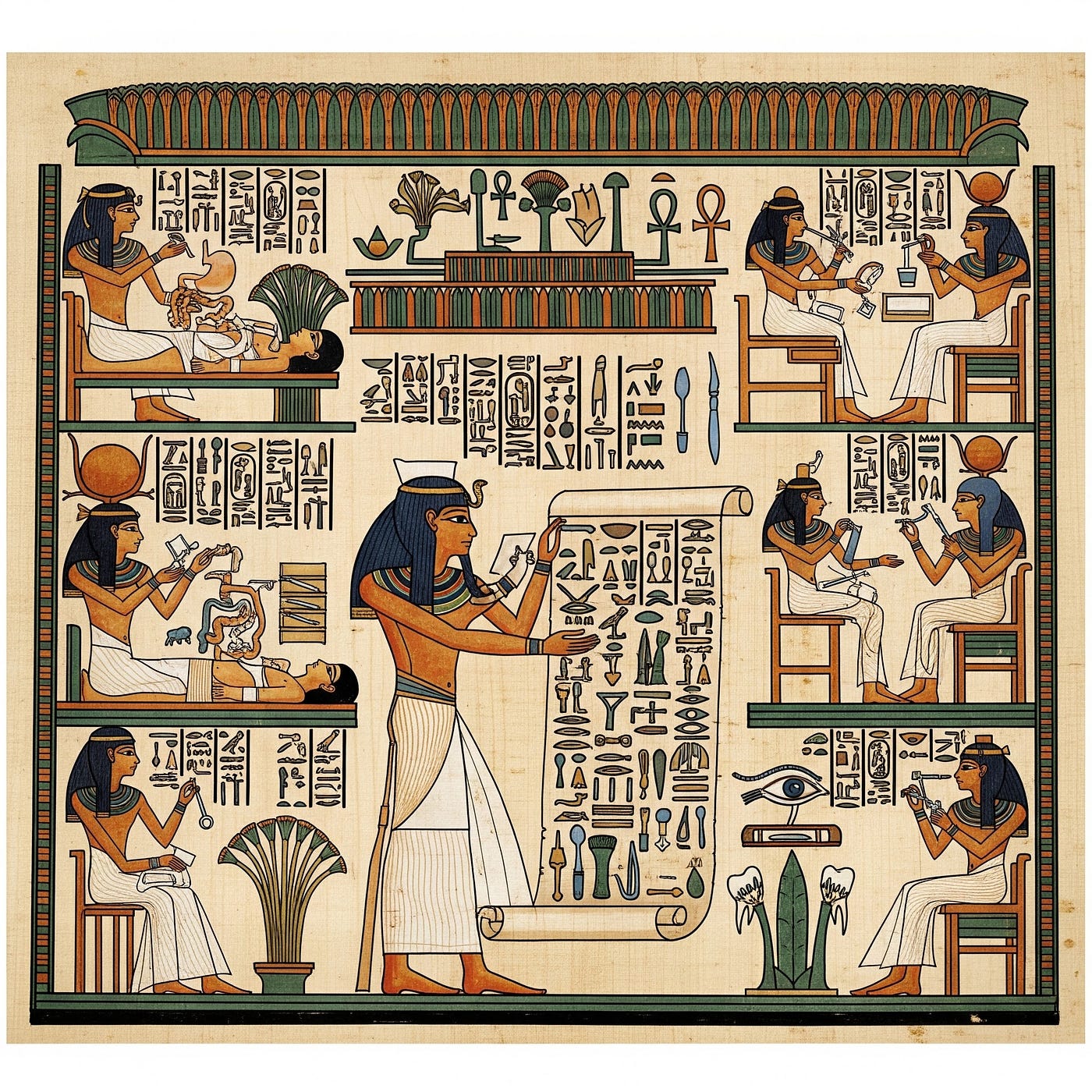
Unlike the Edwin Smith Papyrus, which is dedicated to surgery, the Ebers Papyrus is the comprehensive manual of internal medicine. It covers an extremely wide range of specialties:
Gastroenterology: Treatment of intestinal diseases, digestion and parasites (he describes Guinea worm infection in detail).
Dermatology: Treatments for skin conditions, ulcers, burns, bites and even remedies for hair loss.
Gynecology: Contraceptive methods, pregnancy diagnoses and treatments for women’s diseases.
Ophthalmology and dentistry: Eye care (a crucial specialty in Egypt due to the sand and sun) and treatments for dental abscesses.
Psychiatry: It contains one of the earliest descriptions of mental disorders, equating what resembles clinical depression or dementia with an affliction of the heart.
The Treatise on the Heart
This is one of the most remarkable and scientifically fascinating sections of the manuscript. The Egyptians describe the heart as the center of the body, connected to all the limbs by a network of vessels. Although their anatomical understanding was imperfect (they often confused arteries, veins, nerves, and ducts under a single generic term), this text demonstrates an exceptional intuition for the human cardiovascular system.
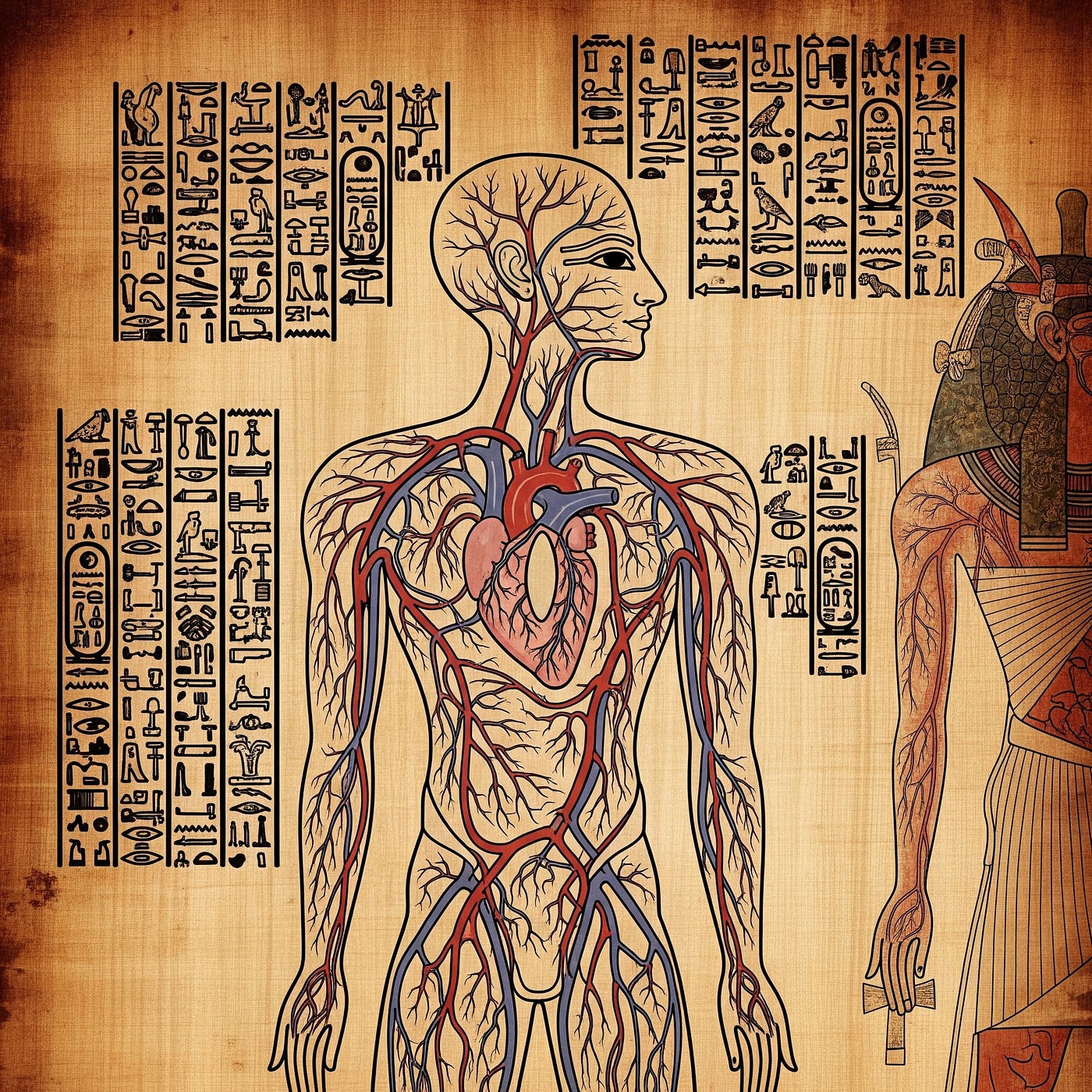
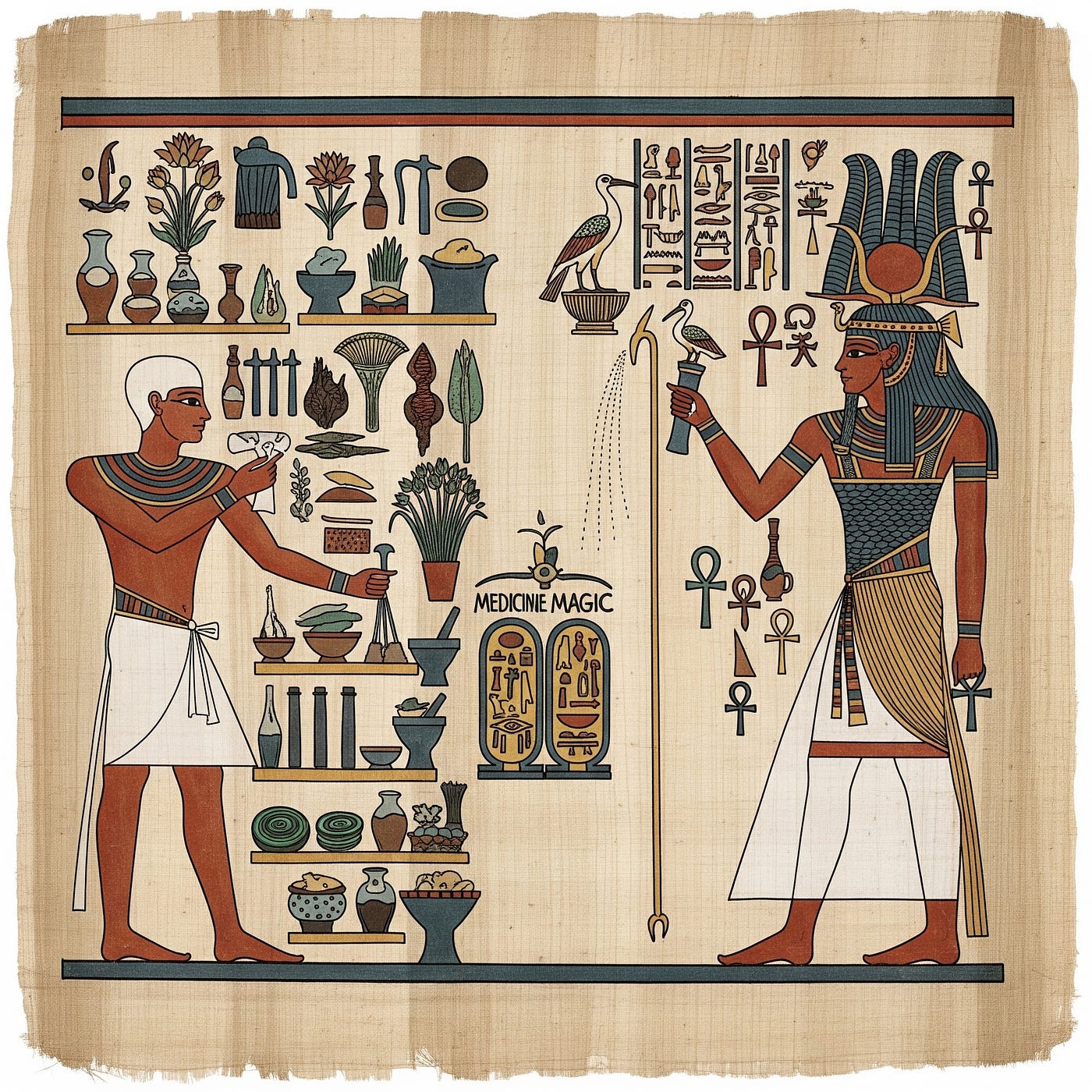
Medicine with two faces: Pharmacopoeia and Magic
Practical treatments: The papyrus details hundreds of preparations based on plants (aloe, castor, garlic, willow), minerals (ochre, clay, copper) and ingredients of animal origin (honey, blood, fat, crocodile dung). The methods of administration are precise: pills, ointments, inhalations or enemas.
The mystical dimension:The medical approach was not separate from religion. The Egyptians believed that illness was often caused by evil spirits, ghosts, or the wrath of the gods. Therefore, physical remedies almost always had to be accompanied by incantations and magic spells to drive out the demon and “activate” the power of the medicine.
The Ebers Papyrus offers the most comprehensive insight into the daily lives of ancient Egyptian physicians. It attests to their remarkable botanical and clinical observational skills, while also reminding us that, for them, the healing of the body involved an invisible dimension accessible through magic.
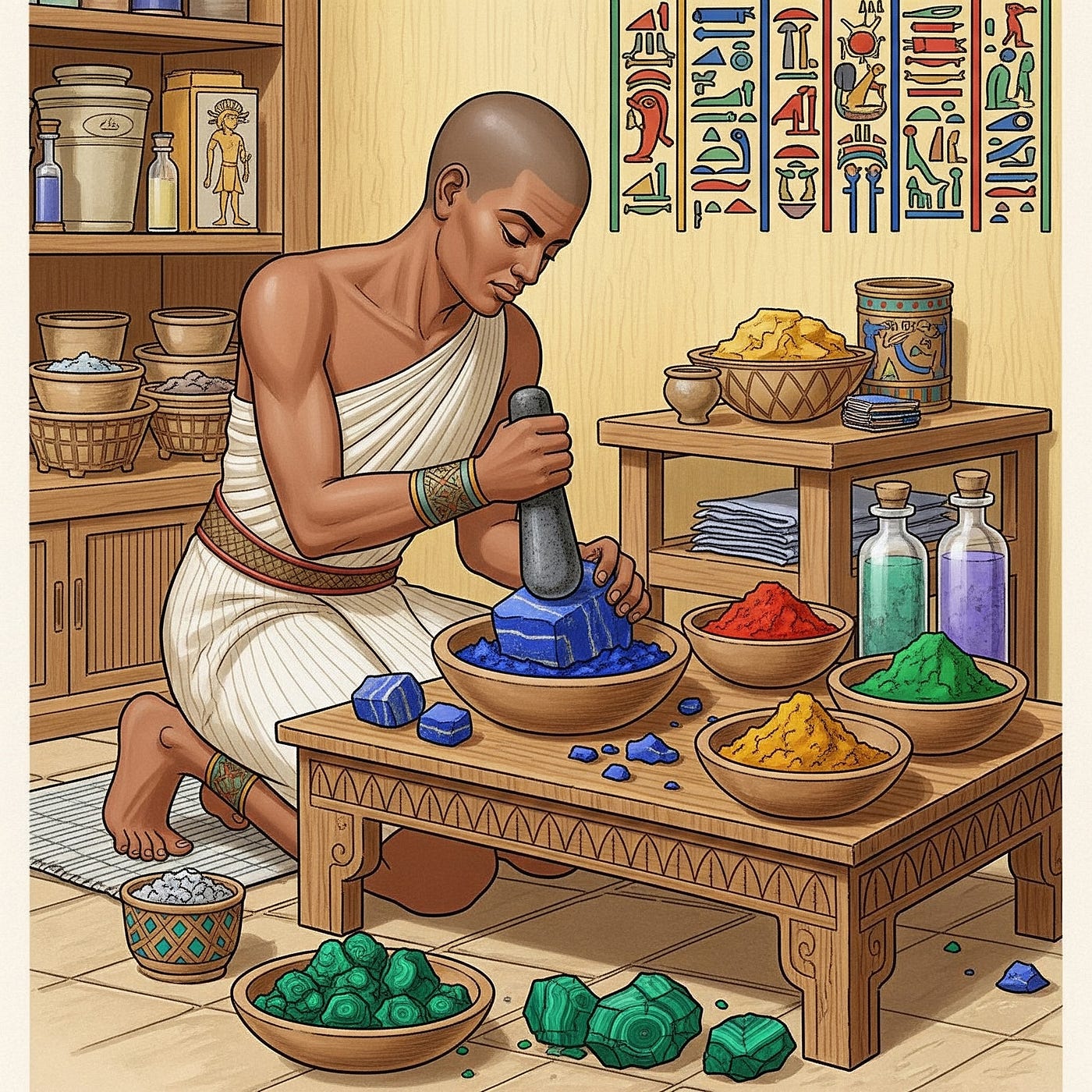
Minerals with medicinal uses found in the Ebers Papyrus
In the Ebers Papyrus, minerals and stones occupy a prominent place in the therapeutic arsenal of Egyptian physicians.
They were generally crushed, ground into a very fine powder, and then mixed with excipients (such as honey, oil, beer, or animal fat) to create ointments, eye drops, potions, or poultices. Their use was often based on a dual approach: genuine empirical efficacy (chemical properties) and strong magical-religious symbolism.
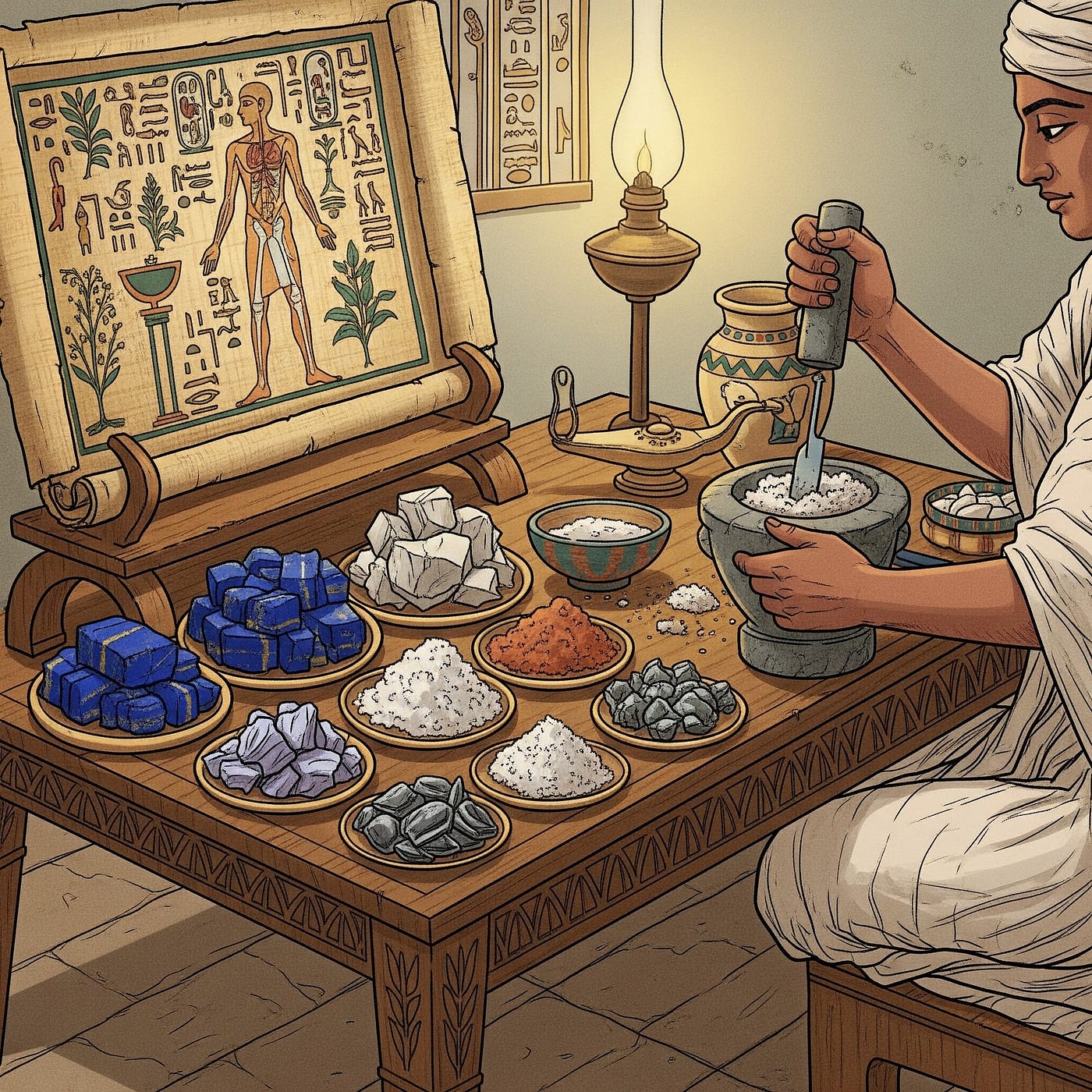
Other stones, earths and mineral elements
Lapis-lazuli: The papyrus prescribes the use of powdered Lapis-lazuli to treat serious conditions, including what appear to be cataracts described as a “stagnation of water” in the eye) or severe conjunctivitis. Beyond its potential abrasive or absorbent properties, its inclusion in a remedy was primarily magical in nature and linked to its divine and royal status.
Salt (sea or rock): Frequently mentioned in purgative remedies (enemas, potions) and as a disinfectant agent to clean wounds before applying a dressing.
Antimony (Stibnite): Often confused with galena or used similarly in eye drops and eye care products.
Limestone and Alabaster: Used as a base for poultices and plasters. Clay was used to soothe inflammation, relieve insect bites and trap pathogens.
Limestone and Alabaster: Reduced to an extremely fine powder, these elements were often used as a neutral excipient or drying powder for skin diseases.
By combining these minerals with a rich botany and sometimes repulsive animal ingredients, the Ebers papyrus paints a picture of a medicine that empirically experimented with the natural chemistry of the earth.
Contrast and Complementarity Egyptian Medical Papyrus
Although the Papyrus Ebers and the Papyrus Edwin Smith are both fundamental medical texts from ancient Egypt they approach medicine in very different ways.
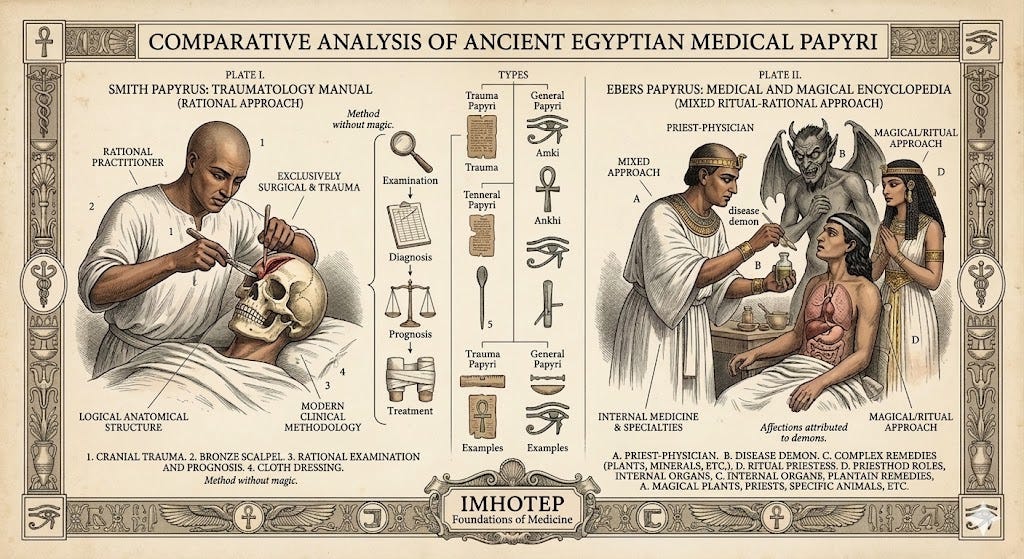
The main difference lies in their area of expertise: the Ebers Papyrus is an encyclopedia of general medicine and pharmacology with a strong magical component, while the Edwin Smith Papyrus is a treatise on surgery and traumatology based on a very rational and scientific approach.
The Edwin Smith Papyrus: The Surgeon’s Manual
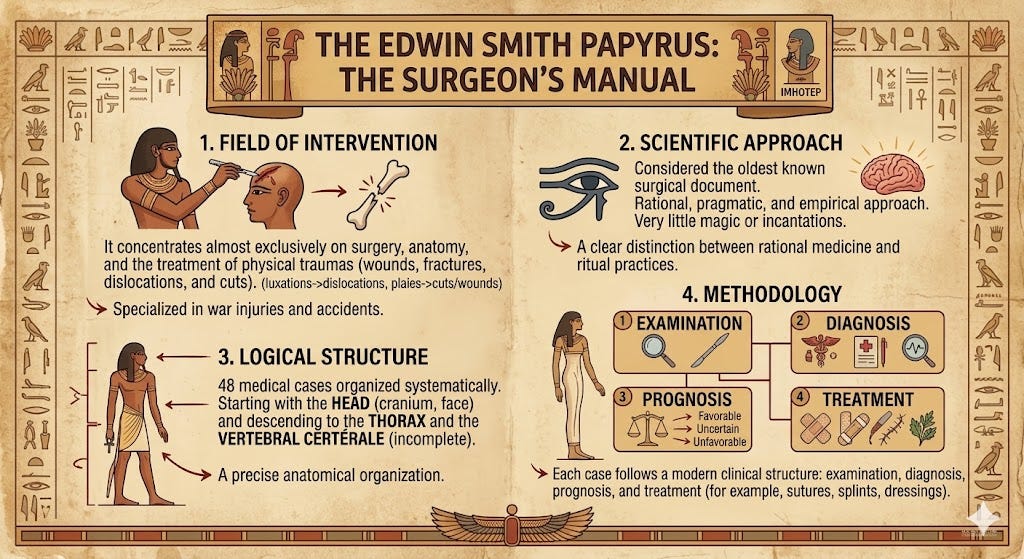
Area of intervention: It focuses almost exclusively on surgery, anatomy and the treatment of physical trauma (injuries, fractures, dislocations, wounds).
Scientific approach: This is what makes it so exceptional. It is considered the oldest known surgical document and is distinguished by its highly rational, pragmatic, and empirical approach. It contains very little magic or incantations.
Logical structure: The medical cases (48 cases in total) are organized systematically, starting with the head (skull, face) and moving down towards the thorax and spine (the papyrus is incomplete and stops there).
Methodology: Each case follows a modern clinical structure: examination, diagnosis, prognosis (favorable, uncertain or unfavorable) and treatment (sutures, splints, dressings).
The Ebers Papyrus: The Medical Encyclopedia
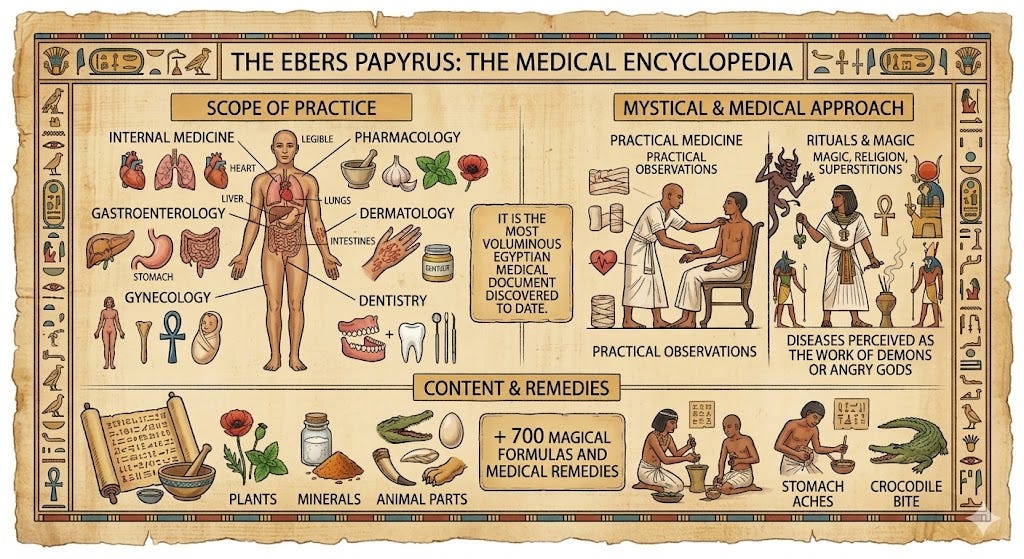
Area of intervention: It covers internal medicine, pharmacology, gastroenterology, gynecology, dermatology, and dentistry. It is the most voluminous Egyptian medical document discovered to date.
Mystical and medical approach: Unlike the Edwin Smith Papyrus, the Ebers Papyrus freely mixes practical medical observations with magic, religion, and superstitions. Diseases are often portrayed as the work of demons or angry gods.
Content : It contains over 700 magical formulas and medical remedies. The prescriptions include a wide range of ingredients (plants, minerals, animal parts) to treat all sorts of ailments, from stomach aches to crocodile bites.
In summary, if an ancient Egyptian fell from scaffolding and fractured his skull, the doctor would have consulted the knowledge contained in the Edwin Smith Papyrus. If he suffered from unexplained stomach pains or a skin disease, the doctor would have turned to the remedies (and prayers) of the Ebers Papyrus.
Conclusion
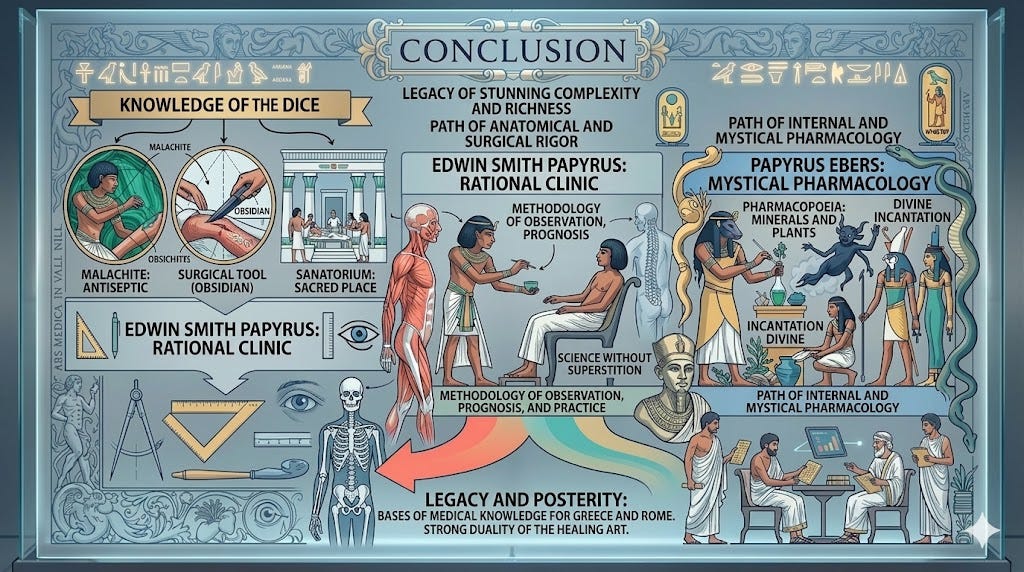
Ultimately, the study of the foundations of Egyptian medicine, from the era of Imhotep to the great papyrological compilations, reveals a legacy of astonishing complexity and richness. The influence of stone, whether as an antiseptic material , a surgical tool, or the sacred space of the sanatorium, illustrates the pragmatism and empirical know-how of the practitioners.
This practical approach culminated in the emergence of the Edwin Smith Papyrus, a revolutionary document which, through its methodology of observation and prognosis, stands as a precursor to rational clinical practice, marking the first step towards a science free from superstition. Its counterpart is the Ebers Papyrus. This manual, with its breadth and diversity, reminds us that illness was also perceived as a cosmic disorder or a demonic intrusion. Rich in its pharmacopoeia of minerals and plants, it constantly intertwines physical remedies with divine incantations, mobilizing the entire pantheon for healing.
Egyptian medicine thus bequeathed to posterity not one, but two master paths: that of anatomical and surgical rigor, and that of internal and mystical pharmacology. This duality, far from being a contradiction, was the strength of the art of healing in the Nile Valley, ensuring that every affliction, whether visible or invisible, found an appropriate response, thereby laying the foundations of medical knowledge that the Greek and Roman civilizations would later adopt and perpetuate.
References
- The medical text of the Ebers Papyrus, Hieroglyphic transcription, transliteration, translation, glossary and index, Bernard Lalanne Gérard Métra, Ancient Languages and Cultures Collection, 28. Safran Editions, 2017.
- The Papyrus of Pharaonic Egypt, Thierry Bardinet, Fayard Publishers, 1995
- The Edwin Smith Medical Papyrus; Surgery and Magic in Ancient Egypt, François Resche, Ed. l’Harmattan, Collection Medicine Through the Ages, 2016
- The African Imhotep, the true father of modern medicine,Dr. Chika Esiobu,Pan African Review, 2023.
- Médecine en Égypte au temps des Pharaons, Portraits de Médecins, Medarus,2017
- Papyrus Edwin Smith, Wikipedia
- A mysterious papyrus discovered in the 19th century reveals Egyptian surgical practices that would not be discovered until 1000 years later by the Greeks. Auriane Polge, Science & Vie, Archaeology, April 4, 2026
- The mysteries of an Egyptian papyrus, film by Denis Kliewer and Ulli Werndelmann, Production Schulz/Wendelmann Film, 2023
- Imhotep, UTMB, The University of Texas Medical Branch, John P. McGovern Academy of Oslerian Medicine
Original on Medium · Sarha Desalme · Apr 21, 2026
Comments
Discussion via giscus and GitHub Discussions.