From Pleroma to Talisman: Stones, Crystals and Gems in Gnostic Thought
Luminous Matter: The Material Crystallization of the Divine
Abstract
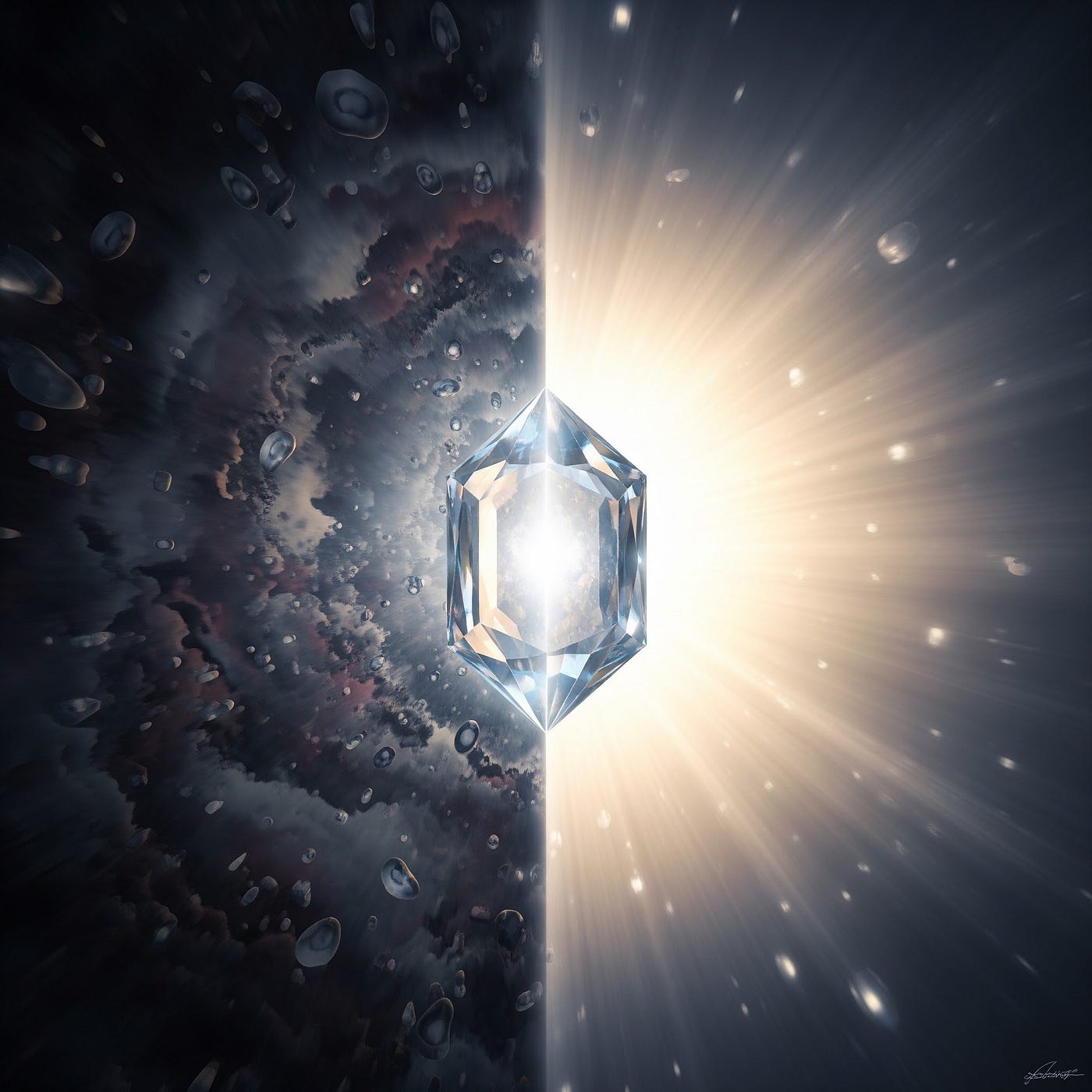
Gnostic texts are incredibly rich in symbolism, but stones, crystals, and gems play an important symbolic role in them, not only as powerful metaphors but as fundamental elements of Gnostic cosmology and ritual practice.
At the heart of Gnostic doctrine lies the duality between the imperfect and illusory material world (the Kenoma, created by the Demiurge) and the true divine realm of pure light (the Pleroma). Precious stones serve as a “perfect bridge” between these two realms, for they are composed of physical matter while possessing the unique ability to capture, retain, and reflect the immaculate light of the divine.
We will explore this through the foundational texts of Nag Hammadi, notably Divine Cosmology through The Pistis Sophia and the Apocryphon of John, as well as The Hymn of the Pearl.
Finally, we will turn to practical application with the study of Gnostic jewels, such as amulets engraved with symbolic figures — true tools of protection, healing, and guidance for the soul’s journey through the hostile spheres of the Archons after death.
From the sublime architecture of the celestial realms to everyday ritual objects, this article aims to demonstrate how gems and crystals embody the enduring physical manifestation of Gnosis, a fragment of immaculate light that confirms the divine spark hidden within the darkness of the world.
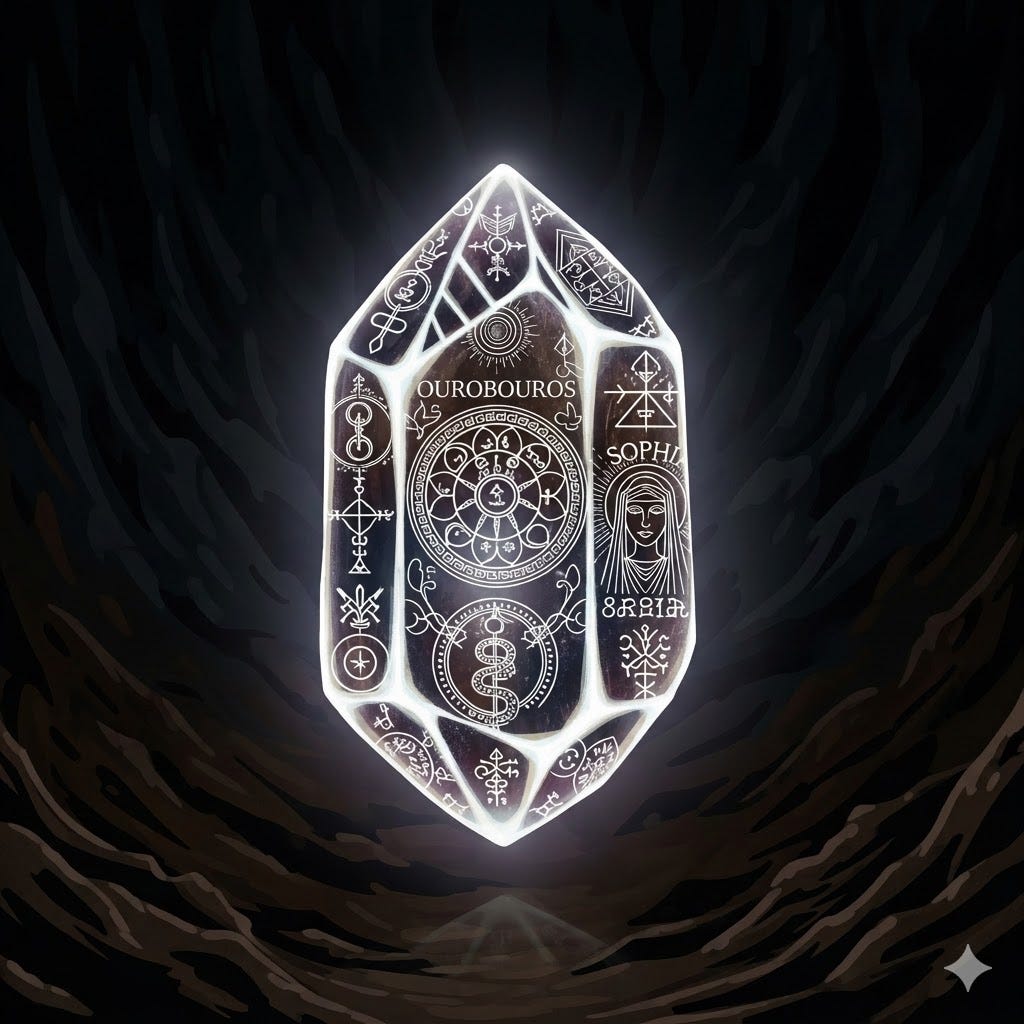
Table of Content
The Pistis Sophia
The Pistis Sophia, often translated as “Faith and Wisdom” or “Faith of Wisdom”, one of the most famous and complex Gnostic texts dating from around the 3rd or 4th century. This manuscript discovered in the late 18th century, directly addresses the existence of metals and minerals. It is a fundamental document for understanding Gnosticism, a spiritual and philosophical movement of the early centuries of Christianity that emphasized intimate spiritual knowledge (gnosis) as the path to salvation.
Core Content
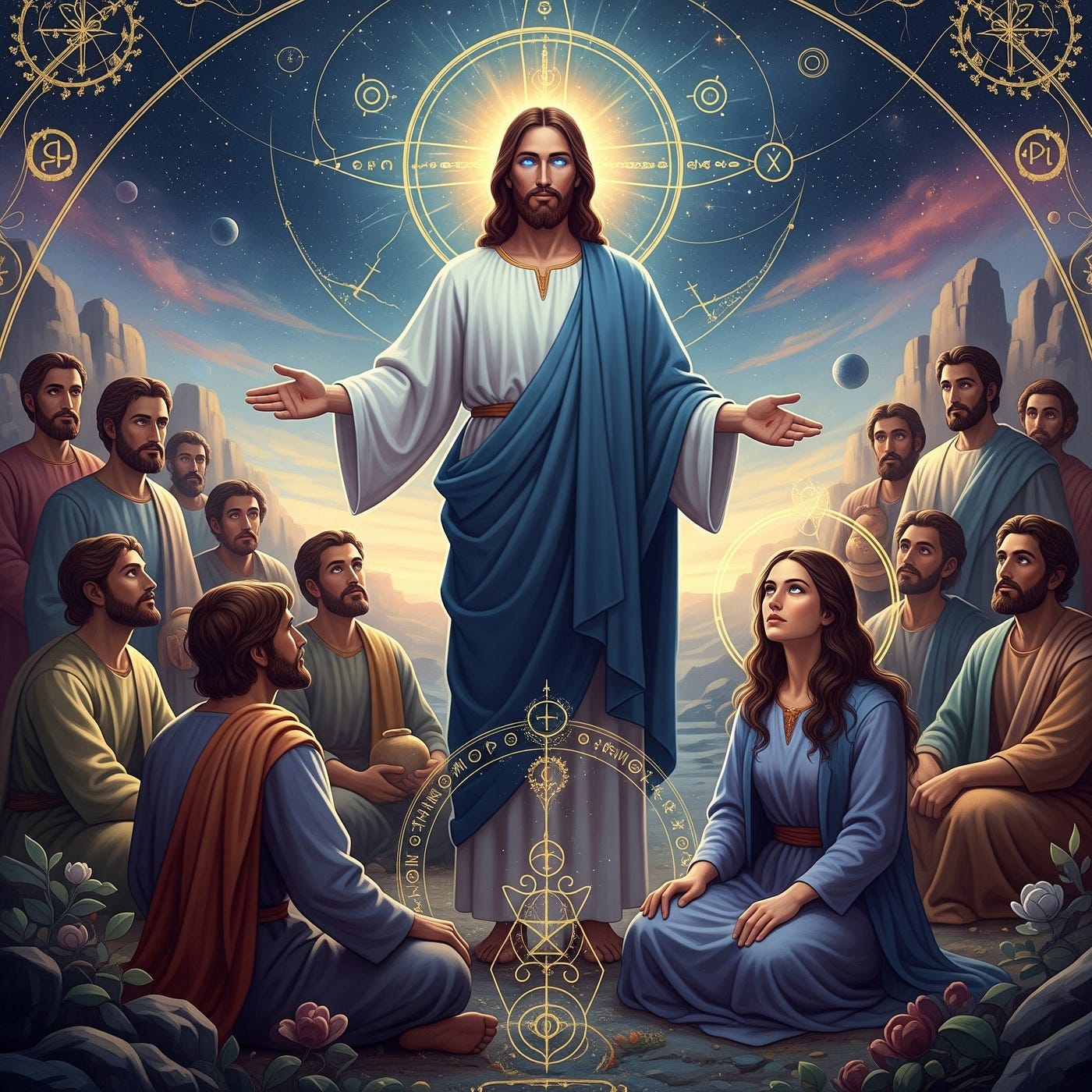
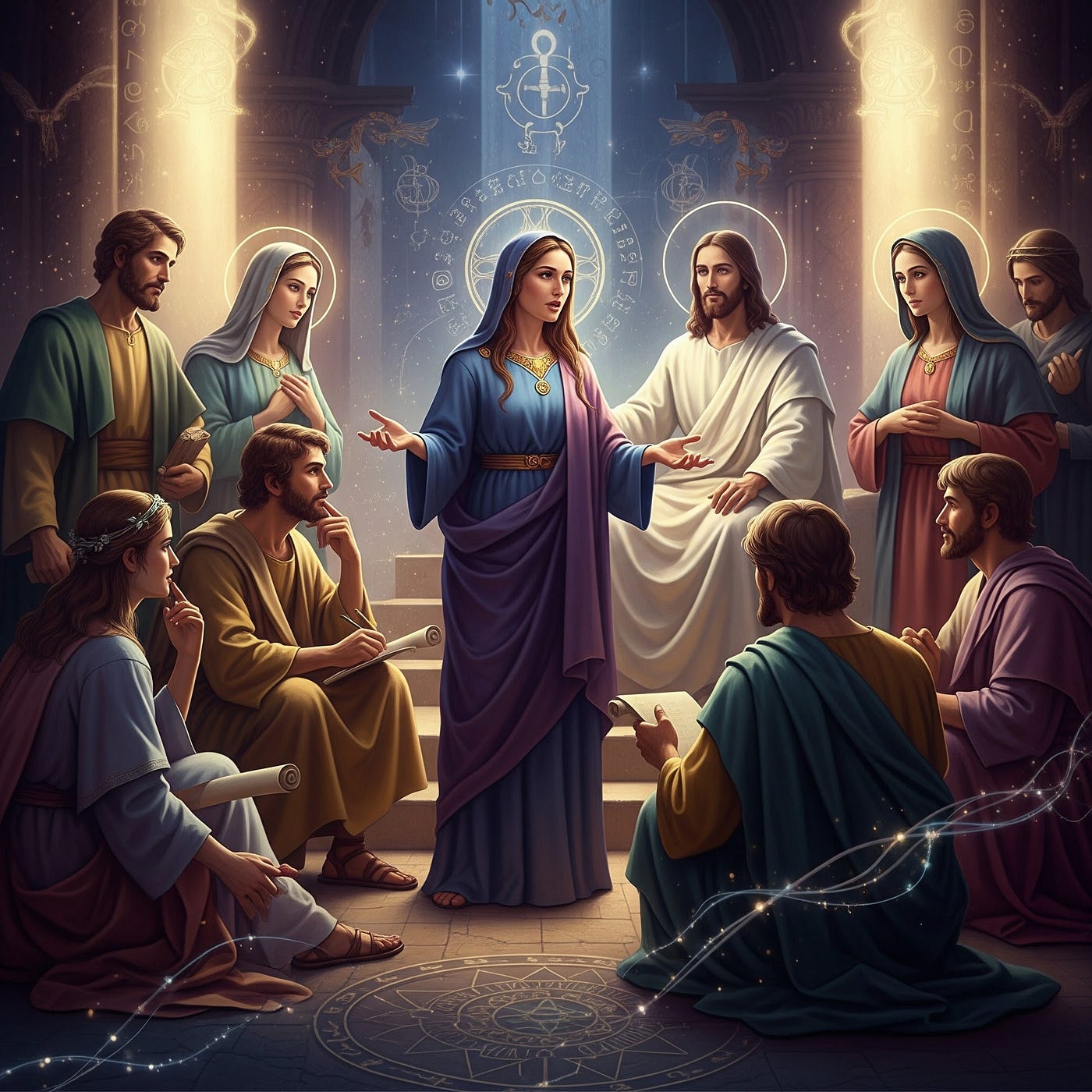
The text of Pistis Sophia records the resurrected Jesus teaching the profound mysteries of the universe and creation to his disciples, including Mary Magdalene. According to this account, Jesus remained on Earth for eleven or twelve years after his death to complete the instruction of his disciples on the mysteries of the universe and the human soul.
Who is the Pistis Sophia?
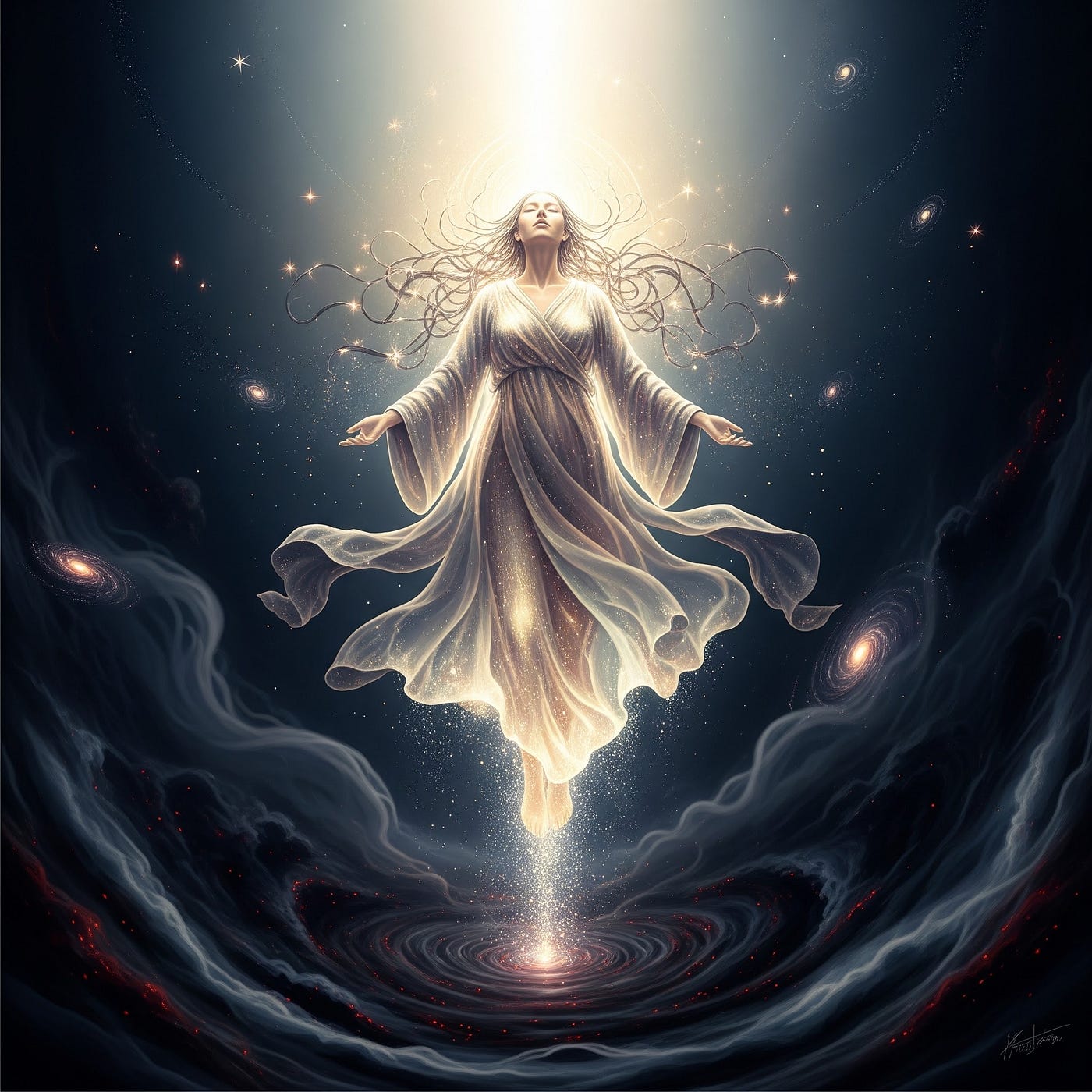
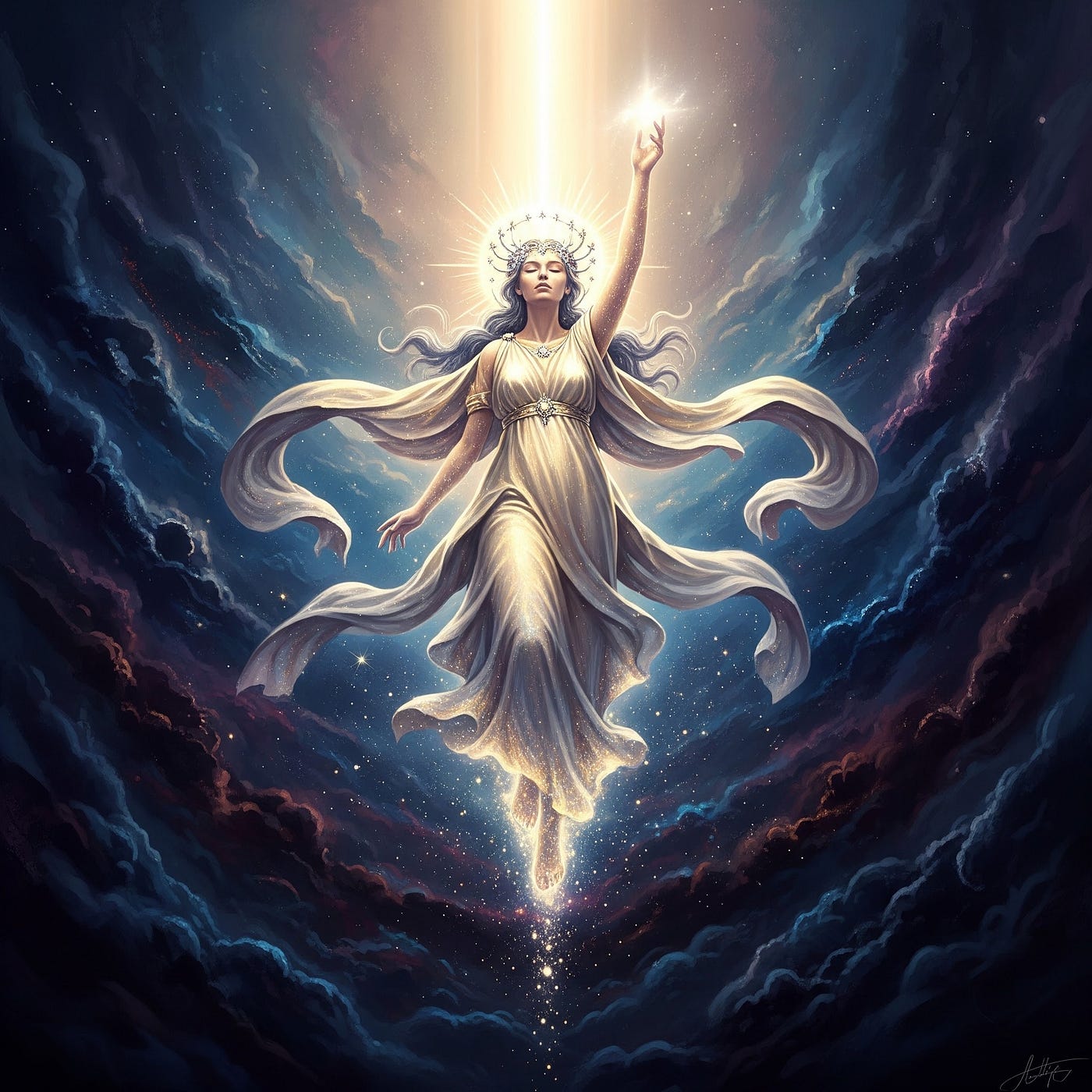
In Gnostic cosmology, Pistis Sophia is a divine feminine entity, an “Aeon”. The text recounts her fall from the divine realm (the Pleroma) into chaos and matter, deceived by inferior powers (the archons).
Jesus explains to his disciples how he intervened to help her ascend to the divine Light. This narrative serves as an allegory for the salvation of the human soul.
The Central Role of Mary Magdalene
One of the most fascinating aspects of the Pistis Sophia is the prominent role given to women, and especially to Mary Magdalene. Of all the disciples present (including Peter, John, Andrew), she is the one who speaks most often, asks the most profound questions, and interprets Jesus’ words most accurately. She is praised as the disciple whose heart is “more turned toward the Kingdom of Heaven than all her brothers.”
Key Idea
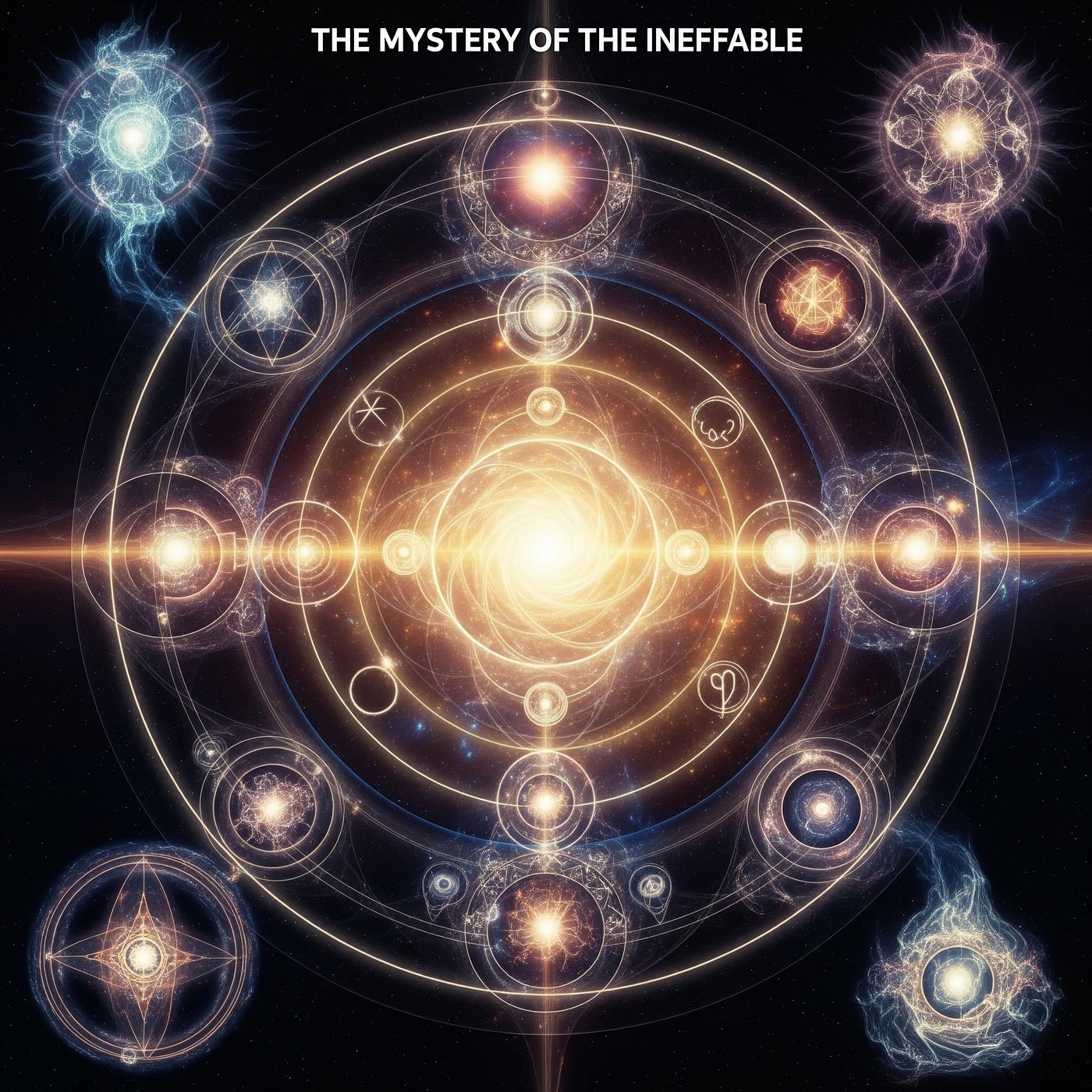
In chapter 92, Jesus explains that only those who attain the “Mystery of the Ineffable” can truly understand the profound reasons for material creation, including:
“Why the mountains arose and why the precious stones found there arose.”
“Why the matter of gold, silver, copper, iron, and stone arose.”
Symbolic Meaning
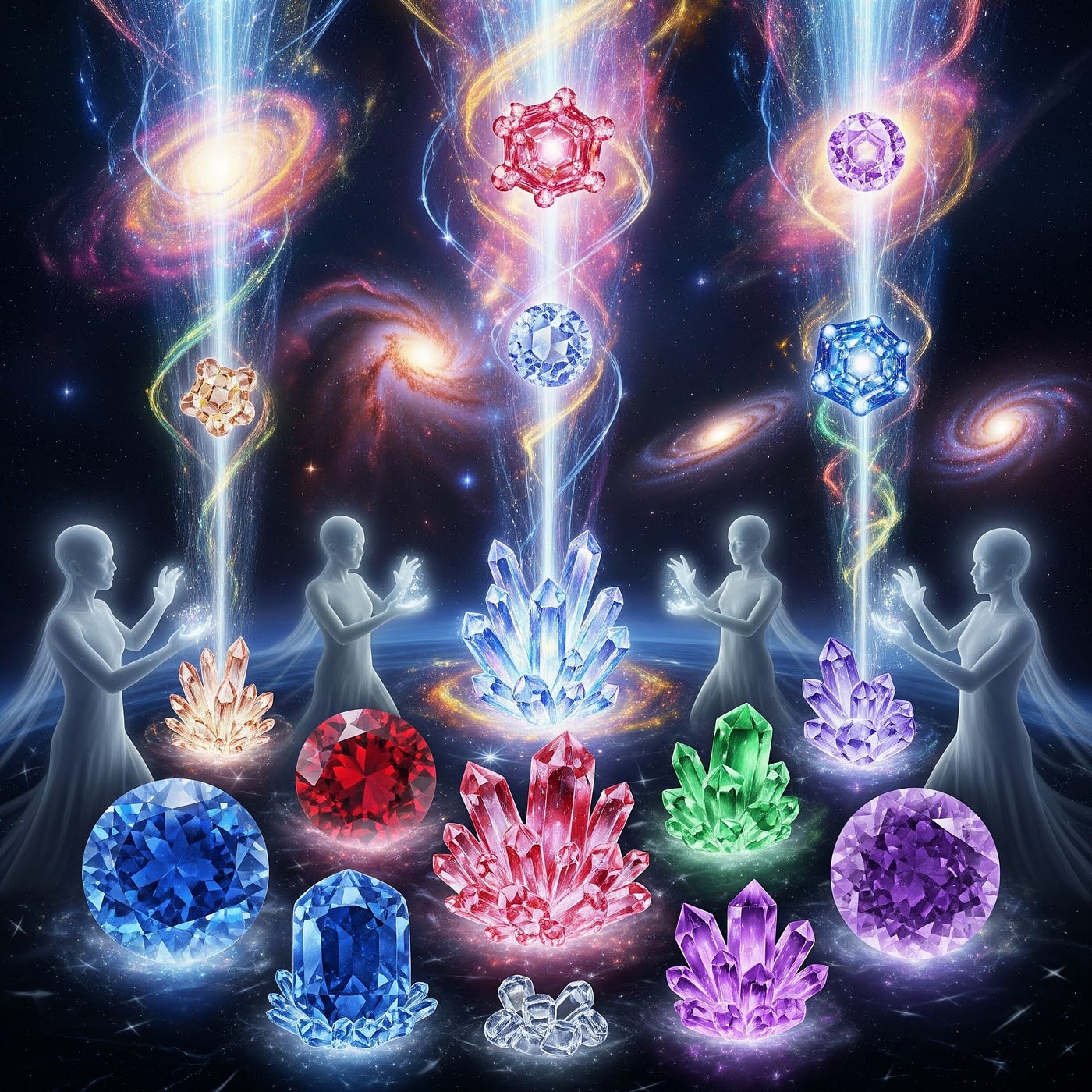
This gnostic text induce that precious stones are not random objects but are material crystallizations of cosmic emanations, passions, and the purifications of the Aeons (divine entities). In the Gnostic worldview, this understanding allows one to know the fundamental, cosmic reason for the existence of all metals and minerals.
Pistis Sophia is renowned for its extremely detailed and sometimes dizzying description of the Gnostic afterlife. It describes a complex hierarchy of heavens, spheres, angels, demons, temporal mysteries, and passwords that the soul must know to traverse the different strata of the universe and return to its divine source.
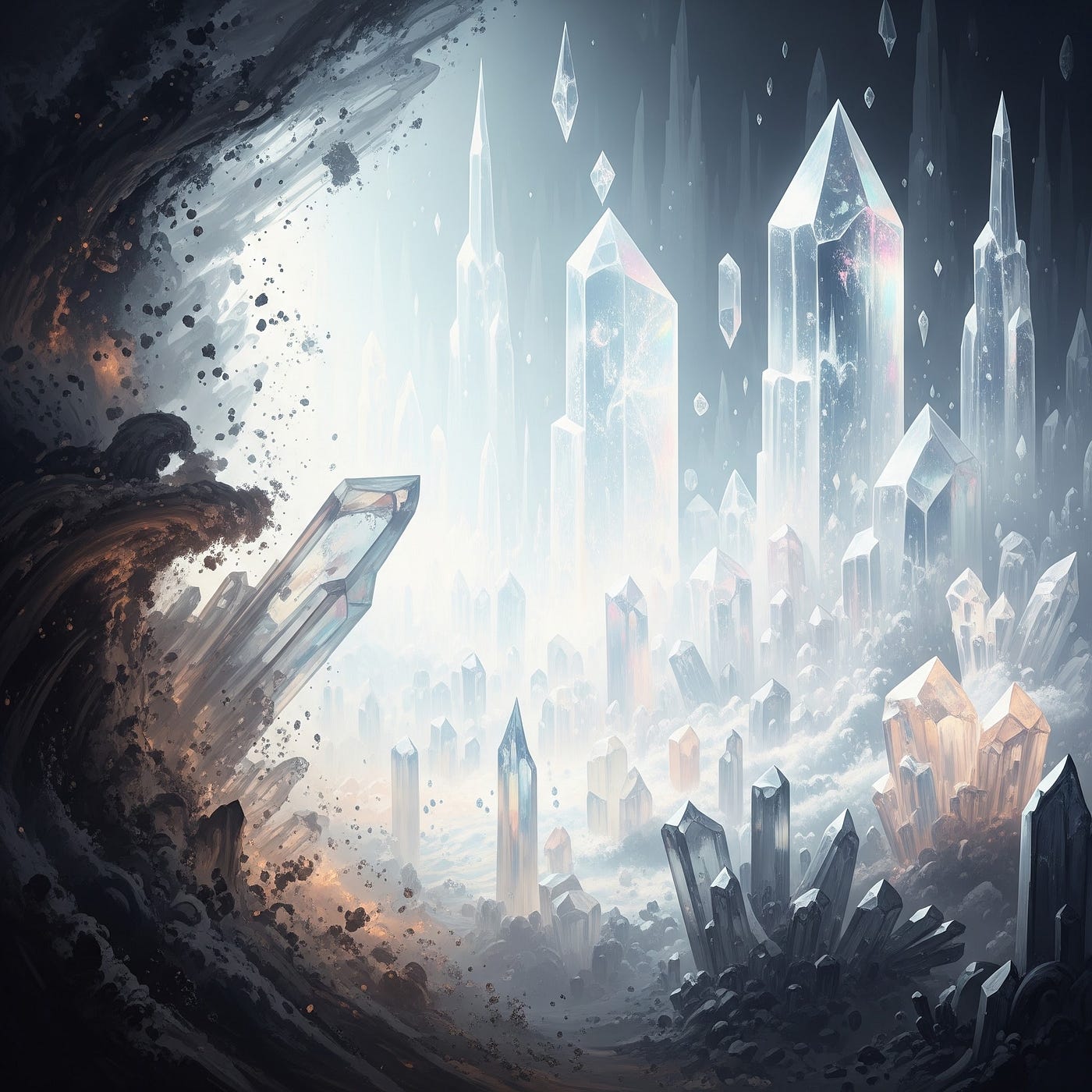
Crystals and Gems as the Divine Realm
In heavily cosmological texts from the Nag Hammadi library, such as the Apocryphon of John, The Secret Revelation of JohnThe Secret Revelation of John and On the Origin of the World, crystals and gems are used to describe the architecture of the higher spiritual realms.

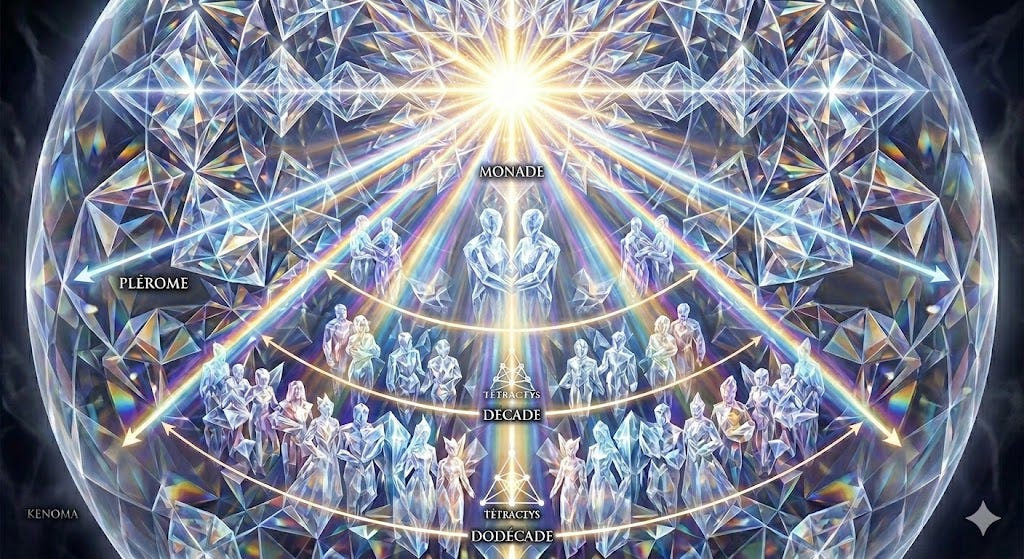
The true God (the Monad or Invisible Spirit) and the surrounding Aeons (divine emanations) are often described using the imagery of pristine, transparent light. While specific mineral names are less common than general terms of radiance, the “waters of life” and the divine realms are described as crystalline, pure, and luminous — a stark contrast to the murky, chaotic matter of the physical universe.

The Gnostic text that, besides the Apocryphon of John, uses crystals and gems to describe the architecture of the higher spiritual realms is On the Origin of the World. Both are cosmological texts from the Nag Hammadi library that use imagery of crystalline, pure, and luminous materials to describe the Pleroma (the true divine realm), contrasting it with the “murky, chaotic matter” of the physical universe.
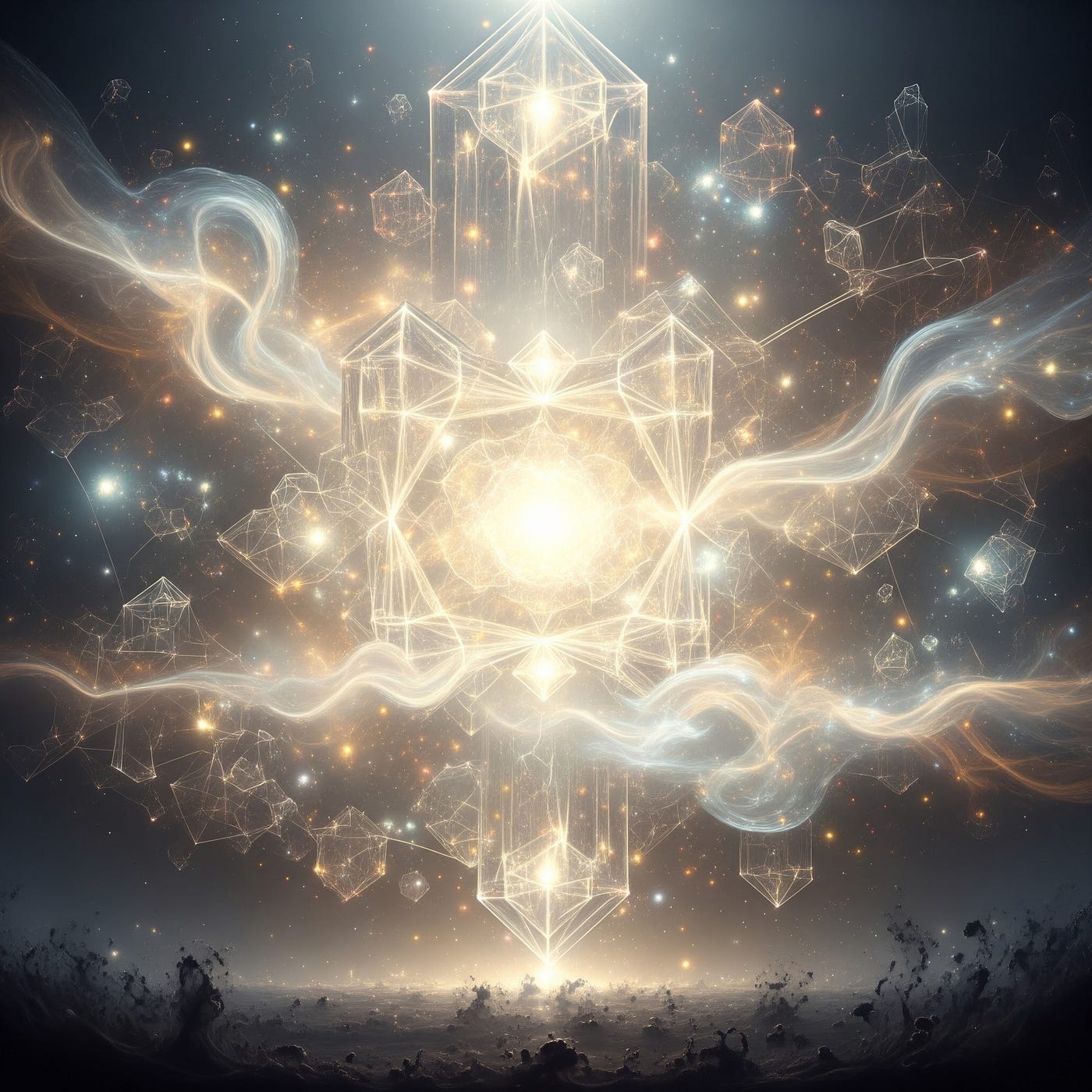
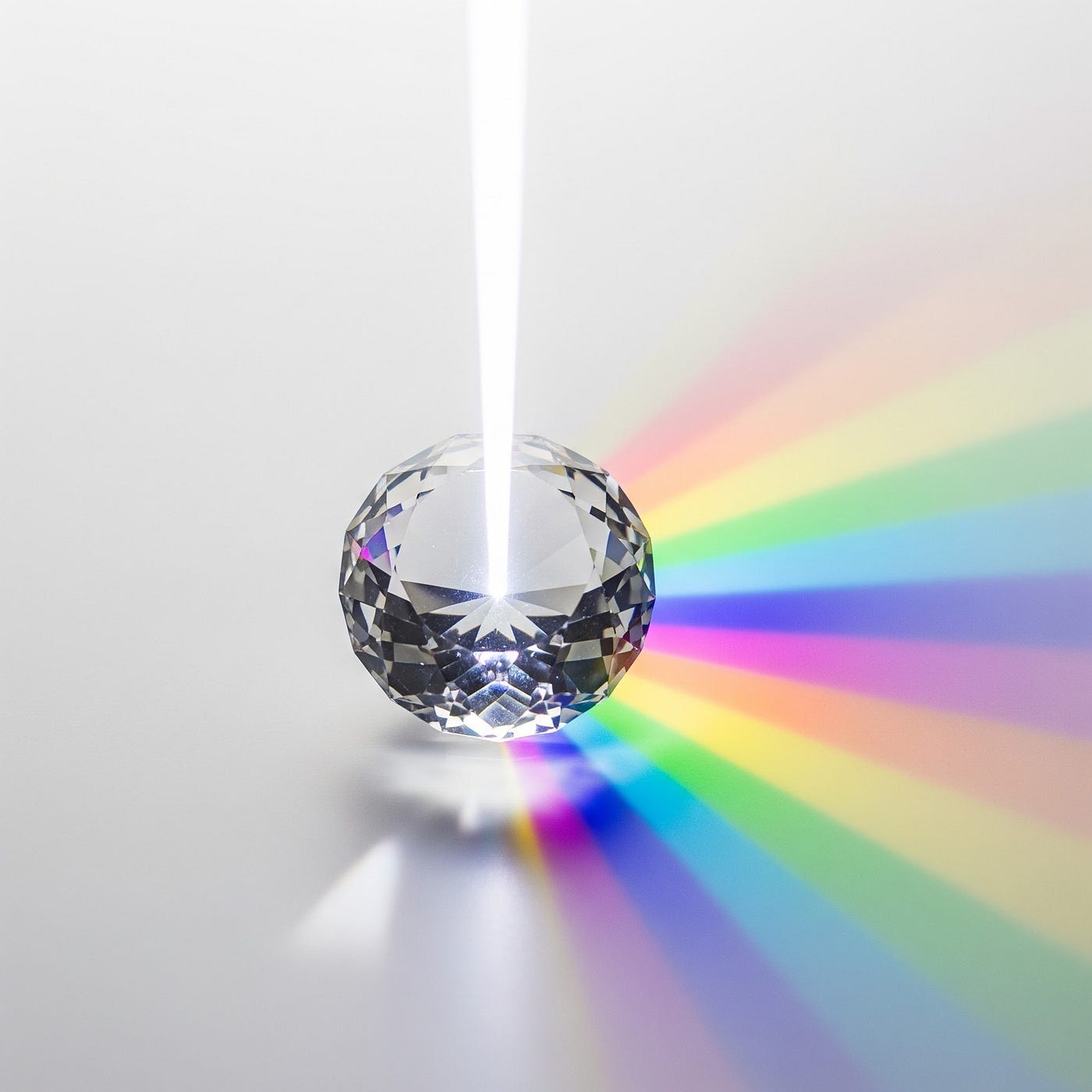
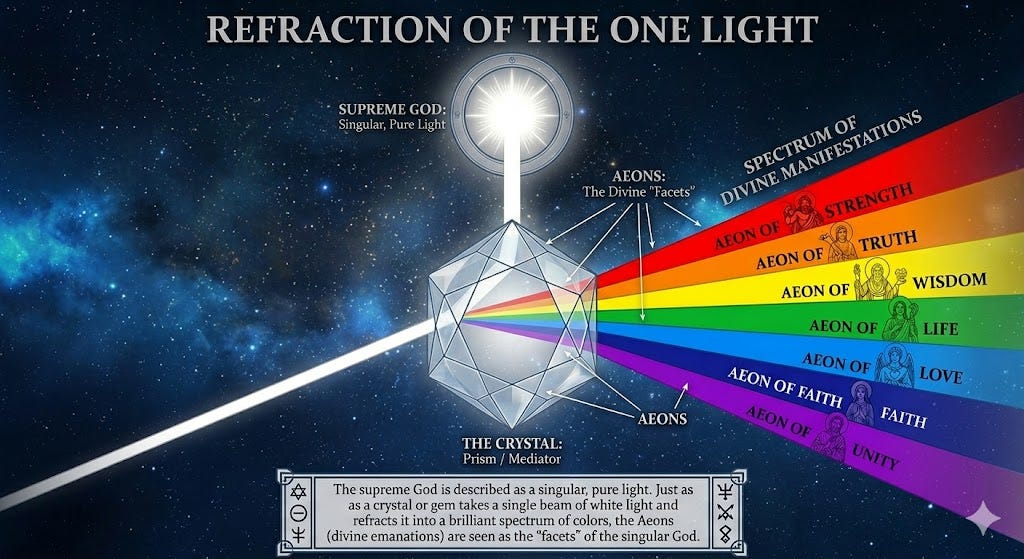
Refraction of the One Light: The supreme God is often described as pure, unnamable light. Just as a crystal or a cut gem takes a single beam of white light and refracts it into a brilliant spectrum of distinct colors, the Aeons are the “facets” of the singular God. Gems in heavenly visions represent these multifaceted divine powers and attributes.
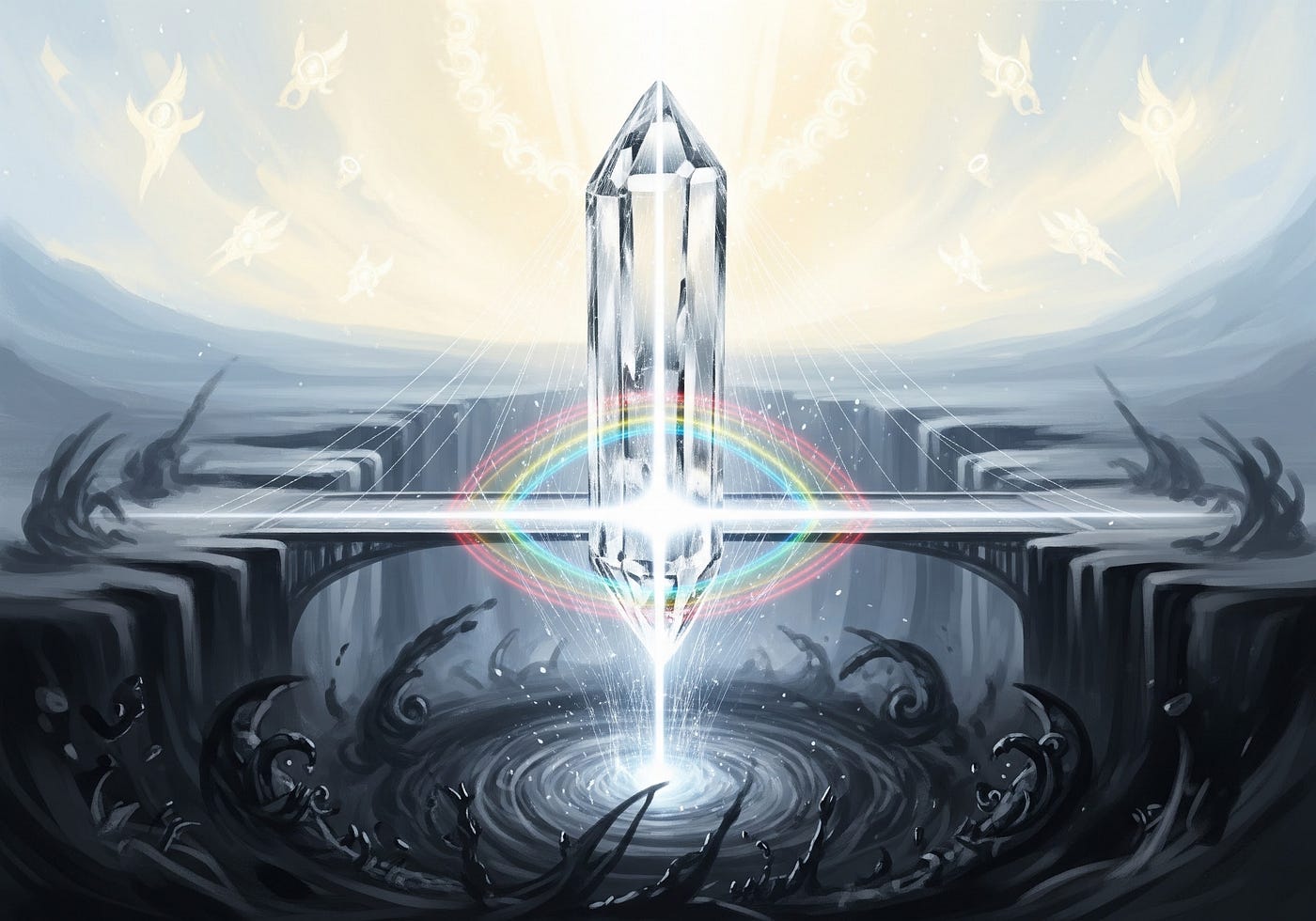
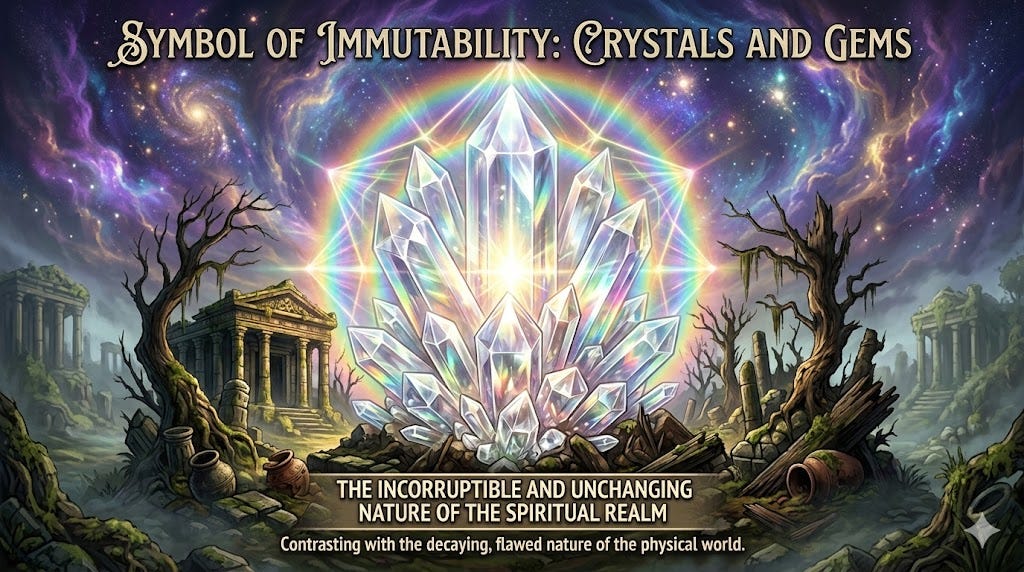
Immutability and Purity: Gnostics viewed the material world (created by the ignorant Demiurge) as decaying, flawed, and impermanent. In stark contrast, crystals and gems are forged under immense pressure into something brilliantly clear, hard, and eternal. They symbolize the incorruptible, unchanging nature of the spiritual realm.
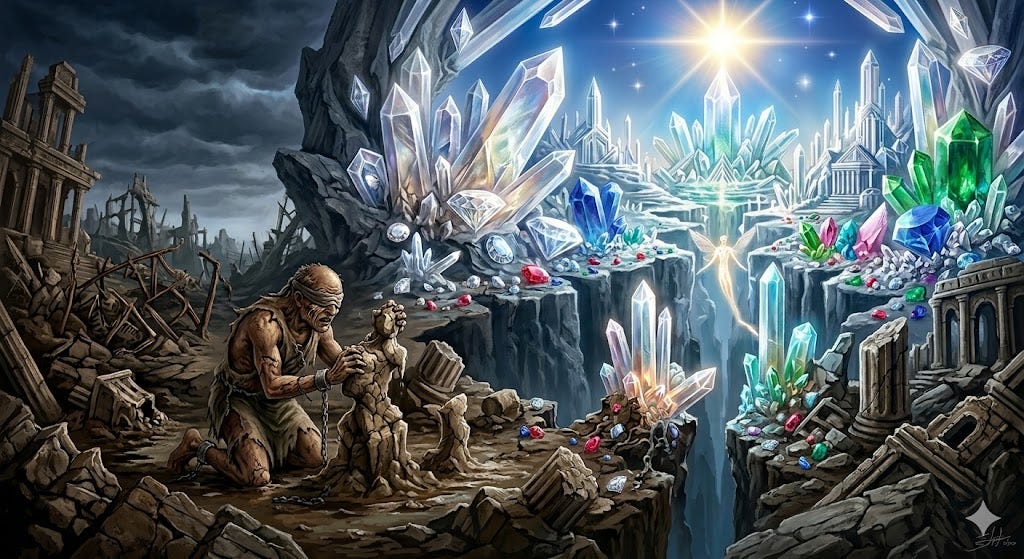
The Hymn of the Pearl: the Pearl as the Soul
The Hymn of the Pearl (also known as the Hymn of the Robe of Glory or Hymn of the Soul) is a Gnostic allegory of the human soul: The Prince’s journey represents the soul’s fall into the body, its forgetting of its true nature, and its ultimate salvation through knowledge (Gnosis) which allows it to return to the divine realm.
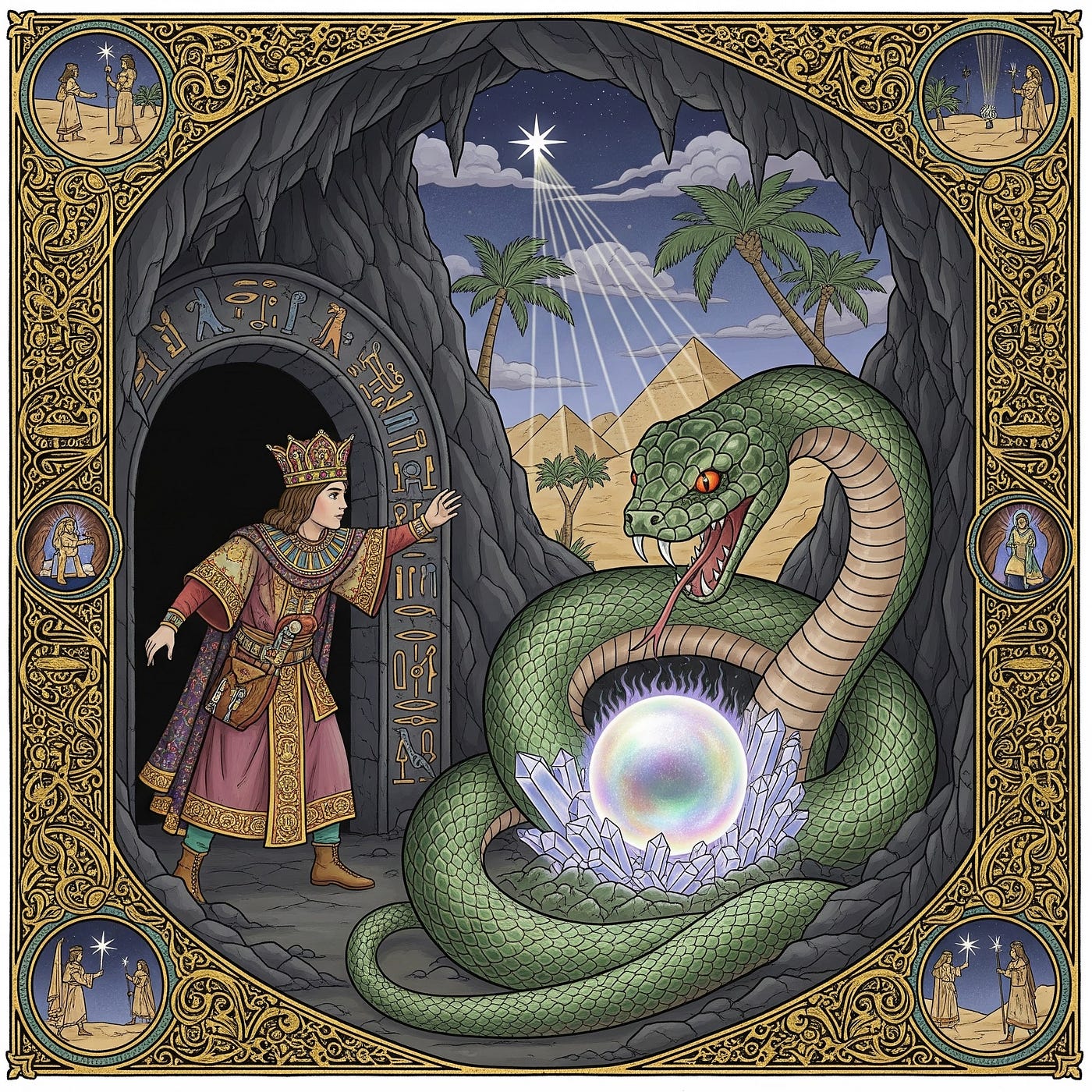
The Story
The allegorical “Hymn of the Pearl” tells of a Prince sent from his divine home (Pleroma) to Egypt (the material world/ Kenoma) to retrieve the magnificent Pearl (symbolizing the soul or divine spark).
He forgets his mission after consuming Egyptian food and falls asleep to his spiritual nature. A letter from his divine parents acts as Gnosis (spiritual knowledge), awakening him to his true self and mission.
Awakened, he confronts the serpent and seizes the Pearl. He leaves Egypt and ascends to his celestial homeland, encountering on his journey his Robe of Glory, now sparkling with precious stones, which awaits him and seems to recognize him. He dons the robe and is welcomed triumphantly by his parents, thus completing his redemption.
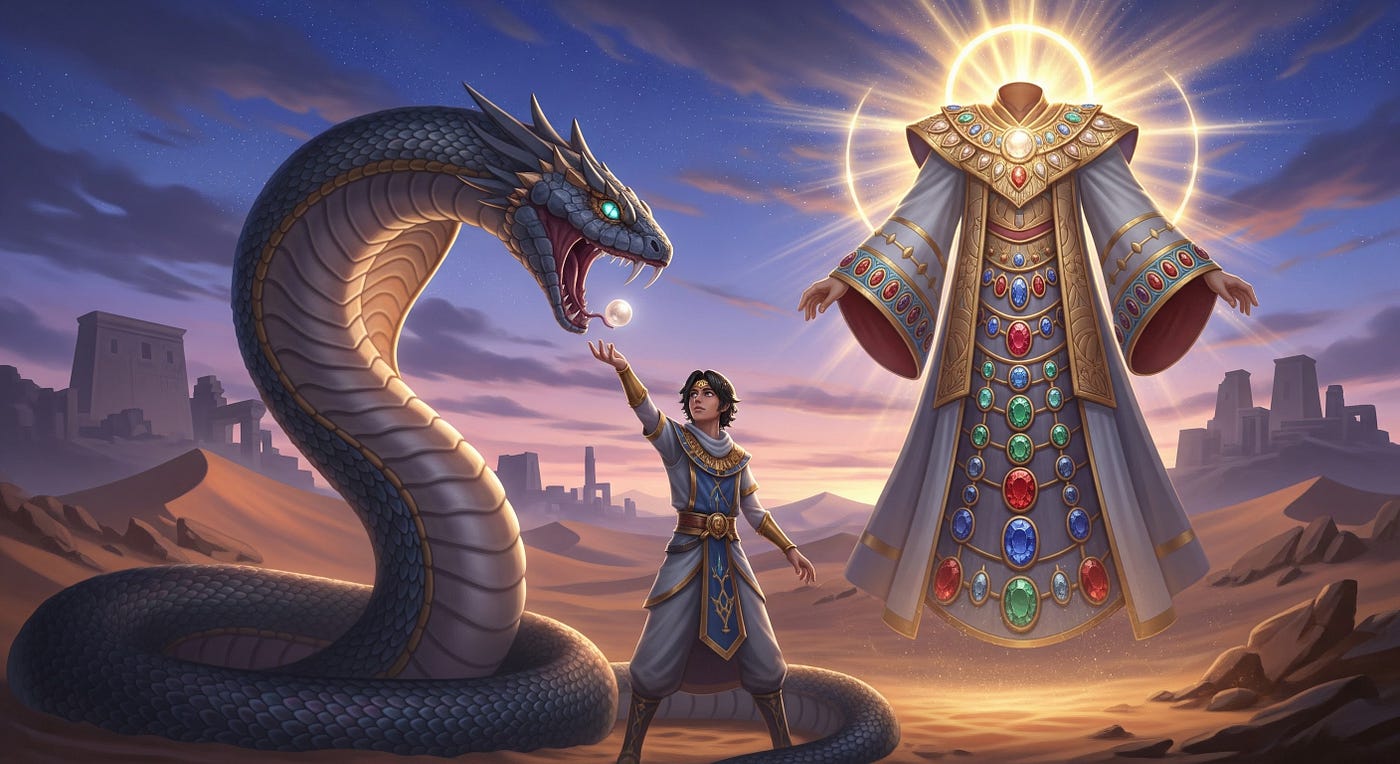
The Pearl
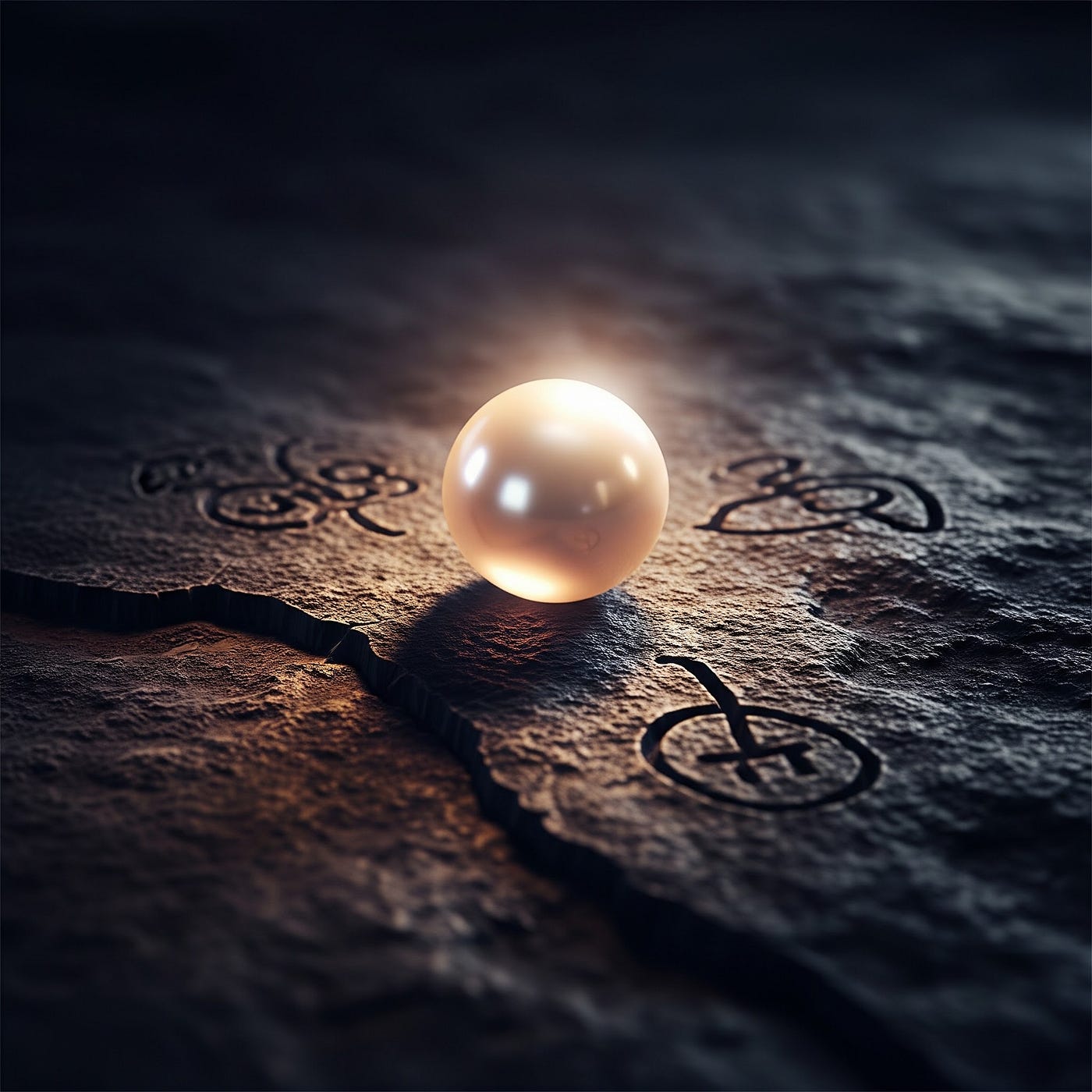
The pearl is the central object of the entire hymn, symbolizing the soul or divine spark that the prince is sent to retrieve. The Pearl is a fragment of the true, highest God that has become lost and trapped in the darkness of physical matter. The prince forgets his mission after eating the food of the Egyptians (falling asleep to his spiritual nature) but is awakened by a letter from his divine parents, allowing him to retrieve the pearl and return to the light.
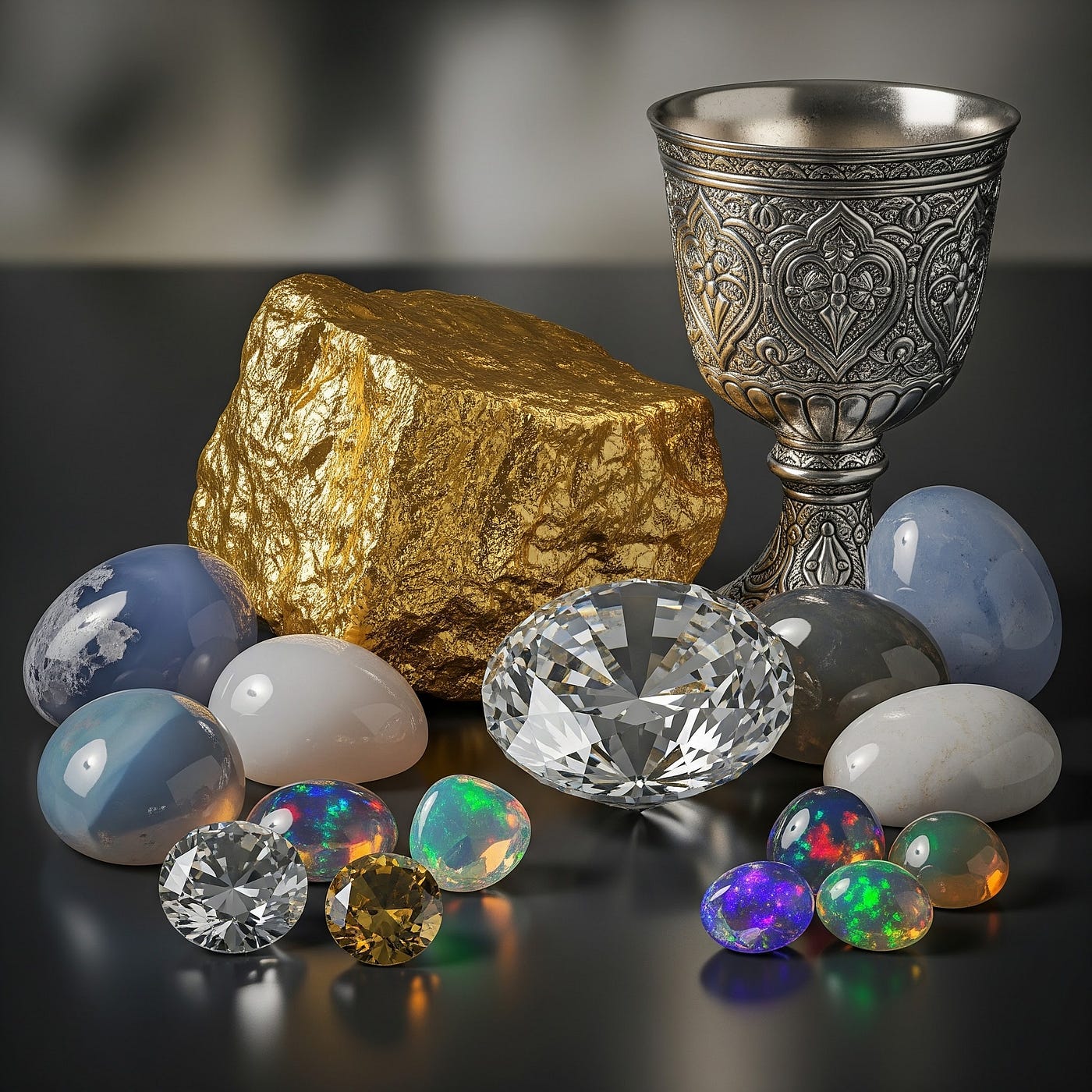
The following mineral, stone, and gem references are found in “The Hymn of the Pearl,” drawing from the translations by G.R.S. Mead and William Wright :
The Hymn of the Pearl, II
“Gold from the Land of Beth-Ellaya, Silver from Gazak the Great,
Chalcedonies of India, Iris-hued [Opals?] from Kãshan.
They girt me with Adamant [also] That hath power to cut even iron.
My Glorious Robe they took off me Which in their love they had wrought me,
And my Purple Mantle [also] Which was woven to match with my stature.”
The Hymn of the Pearl, XVII
“The Glorious Robe all-bespangled With sparkling splendour of colours:
With Gold and also with Beryls, Chalcedonies, iris-hued [Opals?],
With Sards of varying colours. To match its grandeur [?], moreover, it had been completed:
With adamantine jewels All of its seams were off-fastened.
[Moreover] the King of Kings’ Image Was depicted entirely all o’er it;
And as with Sapphires above Was it wrought in a motley of colour.”
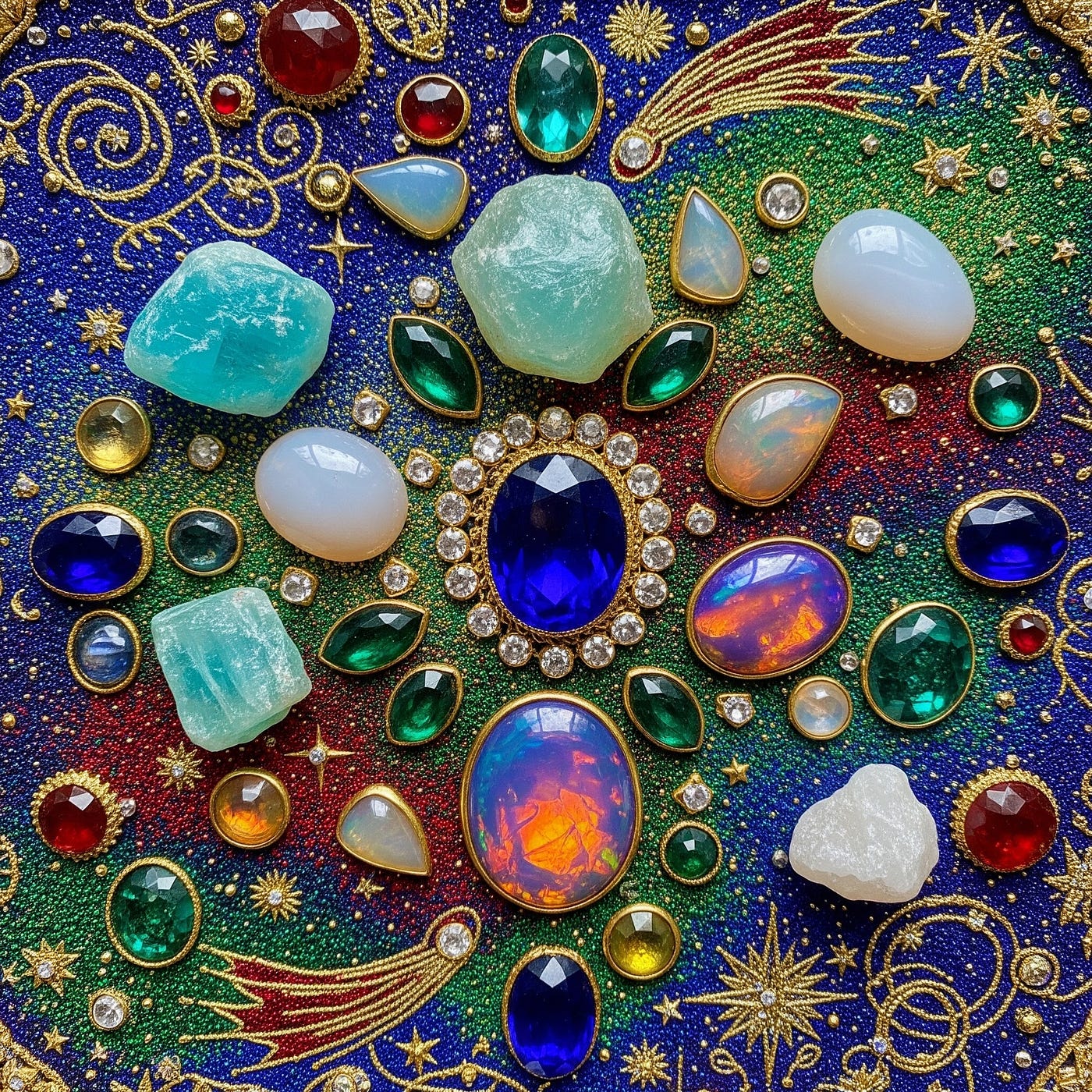
Symbolism of Stones and Minerals in “Hymn of the Pearl”
The precious stones and metals represent spiritual treasures and the celestial nature of the soul
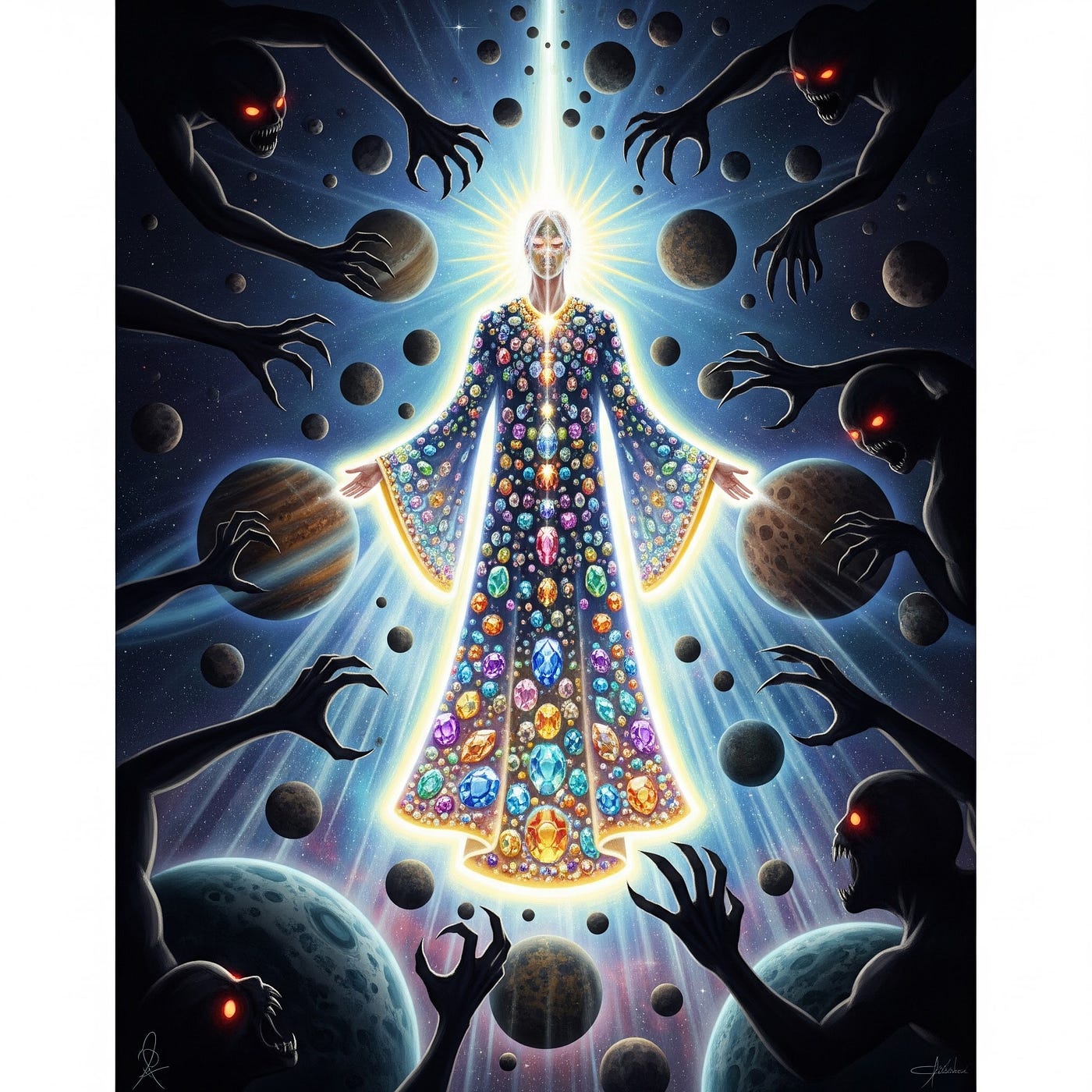
The Robe of Glory: The stones such as Diamonds (Adamant), Rubies, Sapphires, Gold, and Agate are used to adorn the robe that the Prince receives upon completing his mission and returning to the divine realm. It symbolizes the soul’s restored, true, and radiant divine nature.
Symbolism: The use of pure, sparkling stones contrasts with the “murky, chaotic matter of the physical universe” (Egypt/material world), highlighting the purity and luminescence of the divine realm (the Pleroma). The stones are physical matter that can hold and reflect pure light, making them a perfect metaphor for the divine spark within the physical body.
Spiritual Wealth and Virtues: The gems woven into the fabric of the robe represent the spiritual “wealth” the soul has accumulated. Every gem corresponds to a divine virtue, a truth realized, or a piece of gnosis (spiritual knowledge) acquired by the soul.
The Reclaimed Sparks: A core Gnostic myth is that divine light was shattered and trapped in the material world as “divine sparks” within humanity. The “Pearl” the prince retrieves from the serpent is the ultimate symbol of this trapped divine spark. The gems on the robe represent these scattered fragments of light finally being gathered, polished, and set into their proper place.
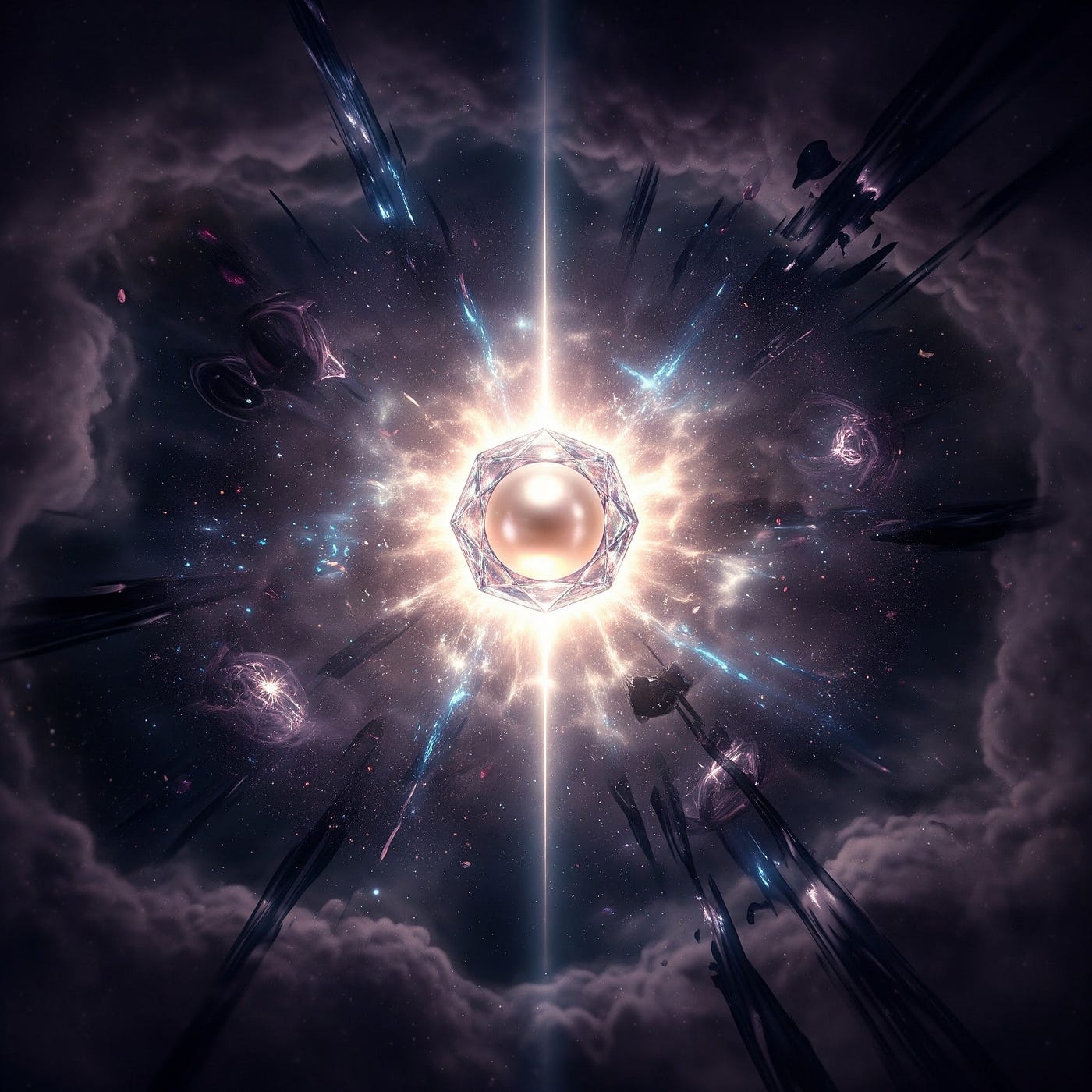
The Robe of Glory and the Robe of Light
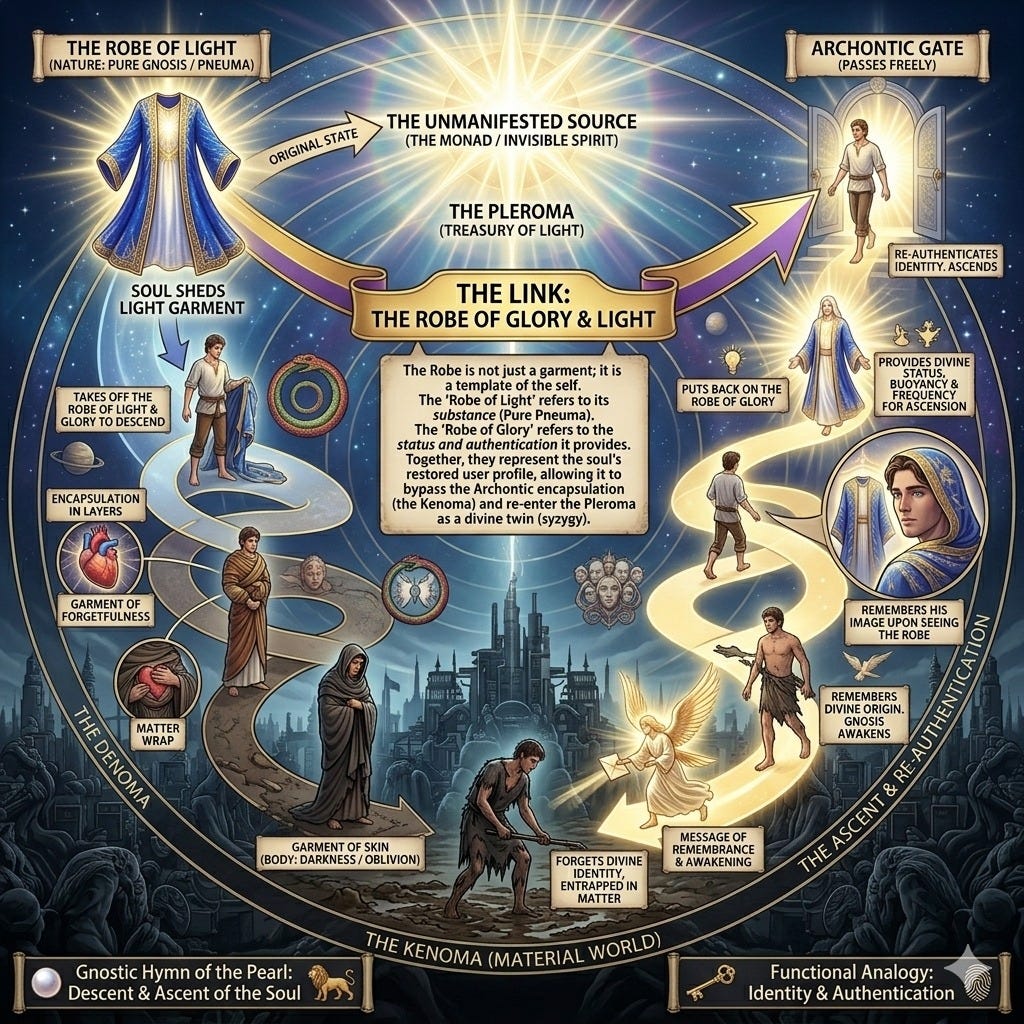
In Gnostic thought, the Robe of Glory and the Robe of Light are often used interchangeably or as sequential stages of the soul’s restoration. They represent the “original” spiritual body that the soul “took off” when it descended into the material world (the Kenoma) and must “put back on” to re-enter the divine realm (the Pleroma).
The Mirror of True Identity
The Robe is not just a garment; it is a template of the self. In Gnostic texts like the Hymn of the Pearl, the protagonist leaves his “glittering robe” behind in the care of his parents (the Divine) before descending to Egypt (the material world) to find a pearl (the divine spark).The Link: The Robe is described as having the wearer’s own image woven into it. When the soul sees the Robe again, it “remembers” who it truly is.Light as Substance: The “Robe of Light” refers to the literal substance of the garment — it is made of the same light-water/pneuma as the Monad
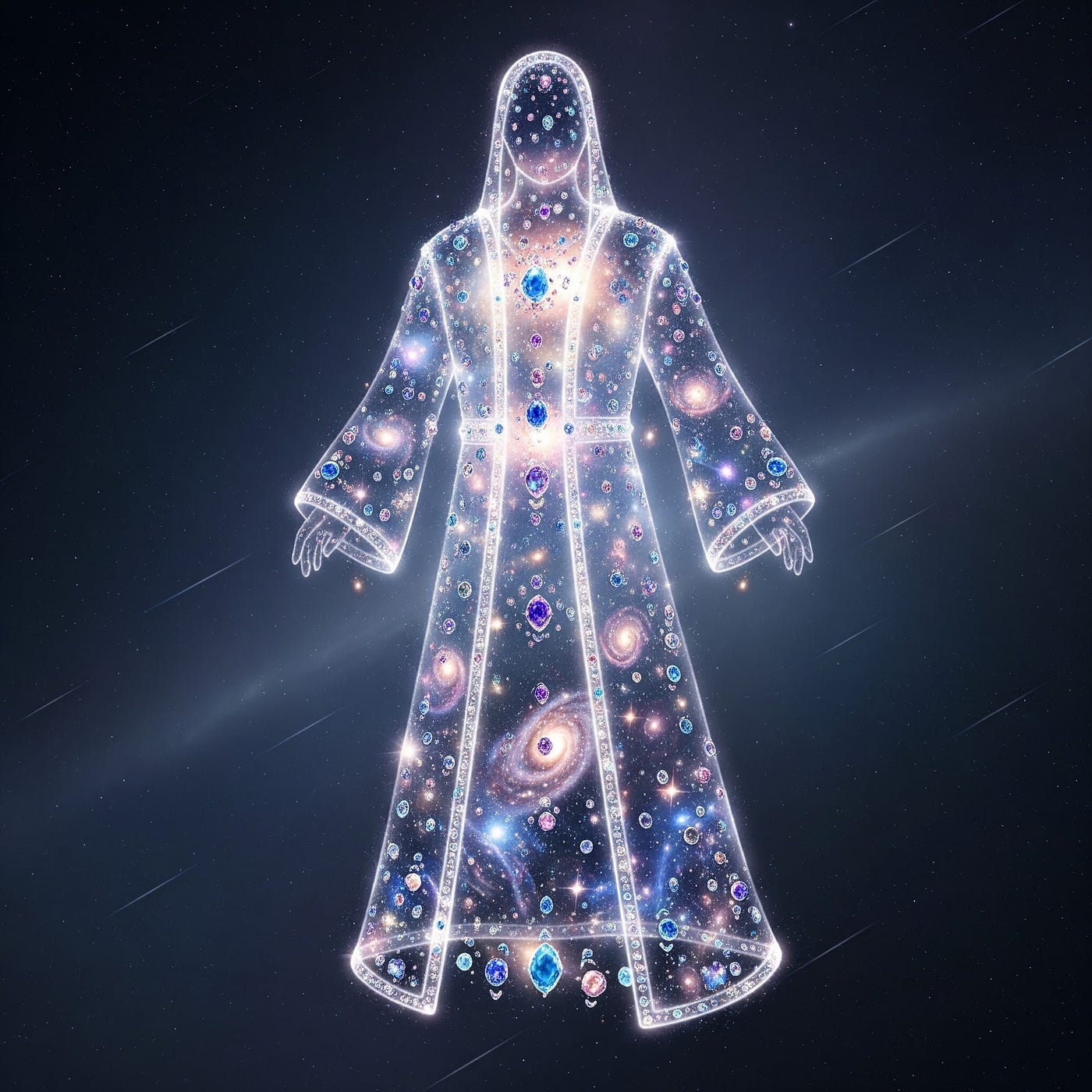
The Garment of Ascension
In the Pistis Sophia, the “Robe of Glory” is the specific vehicle required to pass through the Archontic gates (the planetary spheres).The Function: The material body is a “garment of skin” or “garment of darkness” that weighs the soul down. The Robe of Light provides the “buoyancy” and “frequency” needed to rise. The Authentification: Just as a digital key authenticates a user, the Robe of Glory acts as a “password.” The Archons cannot stop a soul wearing the Robe of Light because they cannot grasp its high-frequency substance.
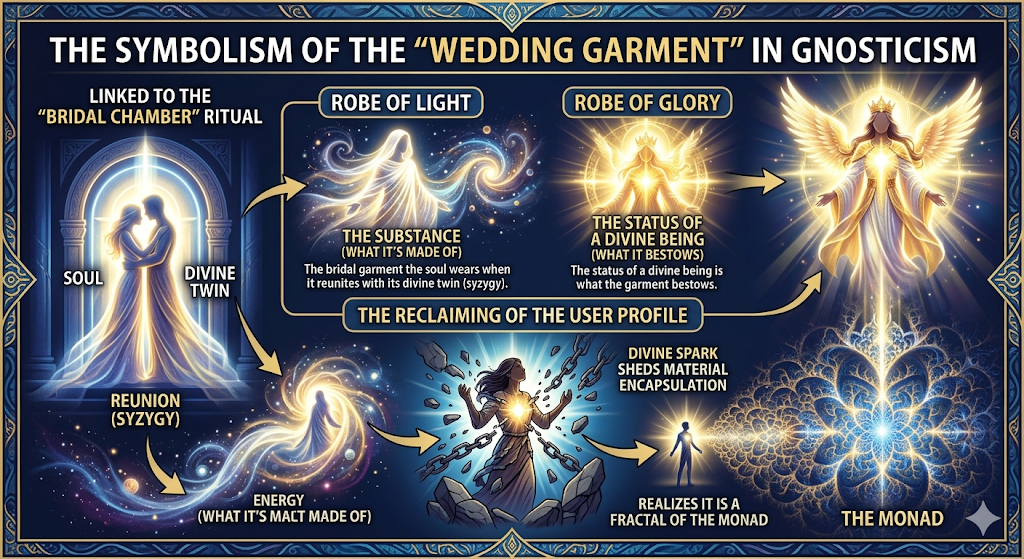
The Symbolism of the “Wedding Garment”
Many Gnostic groups linked this to the “Bridal Chamber” ritual. The “Robe of Light” is the bridal garment the soul wears when it reunites with its divine twin (syzygy). The Robe of Light is what the garment is made of, while the Robe of Glory is what the garment bestows (the status of a divine being). Together, they represent the “reclaiming of the user profile” — the moment the Divine Spark sheds its material encapsulation and realizes it is a fractal of the Monad.
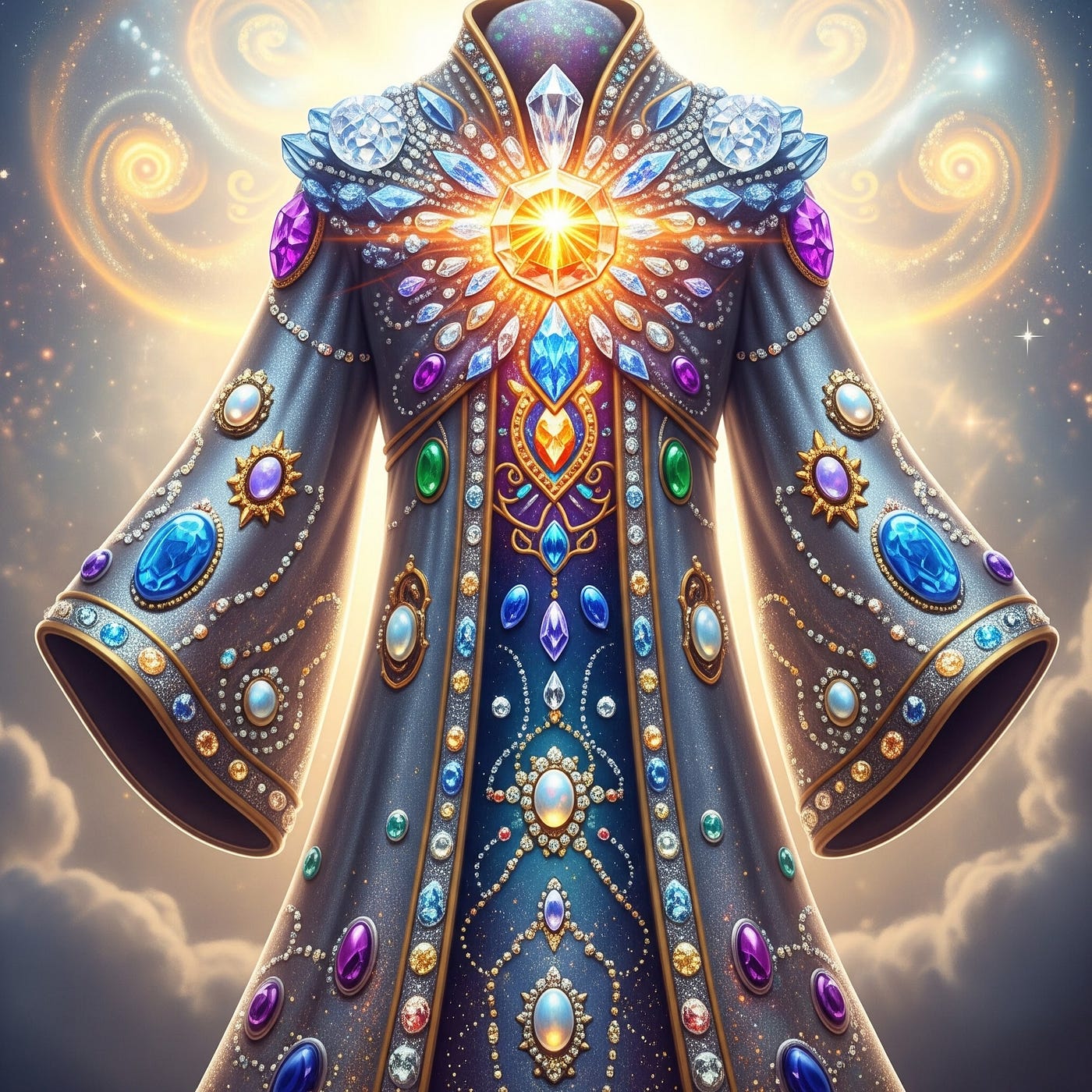
The Meaning: The Robe is a mirror of the True Self. It contains the “motions of all knowledge” and represents the soul’s pre-existent state. Crystals and precious stones serve as powerful symbols for divine light, spiritual truth, and eternal permanence. They connect the garment of the soul to the heavenly realm it originates from.
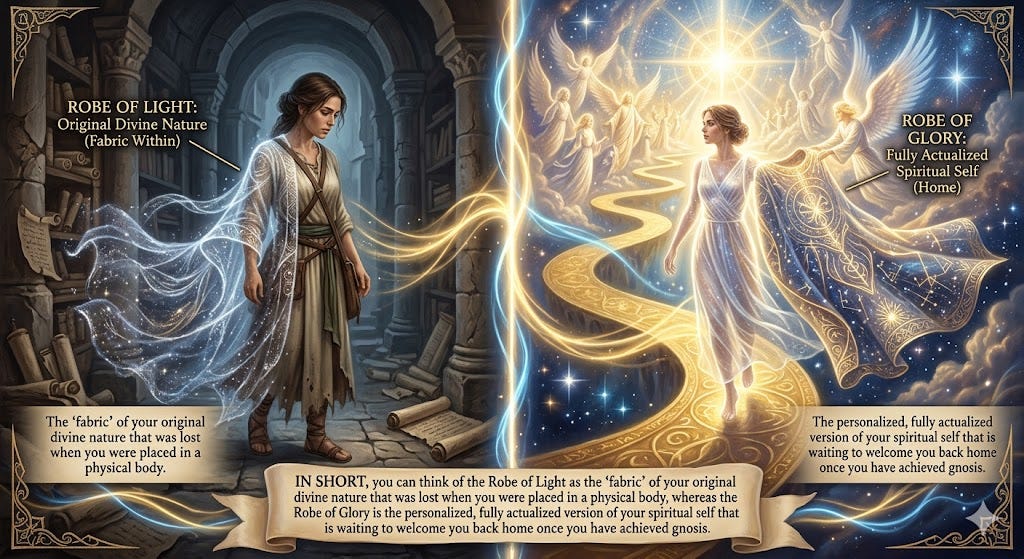
In short, you can think of the Robe of Light as the “fabric” of your original divine nature that was lost when you were placed in a physical body, whereas the Robe of Glory is the personalized, fully actualized version of your spiritual self that is waiting to welcome you back home once you have achieved gnosis.
The Architecture of Light: Gnostic & Buddhist Correspondence
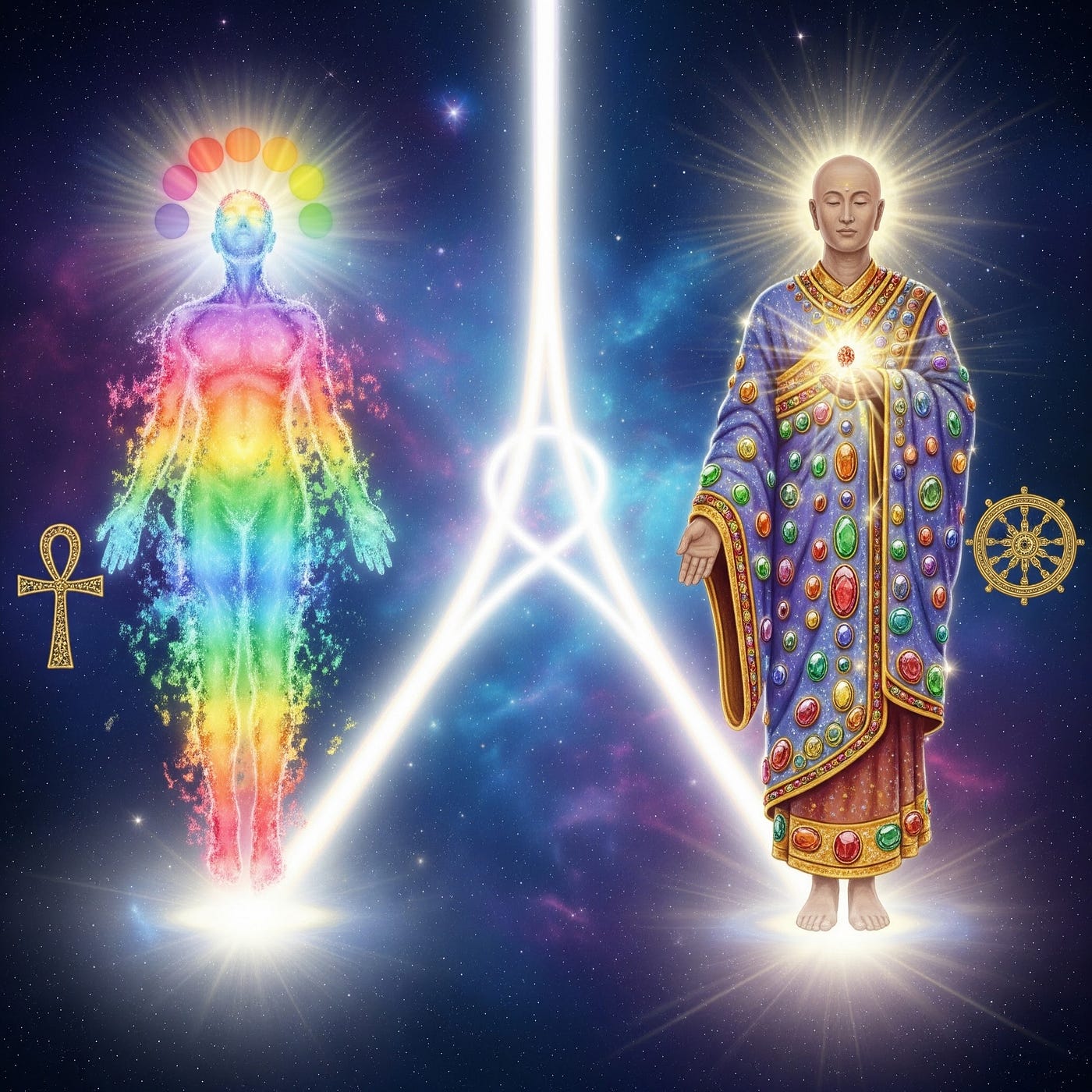
In Tibetan Buddhism, and more specifically in the traditions of Dzogchen, the Rainbow Body represents the ultimate culmination of spiritual realization. When a highly advanced spiritual master dies, their physical body does not decompose in the ordinary way. Instead, after a few days (often seven), the material body shrinks and dissolves into the pure essence of the five elements that compose it (earth, water, fire, air, space).
Both traditions ultimately point toward a profound human potential: the transmutation of dense, unconscious existence into a radiant, awakened state of pure awareness.
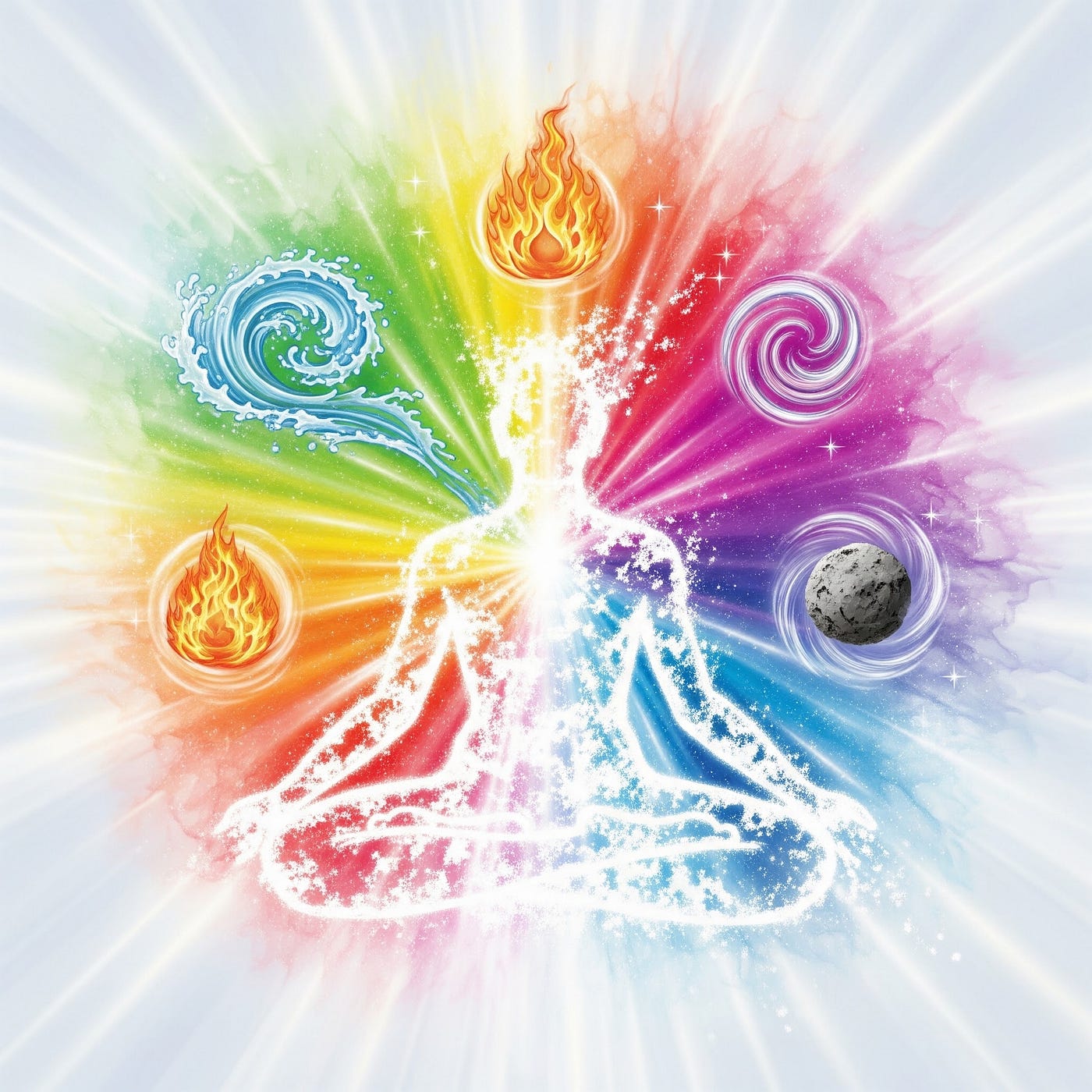
The Parallel with the Robe of Light : The Primordial State
Just as the Gnostic Robe of Light represents the original divine substance, Dzogchen teaches that the fundamental nature of mind and reality is already pure, luminous, and empty (Rigpa). The Rainbow Body is not something external that one “acquires” at death, but rather the revelation of the true nature of the physical body once ignorance and karmic veils have been completely dissipated. It is the “Robe of Light” unveiled.
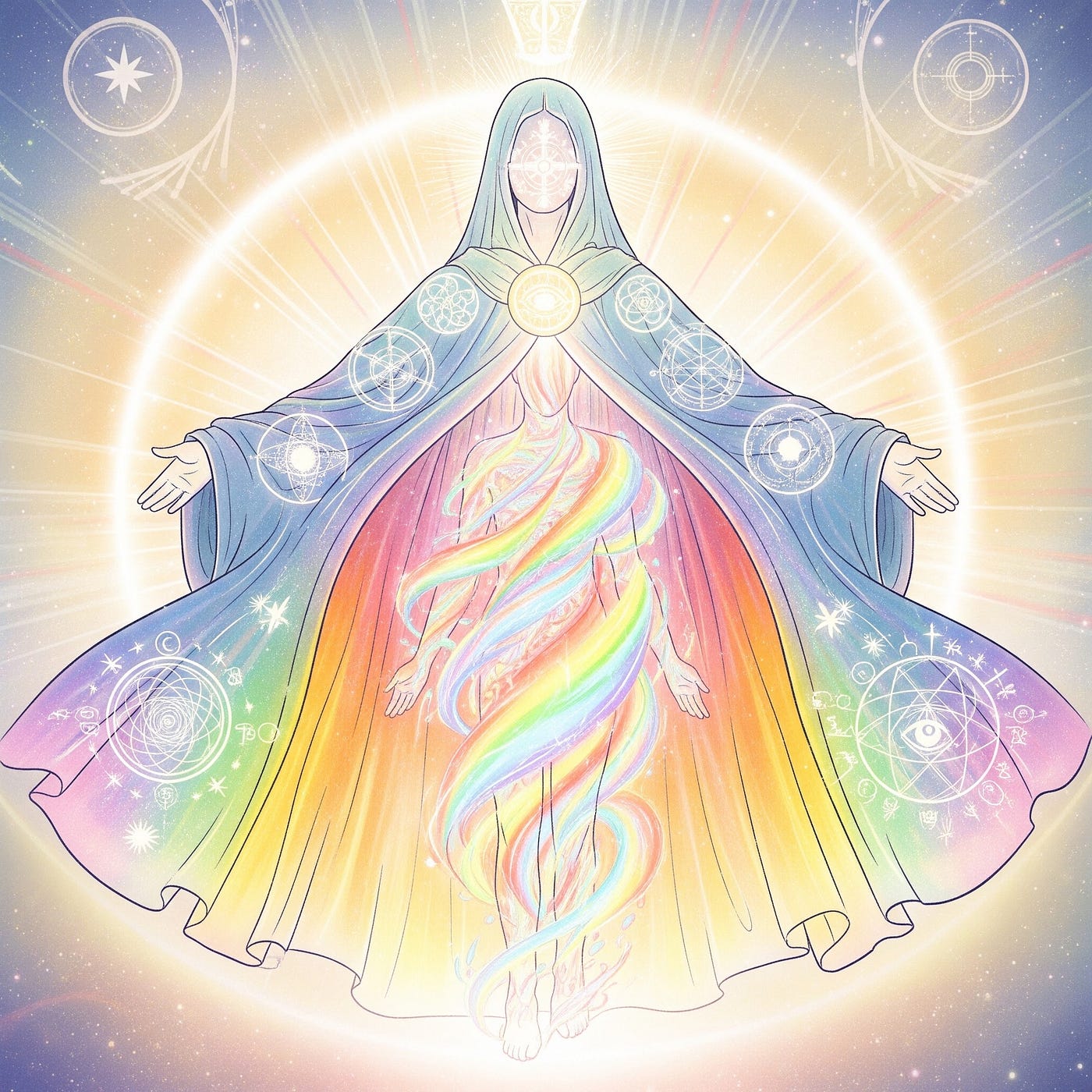
The Parallel with the Robe of Glory: The Actualization
The Gnostic Robe of Glory is the actualized “Higher Self.” Similarly, the Rainbow Body is the ultimate, visible proof of the master’s spiritual accomplishment. It shows that the practitioner has not only intellectually understood their divine nature but has fully actualized and integrated it, to the point that even the dense matter of their biological body has been transmuted.
The Shedding of the False Garment: Gnostics view the physical body as an oppressive garment crafted by ignorant creator god. Tibetan Buddhists view the body as a temporary, karmic vehicle that obscures our luminous nature until we reach enlightenment.
Light as the Ultimate Identity: both traditions assert that the dense, physical body is not our true identity. Our ultimate essence is luminous.
Amnesia and Awakening: for the Gnostics (Hymn of the Pearl) the soul falls asleep in the material world. In Tibetan Buddhism, the fundamental problem is avidya (ignorance or unawareness) — we have forgotten our primordial Buddha nature and are wandering in the sleep-like state of Samsara. Whether its coming from karma or straight archontic interference, in both traditions, gnosis and spiritual practice is an act of waking up and remembering.
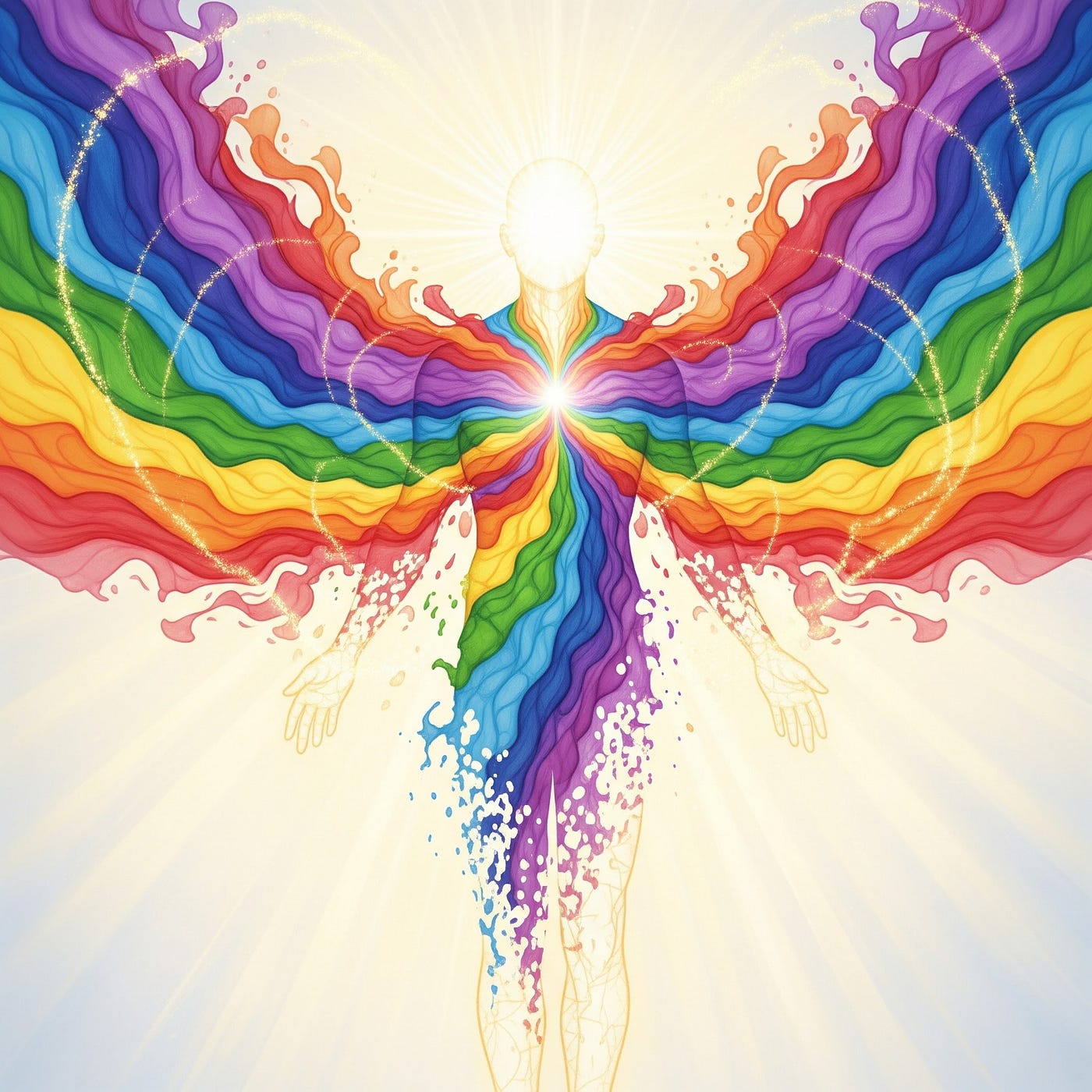
In traditional Dzogchen, the “Great Perfection” teachings of Tibetan Buddhism, Crystals are actually one of the most important teaching metaphors used to explain the nature of reality and the mind.
I will develop in another article more specifically the link between Crystals and Buddhism. Meanwhile you can observe the most significant parallel between these wisdoms in the following table, extracted from the article Christ Consciousness and Buddha Nature, which I deeply recommend if you want to dive deep into the exact relationship between Christ Consciousness and Bouddha Nature.
The Bridge between light and crystals
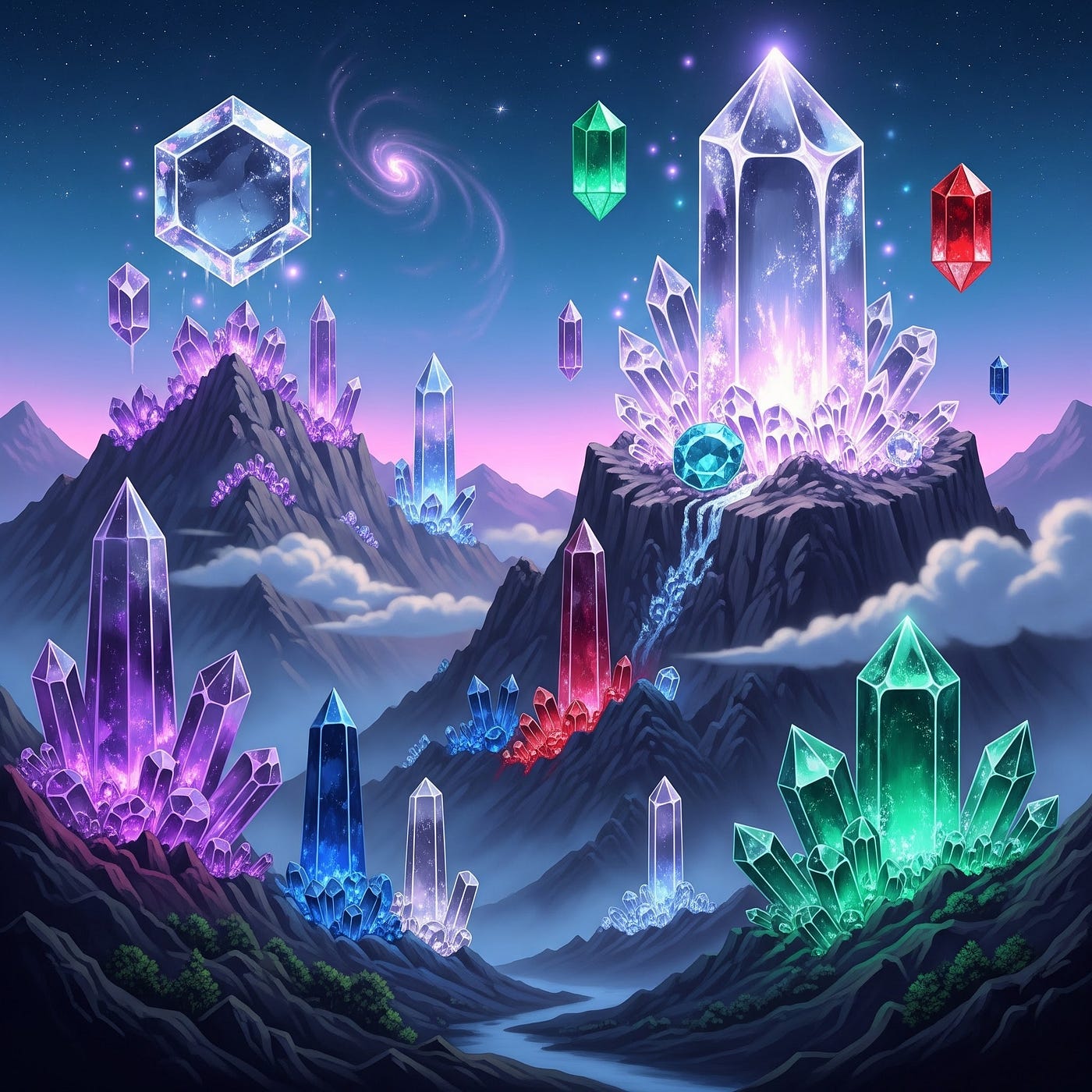
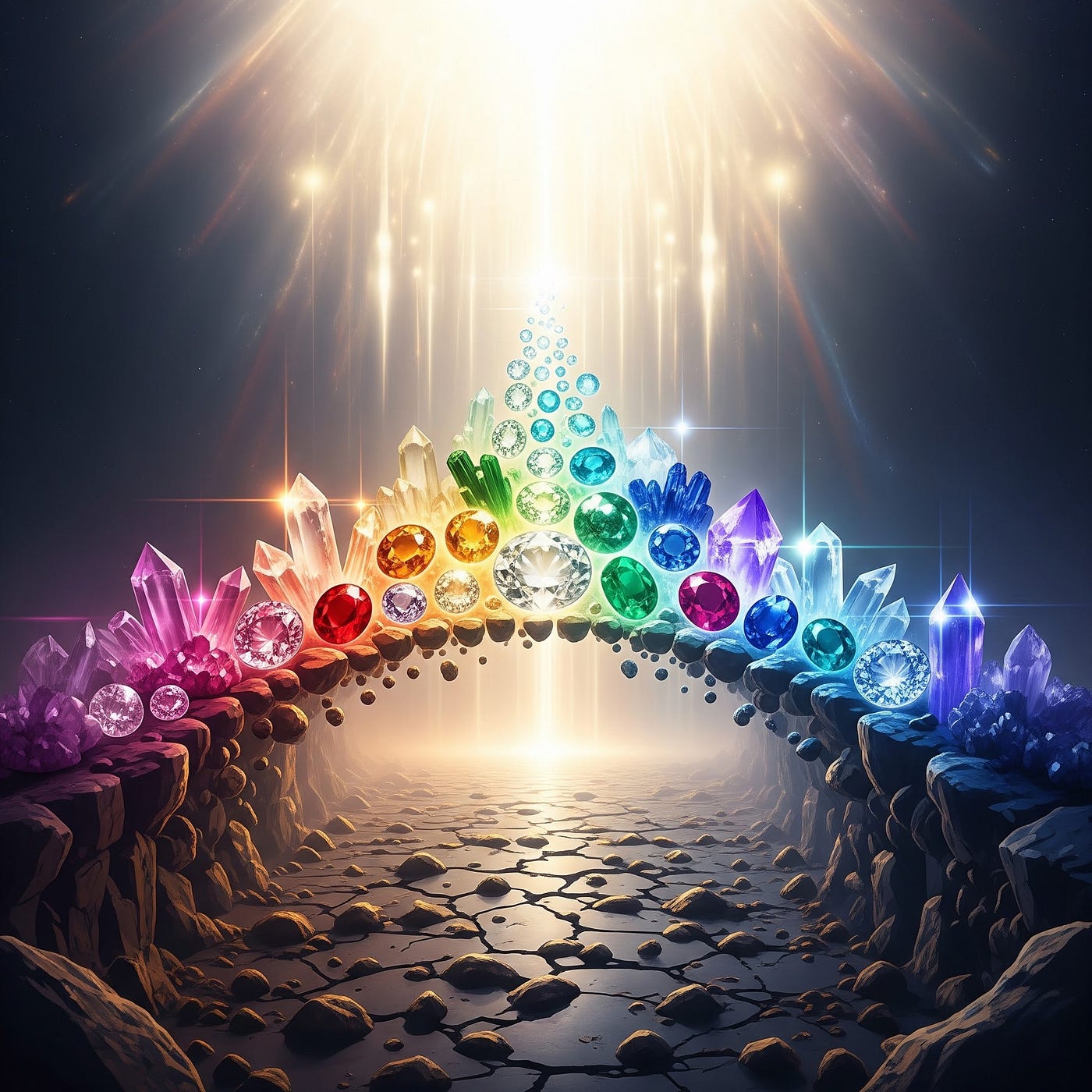
The parallel between light and crystals/gems in Gnostic thought is defined by their unique role as a bridge between the physical and divine realms, and their ability to symbolize the pure, true essence of the cosmos.
Precious stones and crystals serve as a “perfect bridge” between the flawed material world (created by the Demiurge) and the true divine realm (the Pleroma), which is characterized by “pure, unblemished light”. They are physical matter, yet they are able to catch, hold, and reflect pure light.
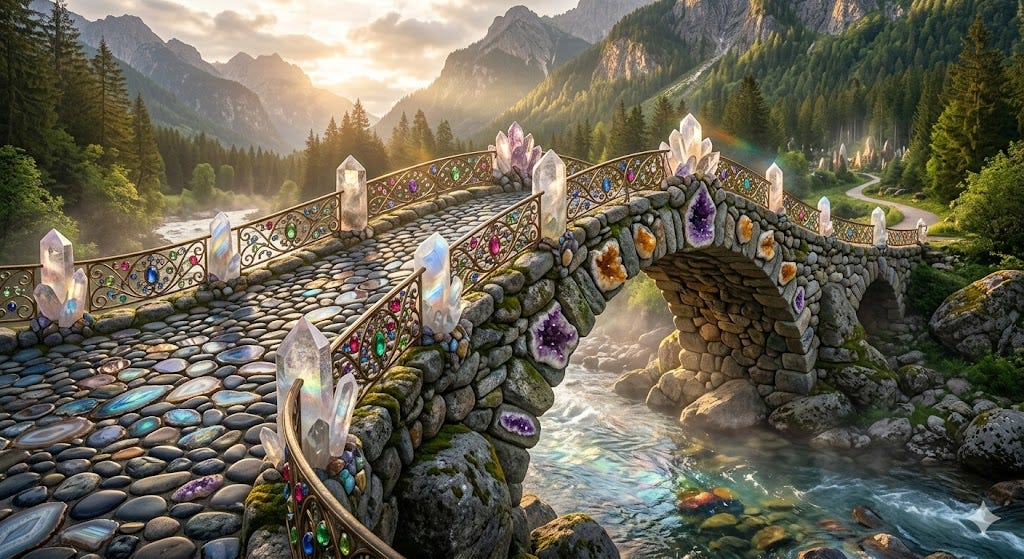
Material Crystallization of the Divine: They are understood not as random objects but as the “material crystallizations of cosmic emanations, passions, and the purifications of the Aeons” (divine entities).
Refraction of the One Light: The supreme God is described as a singular, pure light. Just as a crystal or gem takes a single beam of white light and refracts it into a brilliant spectrum of colors, the Aeons (divine emanations) are seen as the “facets” of the singular God.
Symbol of Immutability: Crystals and gems are clear, hard, and eternal, contrasting with the decaying, flawed nature of the physical world. This symbolizes the incorruptible and unchanging nature of the spiritual realm.
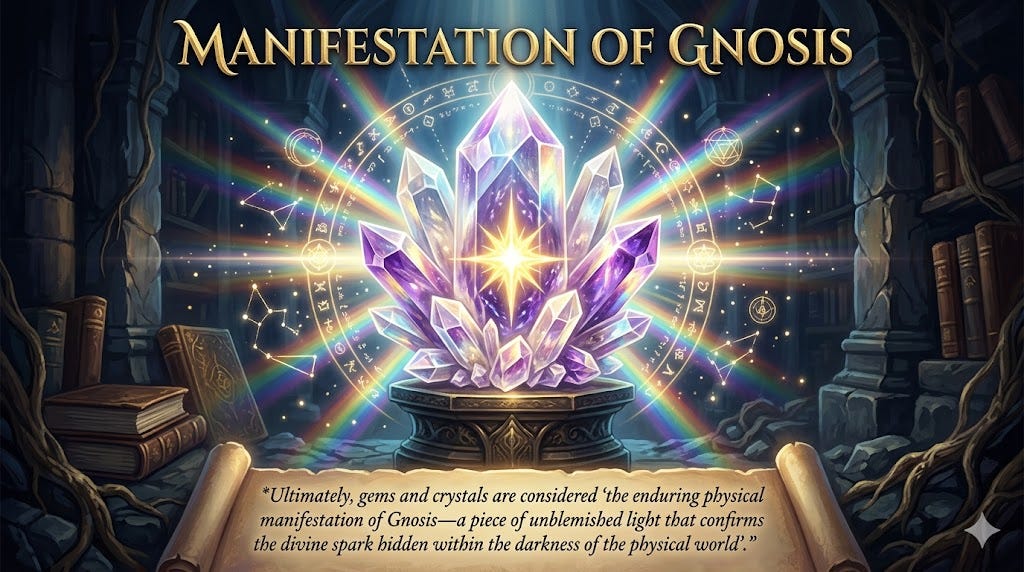
Manifestation of Gnosis: Ultimately, gems and crystals are considered “the enduring physical manifestation of Gnosis — a piece of unblemished light that confirms the divine spark hidden within the darkness of the physical world”.
Gnostic Gems : Amulets and Talismans
Gnostic gems found by archaeologists throughout Egypt and the Greco-Roman world, called also Magic Gems by modern historians, are small engraved stones — usually jasper, hematite, carnelian, or magnetite — used as talismans during Late Antiquity (1st to 4th centuries), they were worn for protection, health, or good fortune.
What Makes a Gem “Gnostic”?
These weren’t just pretty accessories; they were functional tools. To the person wearing one, the gem was a physical shield against the chaotic spiritual forces of the universe.
The Material: They were typically carved from stones believed to have inherent “vibes” or properties, such as jasper (green or red), hematite, carnelian, or obsidian.
The Imagery: The engravings are often bizarre and surreal. You’ll see hybrid creatures that look like they stepped out of a fever dream.
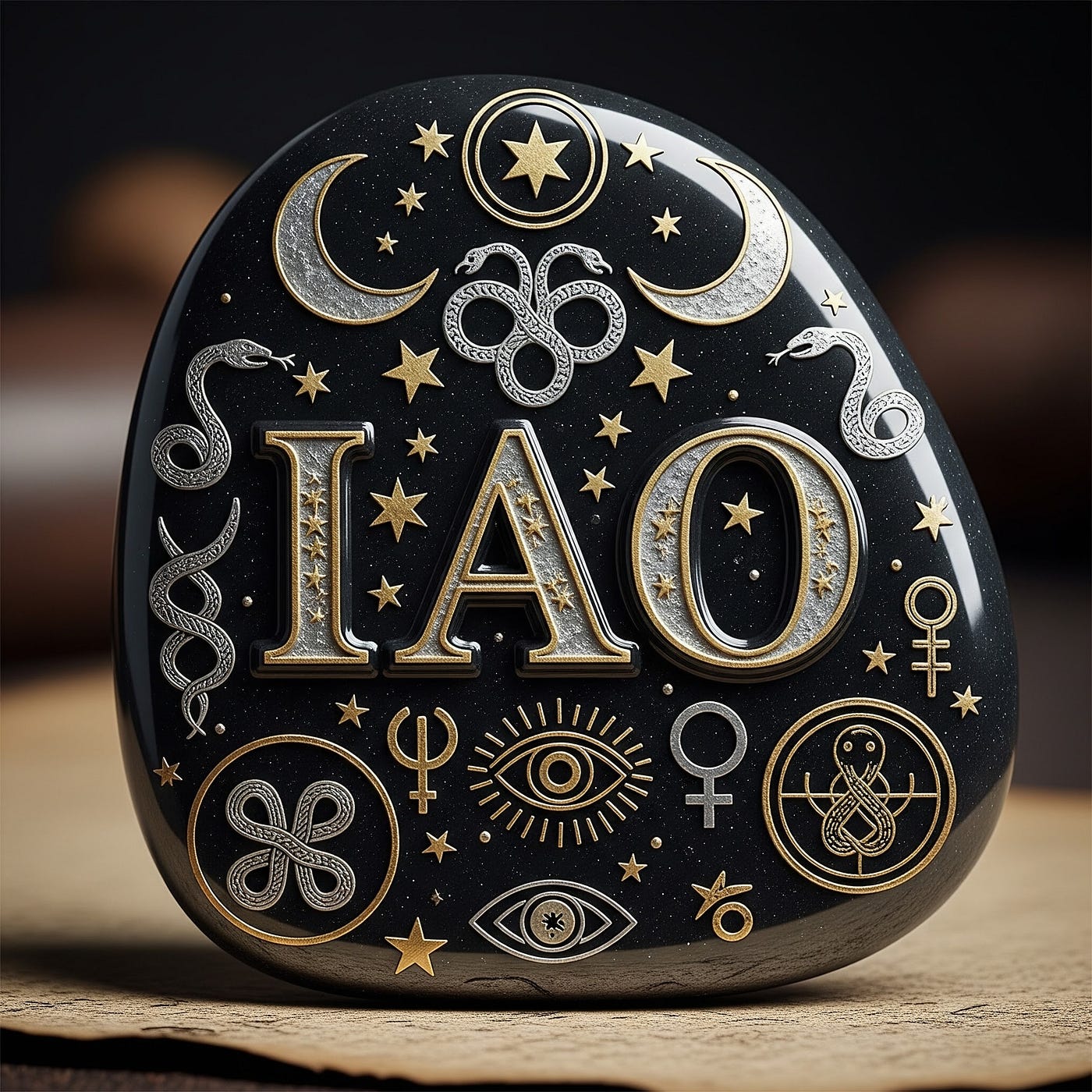
The Power of Words: “Voces Magicae”: What makes these gems unique are the texts engraved on the back or around the images, such as Ablanathanalba (a palindrome meaning “You are our Father” in Hebrew/Aramaic) or Semeseilam (Eternal Sun).
The Magic Vowels: The seven Greek vowels (Α Ε Η Ι Ο Υ Ω) are often repeated in sequences. They symbolize the seven planets and the harmonic sounds of the universe that the soul must use to traverse the celestial spheres.
Despite the name, they weren’t exclusively used by Gnostics. In the 18th and 19th centuries, early archaeologists lumped all these “weird” gems into the Gnostic category because they didn’t fit standard Roman or Greek religion. In reality, these were used by a broad range of people in the Mediterranean who just wanted a little extra magical insurance. Modern scholars usually prefer the term “Magical Gems.”
Magical Intaglios : Gems in The Basilidean Tradition
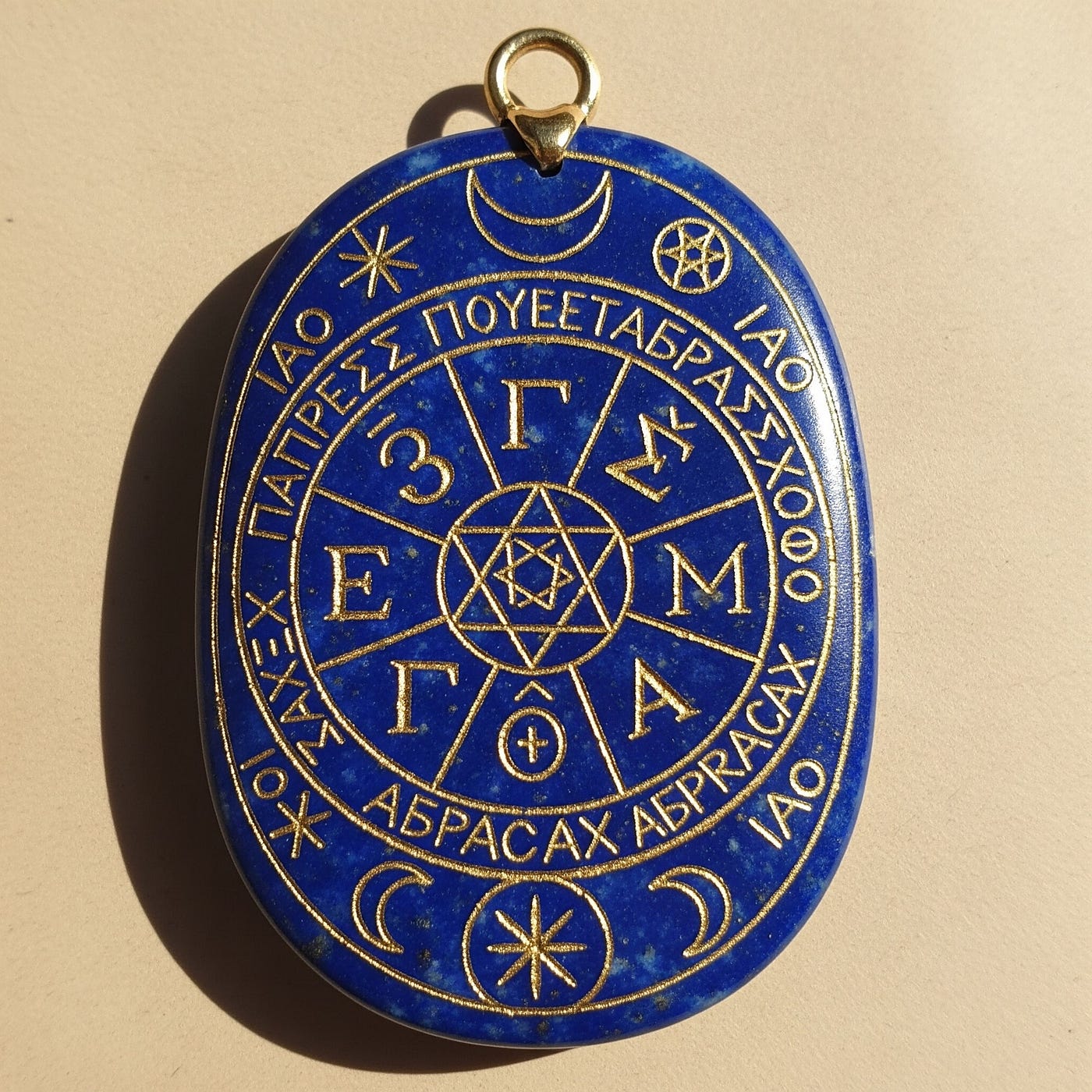
The most concrete mention of stones in the Gnostic universe is found not only in the great philosophical treatises, but also in everyday practice. Gnostic group, and particularly the followers of Basilides (a Gnostic master from Alexandria in the early 2nd century), were famous for their use of engraved stones called Magical Intaglios. The term “intaglio” refers to the specific carving technique where the design is hollowed out or carved into the surface of the stone (the opposite of a cameo, where the design is raised).Practitioners of Gnosticism and related esoteric systems carved specific deities, passwords, and names of power onto semi-precious stones like Jasper, Hematite, Chalcedony, Lapis-lazuli, Emerald, Carnelian, and Agate.
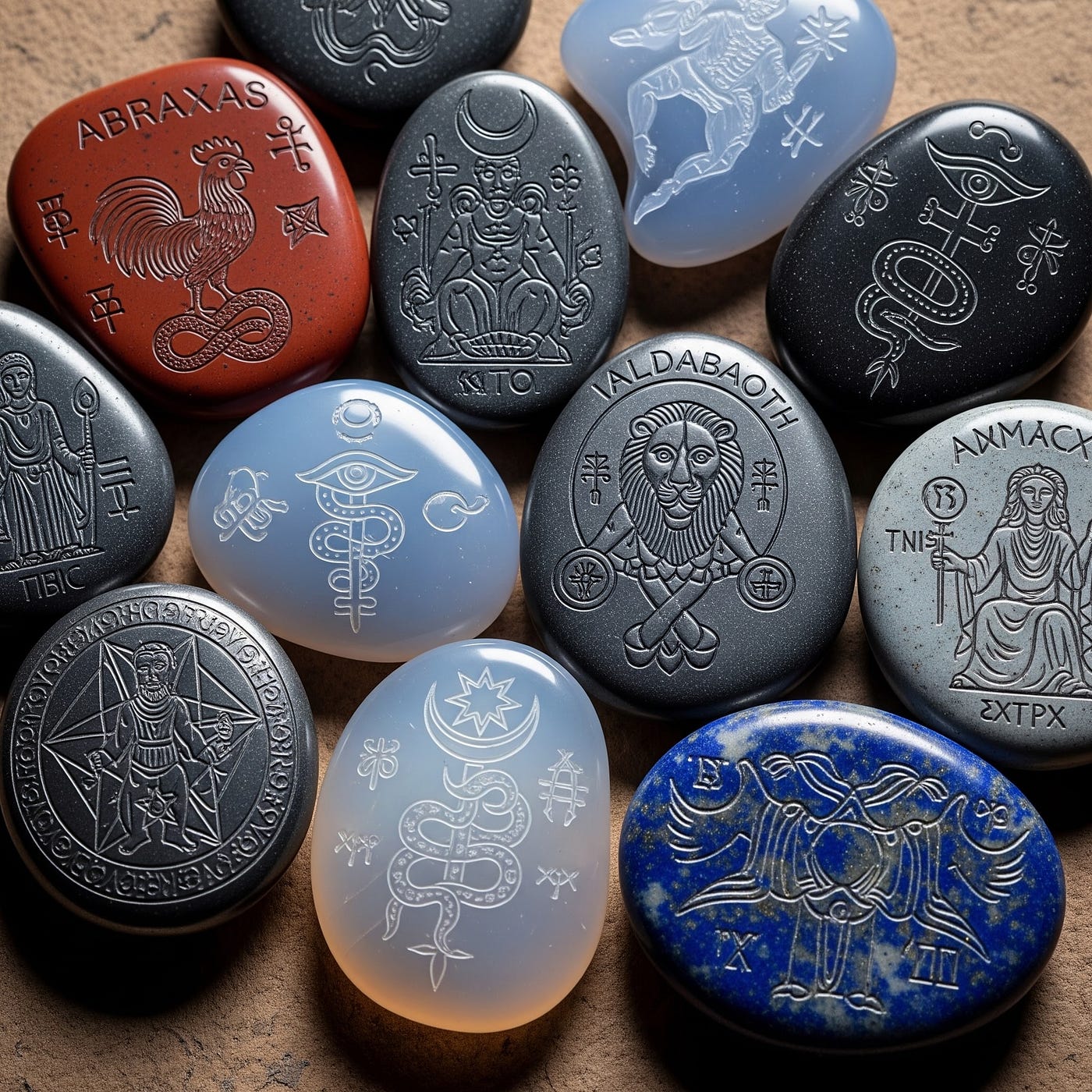
Key Figures : Abraxas, Chnoubis, Iao
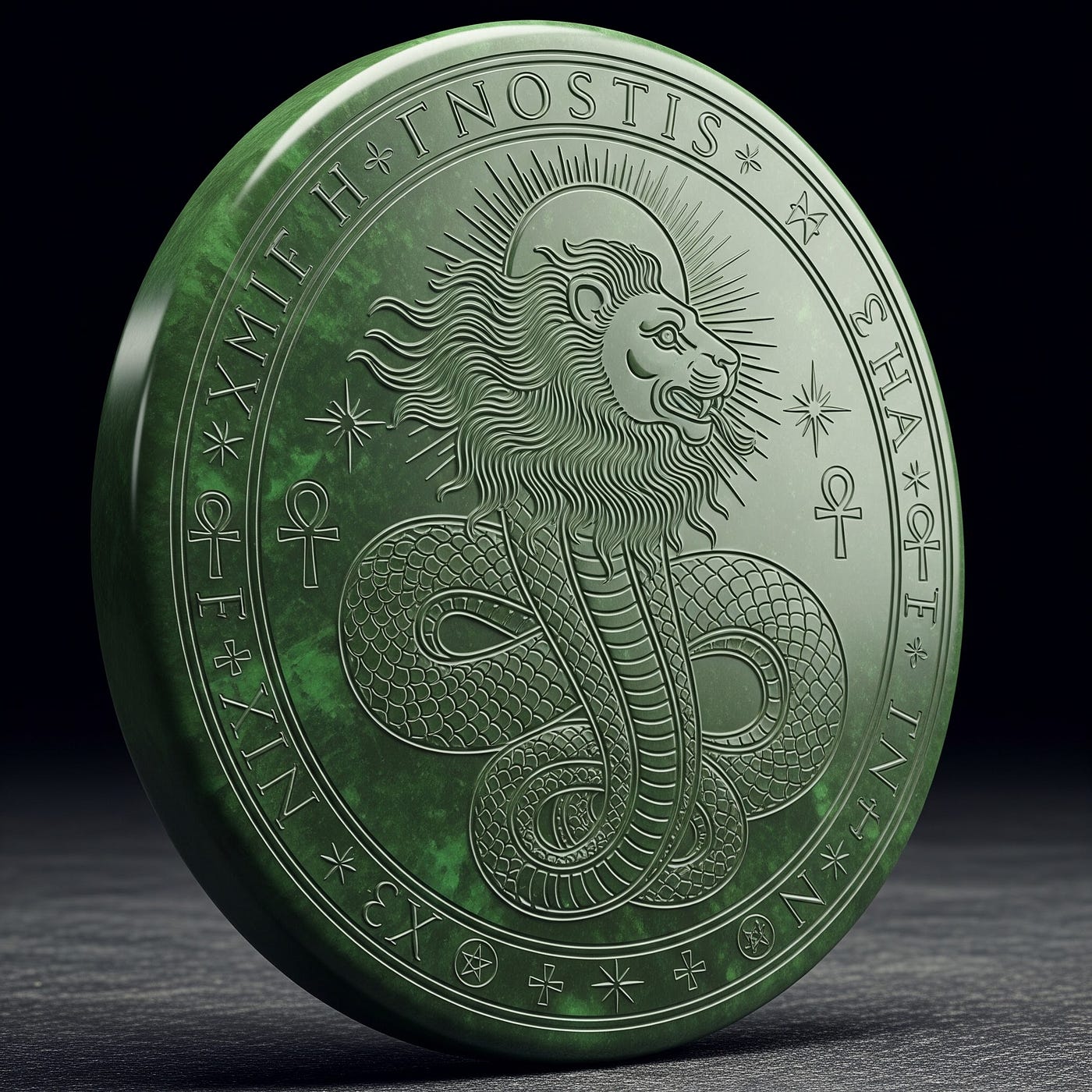
Jasper, Agate, Lapis-lazuli, Emerald, or Carnelian were often used as protective talismans. These stones frequently featured the deity Abraxas (a rooster-headed figure with serpent legs) or Chnoubis (a lion-headed serpent representing the Demiurge, Yaldabaoth, found in texts like the Apocryphon of John. Believers wore these crystal amulets for protection, healing, and to help the soul navigate past the hostile rulers (Archons) of the material cosmos after death.
Abraxas (or Abraxax): A supreme or cosmological deity often depicted with a human body, a rooster’s head and serpent legs. The numerical value of the Greek letters in Abraxas is 365, representing the number of days in the year and the number of heavens in their cosmology.
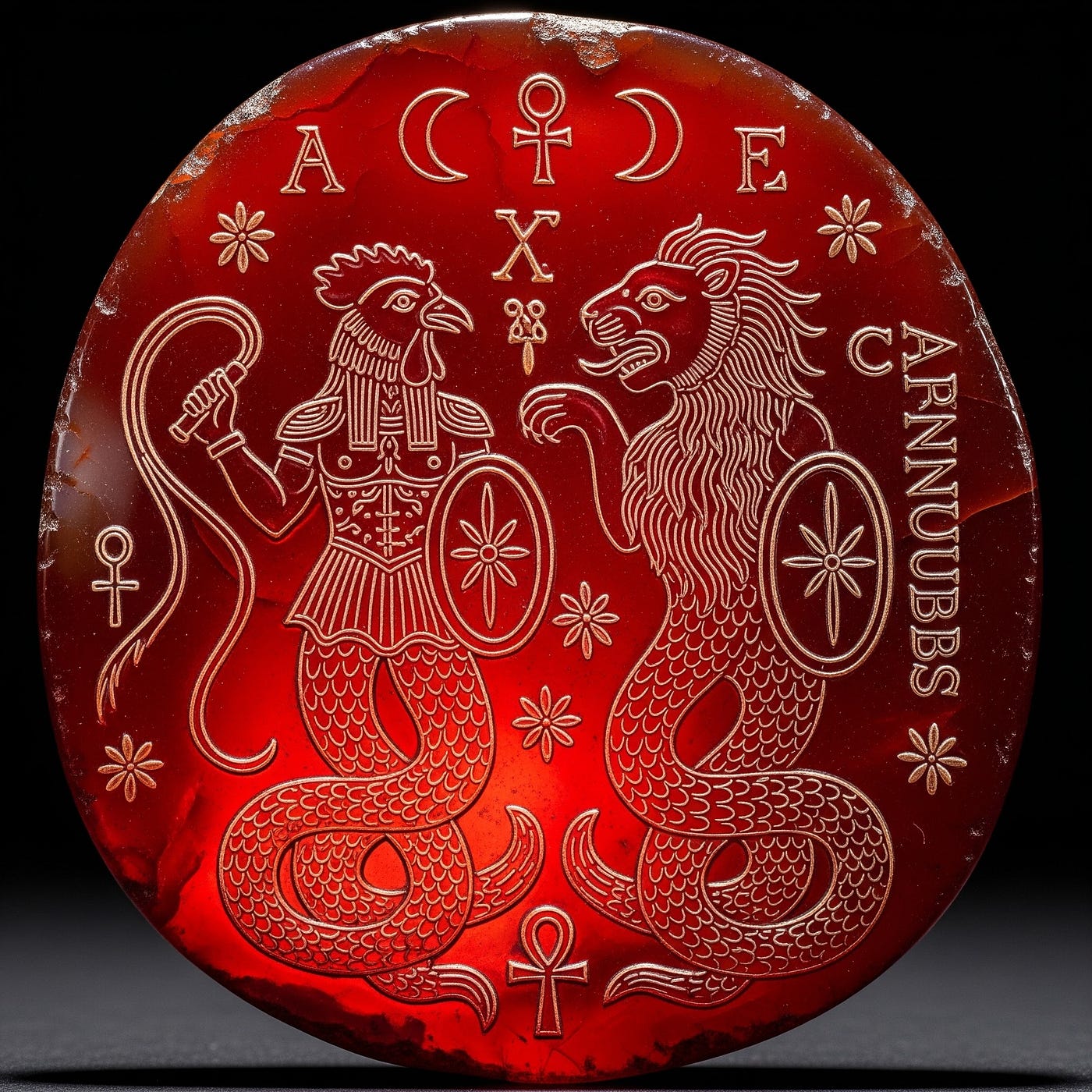
Chnoubis: A serpent with a radiant lion’s head with solar rays emanating from his head, often engraved on green stones, reputed to protect against physical illnesses (especially stomach ailments) and linked to the celestial realm.
Iao: A Greek transliteration of the Hebrew name for God (Yahweh), often used as a word of power to command spirits.
Why Did People Wear Them?
People didn’t just wear them to be edgy; they had specific “user requests” for the universe:
Health: Specifically, stones engraved with the deity Chnoubis were reputed to protect against physical illnesses like stomach ailments
Protection: Worn as talismans to guard the wearer against bad spirit
Spiritual Navigation: They were believed to help the soul navigate past the hostile rulers (Archons) of the material cosmos after death.
Ritualistic Use: They had specific deities (Abraxas or Chnoubis), passwords, and names of power carved onto them.
Conclusion
Ultimately, the symbolic and practical role of precious stones and crystals in Gnostic thought is defined by their unique status as a “perfect bridge” between the material cosmos, seen as flawed and chaotic, and the transcendent, luminous Pleroma. Textual evidence from the Nag Hammadi Library reveals this function on a cosmological level: in The Pistis Sophia, stones are described not as random objects, but as the material crystallizations of cosmic emanations and the purifications of divine Aeons, providing a fundamental reason for their existence within creation. In the Hymn of the Pearl, the Robe of Glory is adorned with stones like diamond and sapphire, powerfully symbolizing the soul’s restored, radiant, and true divine nature upon achieving salvation.
This symbolic luminescence transitions directly into religious practice through the use of Gnostic Gems and Magical Intaglios. Used extensively by Gnostic groups like the Basilideans, these engraved stones transformed spiritual metaphor into tangible tools, worn for protection against physical illnesses and hostile spiritual entities, and to aid the soul in its difficult navigation past the Archons after death. This ancient tradition of attributing intrinsic protective and healing powers to specific mineralogy finds a powerful echo in contemporary lithotherapy. While stripped of the Gnostic cosmological framework — the Pleroma and the Archons — modern crystal healing maintains the fundamental principle that certain stones (such as Jasper, Carnelian, and Lapis-lazuli, which were central to the Gnostic tradition) possess specific energies or frequencies capable of influencing the physical, emotional, and spiritual well-being of the wearer.
Therefore, from the sublime architecture of the highest spiritual realms described in texts like the Apocryphon of John to the personal, protective amulet featuring figures like Abraxas or Chnoubis, gems and crystals stand as the enduring physical manifestation of Gnosis — a piece of unblemished light that confirms the divine spark hidden within the darkness of the physical world.
References
- Pistis Sophia, Chapter 92, website Gnosis.ad
- Hymn of the Pearl, The Acts of Thomas, The Hymn of Judas Thomas the Apostle, gnosis.ad
- The Secret Revelation of John
- On the Origin of the World
- Le serpent léontocéphale Chnoubis et la magie de l’époque romaine impériale, Véronique DASEN & Árpád M. NAGY, Anthropozoologica 47 (1) — Pages 291–314
- Symbolique Templière
- Elements of Gnostic Concepts in Depictions on Magical Gems, GRAŻYNA BĄKOWSKA-CZERNER, The Polish Journal of the Arts and Culture
- Christ Consciousness and Buddha Nature, An illustrated journey of the exact relationship between CC and BN, David Senouf, Medium, 2025
Original on Medium · Sarha Desalme · May 10, 2026
Comments
Discussion via giscus and GitHub Discussions.