The Gnostic Library
Primary Texts — Sources — Categories — Classification
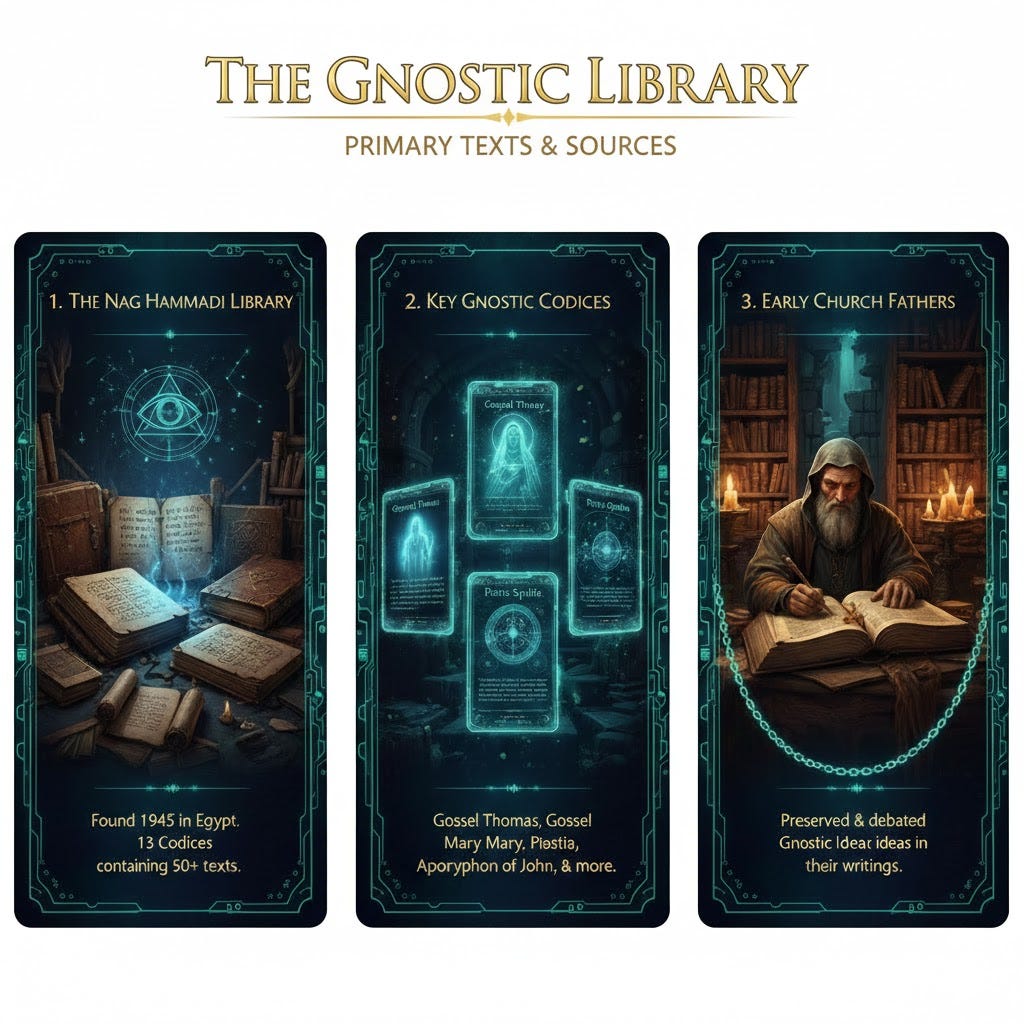
Abstract
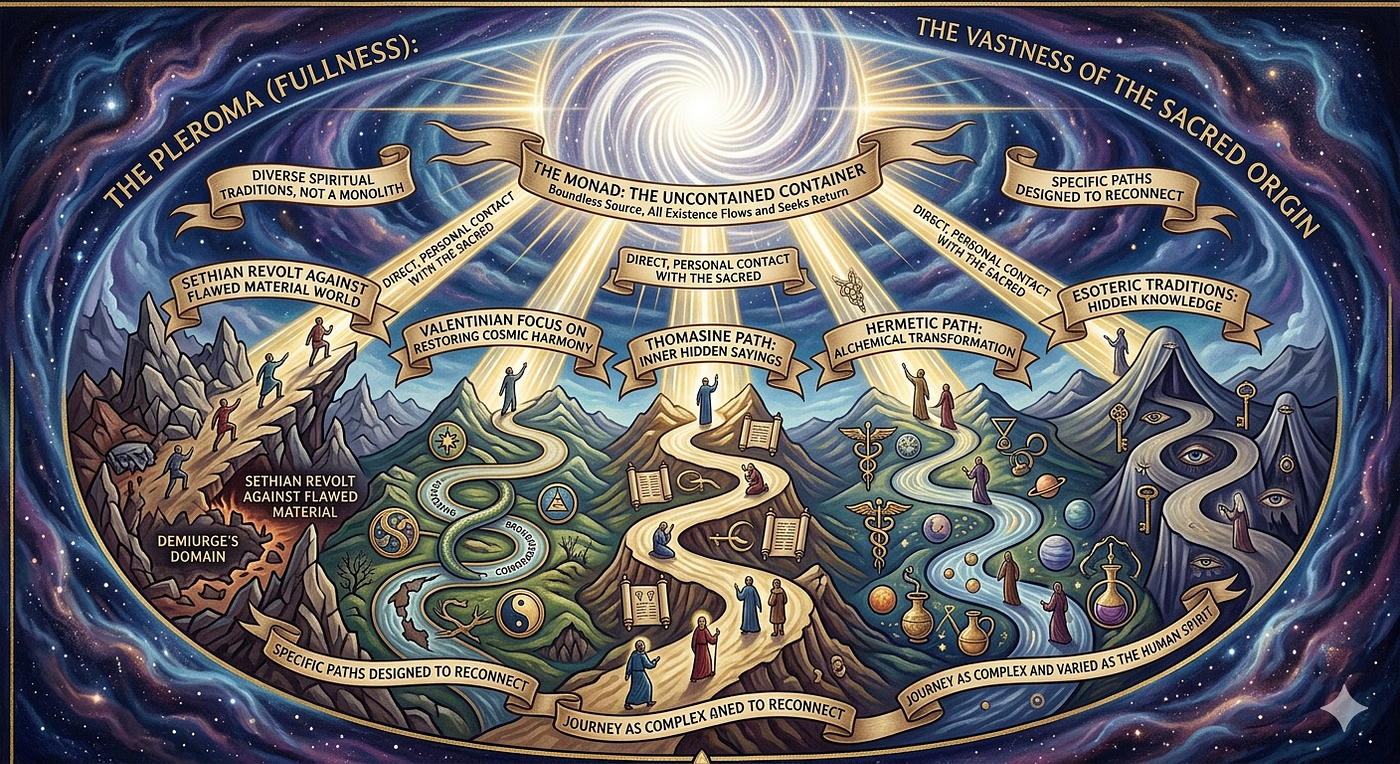
Gnosticism is best understood not as a monolithic religion, but as a rich landscape of diverse spiritual traditions, each offering a unique way to bridge the gap between human experience and the divine. While every school shares the core objective of achieving direct, personal contact with the sacred, their approaches vary from the radical revolt of the Sethians against a flawed material world to the Valentinian focus on restoring cosmic harmony.
At the center of this spiritual ecosystem lies the Monad, the Uncontained Container — a boundless source from which all existence flows and to which it seeks to return. By categorizing these ancient writings, we see that the different schools — whether Thomasine, Hermetic, or Esoteric — are not conflicting voices, but specific paths designed to reconnect us with that ultimate origin. The diversity of these perspectives is a testament to the vastness of the Pleroma (Fullness), proving that the journey back to the source is as complex and varied as the human spirit itself.
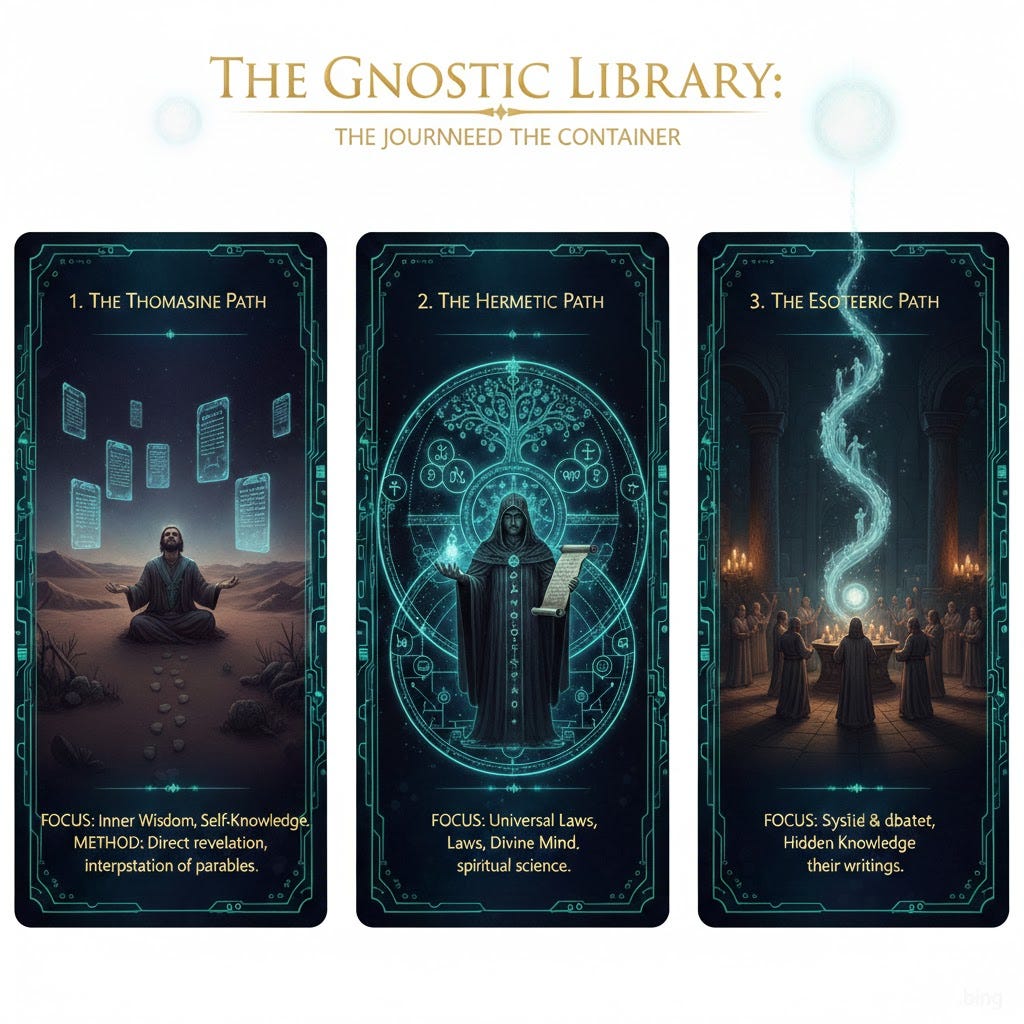
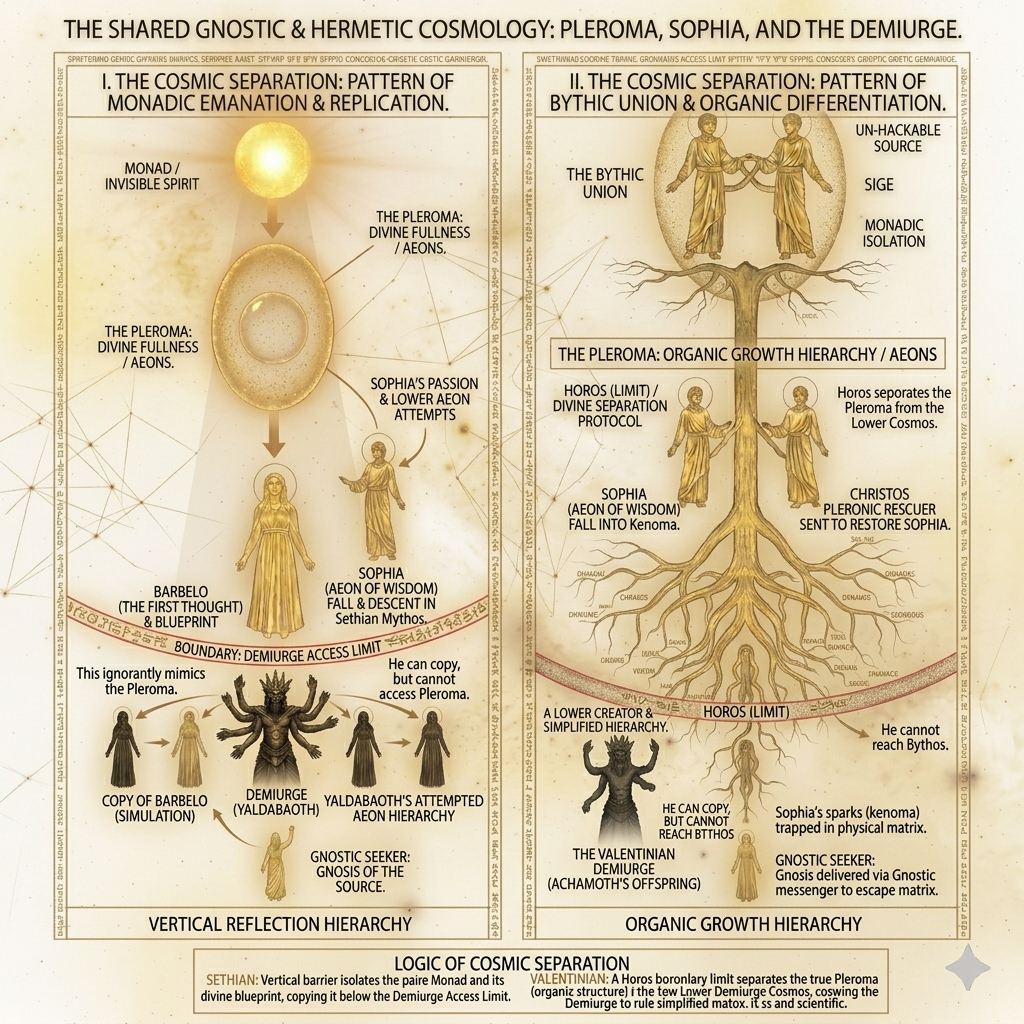
This journey is defined by a shared, layered cosmology that explains our current state of separation. According to these traditions, the Monad emanates a series of divine beings and qualities known as Aeons, which together constitute the Pleroma, or the Fullness of the divine realm. Our physical reality, however, is the result of a cosmic crisis — often involving the fall of Sophia, the Aeon of Wisdom — which led to the rise of the Demiurge, an ignorant or lower creator.
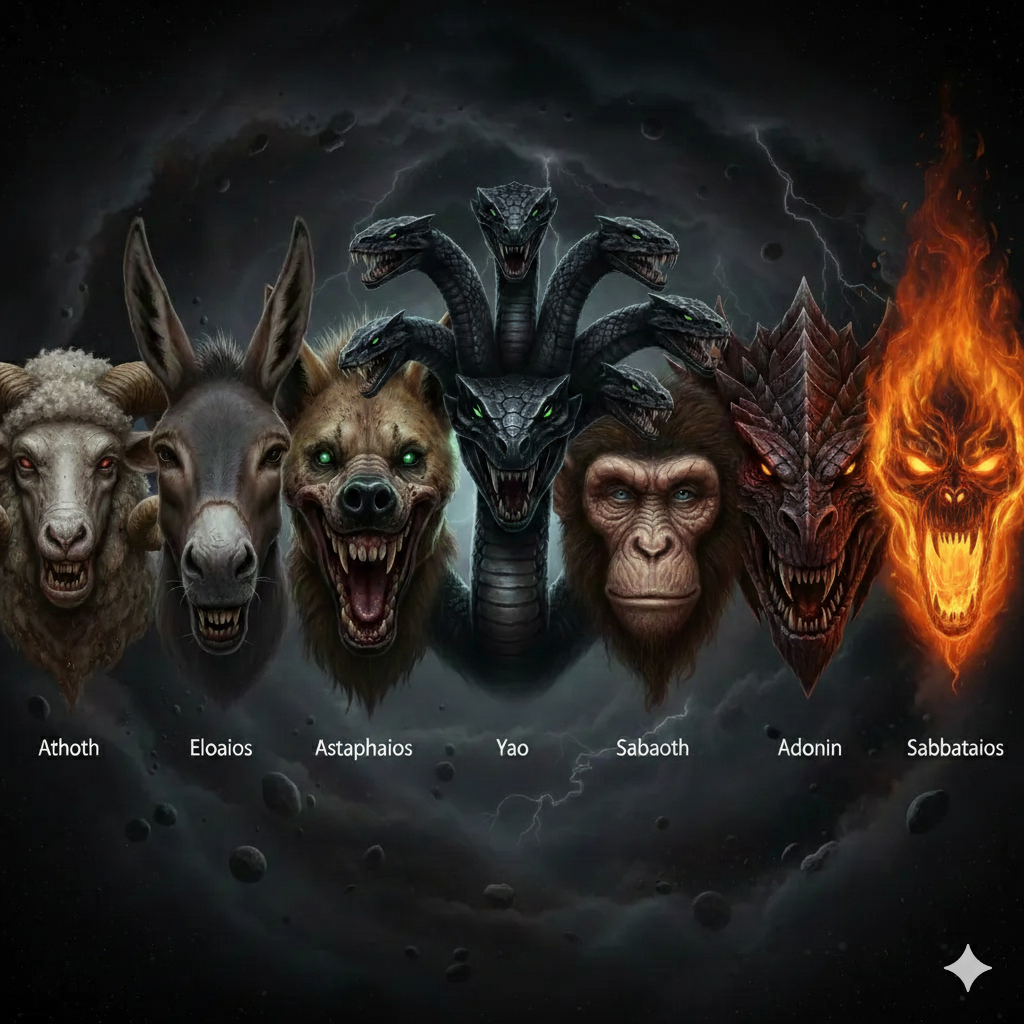
This multifaceted figure described by seven animals, along with his bureaucratic servants known as Archons, governs the material world and the planetary spheres, acting as gatekeepers who obscure the soul’s divine origin. Salvation, therefore, is the process of gaining the knowledge (Gnosis) necessary to navigate past these celestial rulers and ascend back through the Aeonic layers to the ultimate source.
Seven Animal and Demonic figures of the Gnostic Demiurge Yaldabaoth
Main Scriptures
Gnostic Scriptures Categories
They represent the major theological schools, literary genres, and mystical traditions within Gnosticism. These categories help scholars and practitioners differentiate between various worldviews regarding the divine, the soul, and the cosmos.
🟣 Sethian
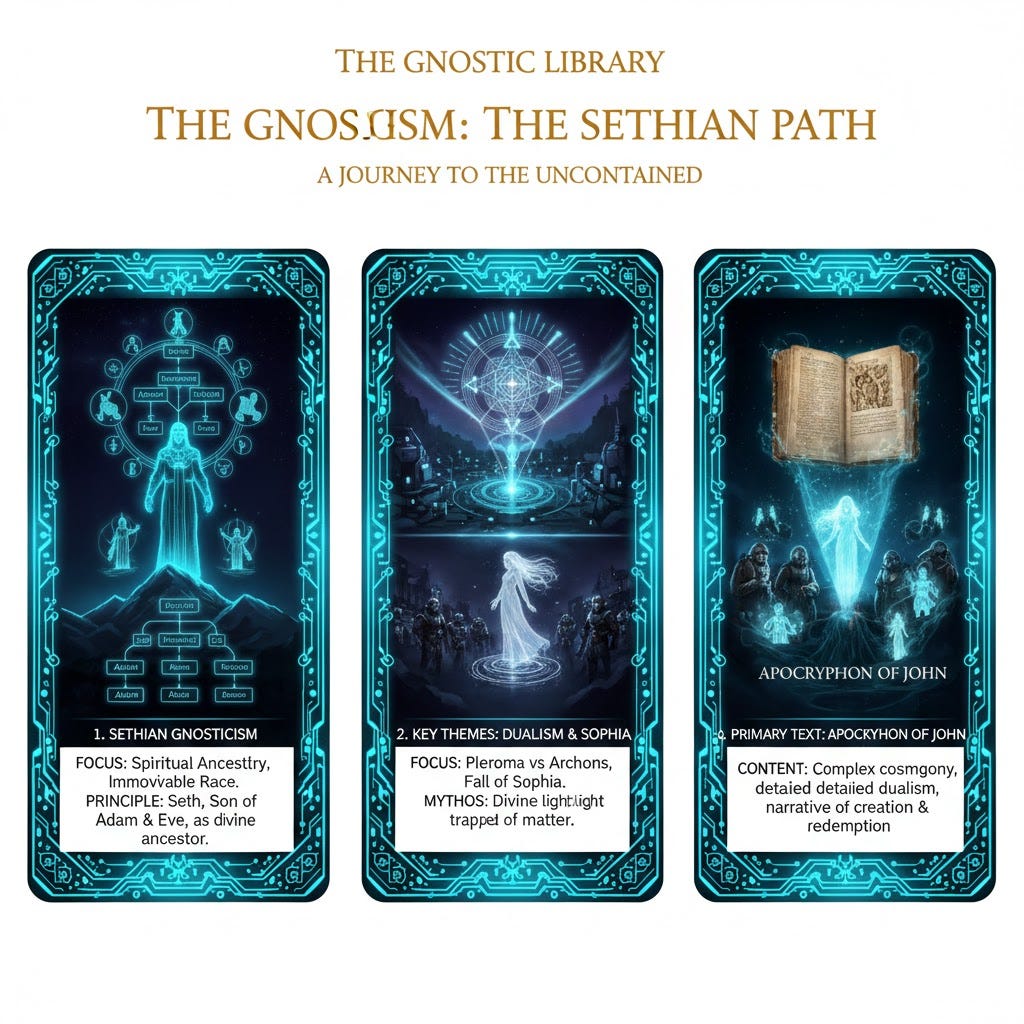
Often considered the “classic” Gnosticism, Sethianism focuses on Seth, the third son of Adam and Eve, as the spiritual ancestor of the “immovable race.”
Key Themes: A complex cosmogony involving the “Triple-Male Child,” a sharp dualism between the light of the Pleroma and the darkness of the Archons (rulers), and the role of Sophia (Wisdom) in the fall of divine light into matter.
Example: Apocryphon of JohnApocryphon of John.
🟡 Valentinian
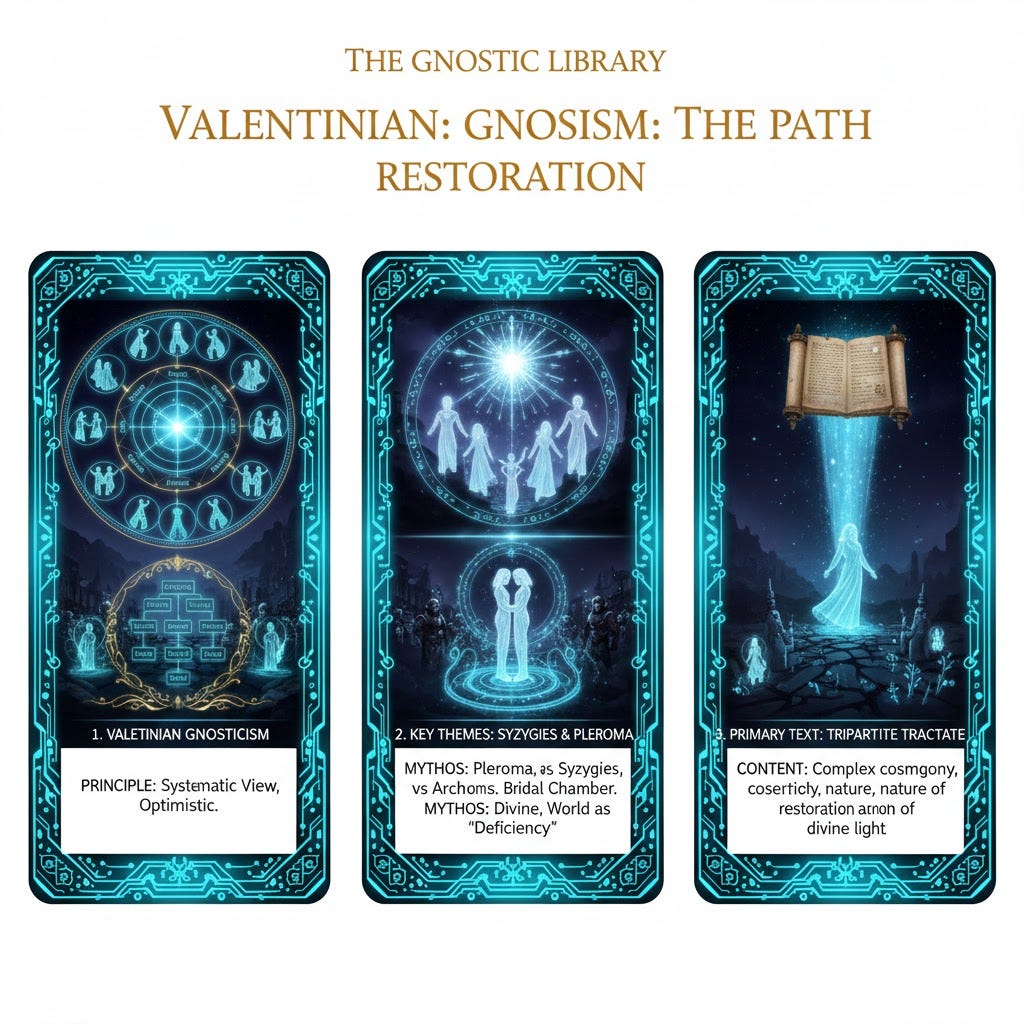
Founded by the teacher Valentinus, this school is characterized by its systematic and somewhat more “optimistic” view of the universe compared to Sethianism.
Key Themes: The Pleroma (Divine Fullness) as a series of syzygies (male-female pairs of Aeons), the “Bridal Chamber” as a primary sacrament for union with the divine, and a view of the world not as purely evil, but as a “deficiency” needing restoration.
Example: Tripartite TractateTripartite Tractate.
🟢 Thomasine
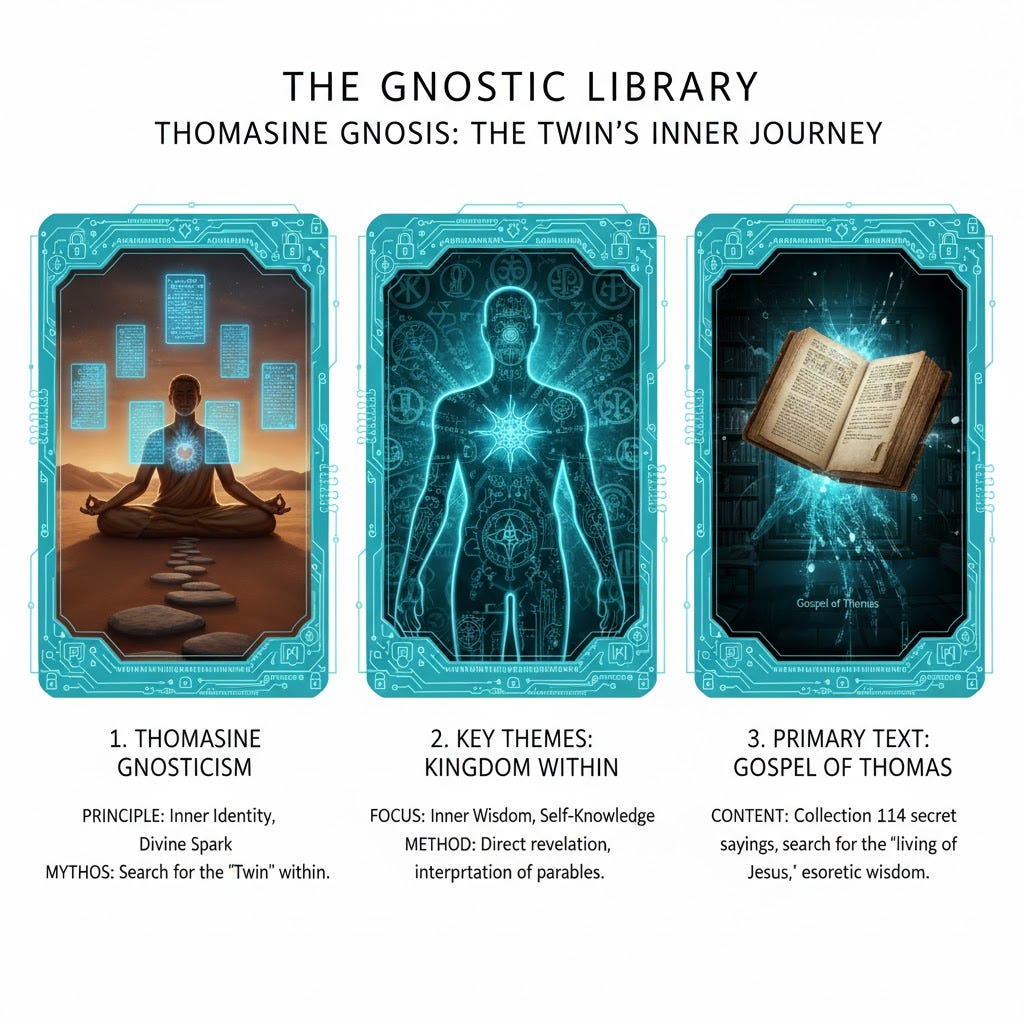
This tradition is linked to the Apostle Thomas (“the Twin”) and emphasizes the discovery of the “divine spark” within the self through secret knowledge rather than external ritual or traditional theology.
Key Themes: The search for inner identity, the “kingdom within,” and the idea that salvation comes through the correct interpretation of secret sayings.
Example: Gospel of ThomasGospel of Thomas.
🔵 Dialogue (Revelation Dialogue)
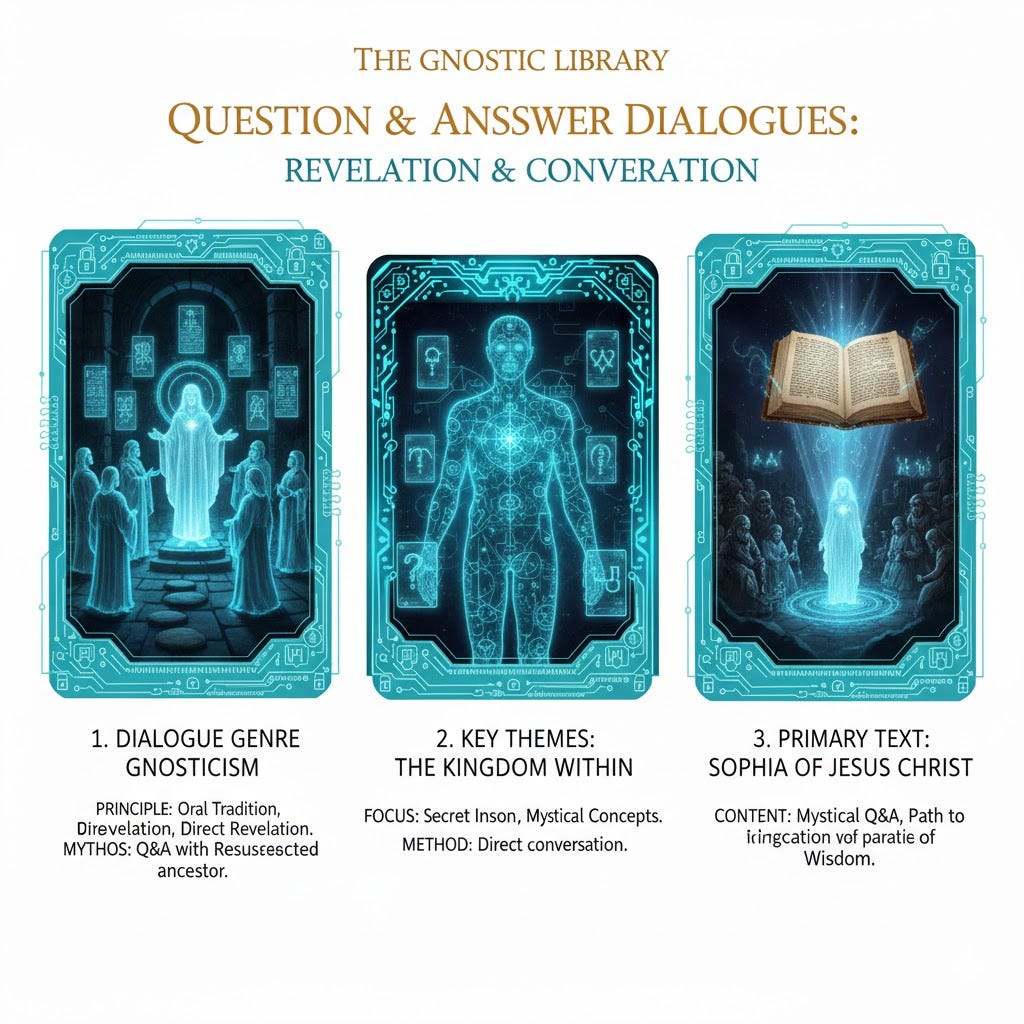
This is a literary genre rather than a specific theological school. In these texts, the resurrected Christ or a divine figure engages in a “Question and Answer” session with his disciples.
Key Themes: Secret oral traditions, the path to the Kingdom, and the clarification of mystical concepts through direct conversation with the Savior.
Example: Sophia of Jesus ChristSophia of Jesus Christ.
🔴 Esoteric
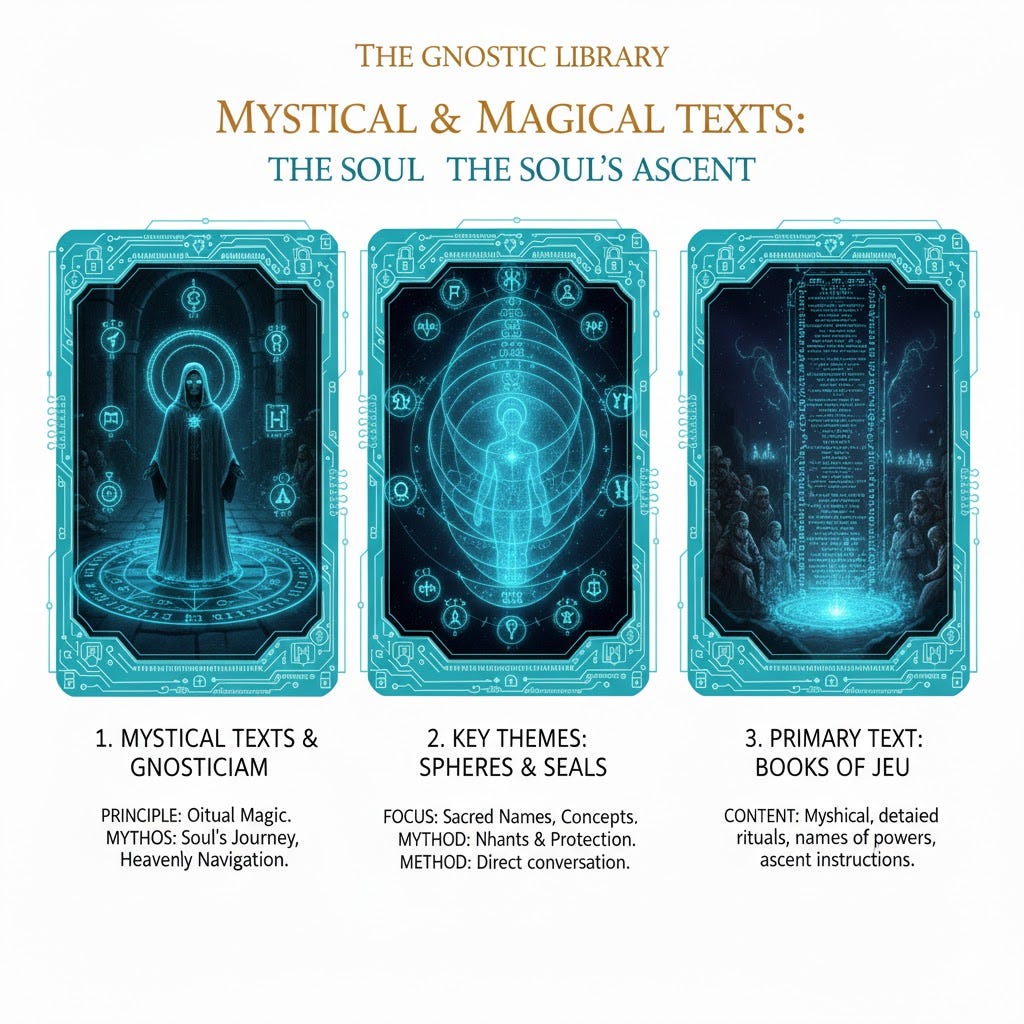
These texts focus heavily on ritual, mystical formulas, and diagrams. They are often highly technical, detailing the specific names of powers, seals, and chants required to safely navigate the heavens during the soul’s ascent.
Key Themes: The soul’s journey through the various spheres (spheres of heaven), the use of sacred names for protection, and ritual magic.
Example: Books of JeuBooks of Jeu.
⚪ Hermetic
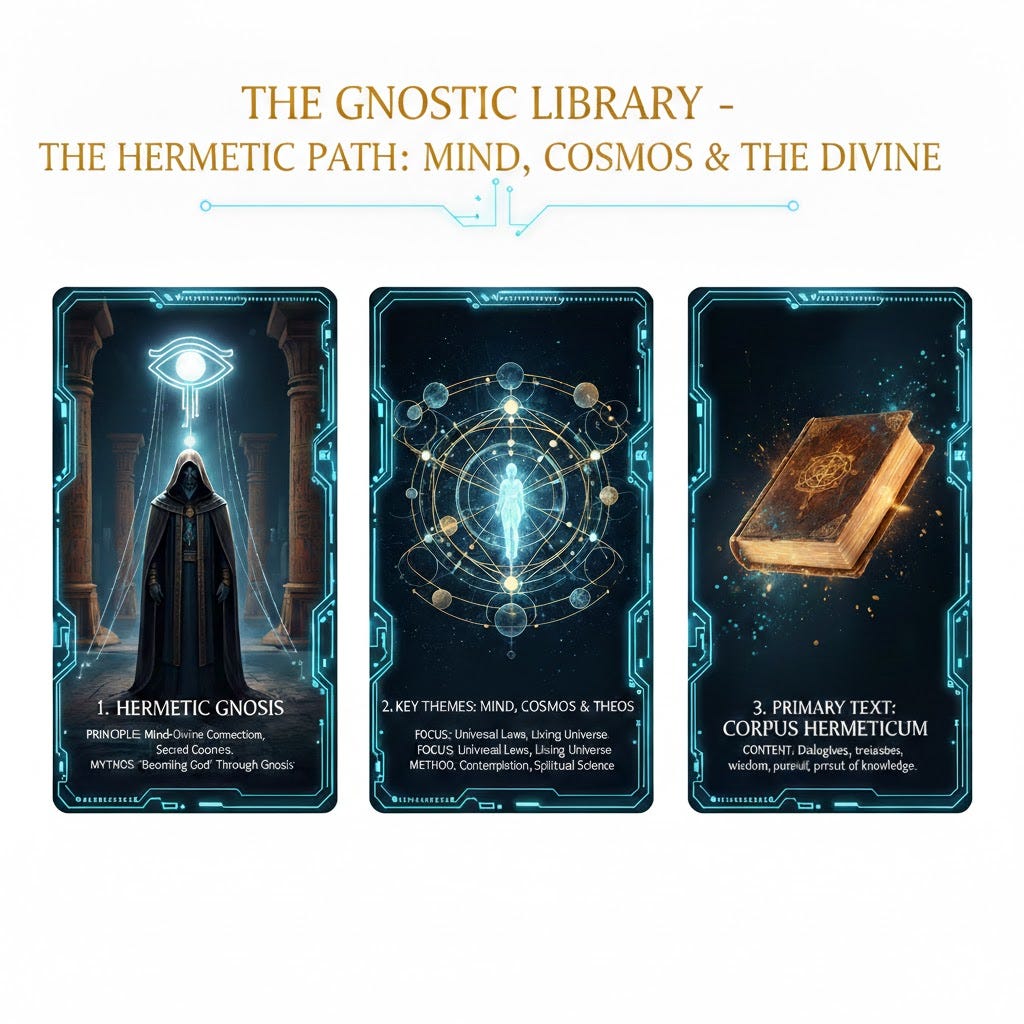
Strictly speaking, Hermeticism is a parallel sister tradition to Gnosticism, originating in Egypt and attributed to Hermes Trismegistus.
Key Themes: The relationship between the Mind (Nous) and the Divine, the pursuit of “becoming God” through gnosis, and the belief that the universe is a living, sacred organism reflecting its creator.
Example: Corpus HermeticumCorpus Hermeticum.
⚪ Poetic / Hymnic
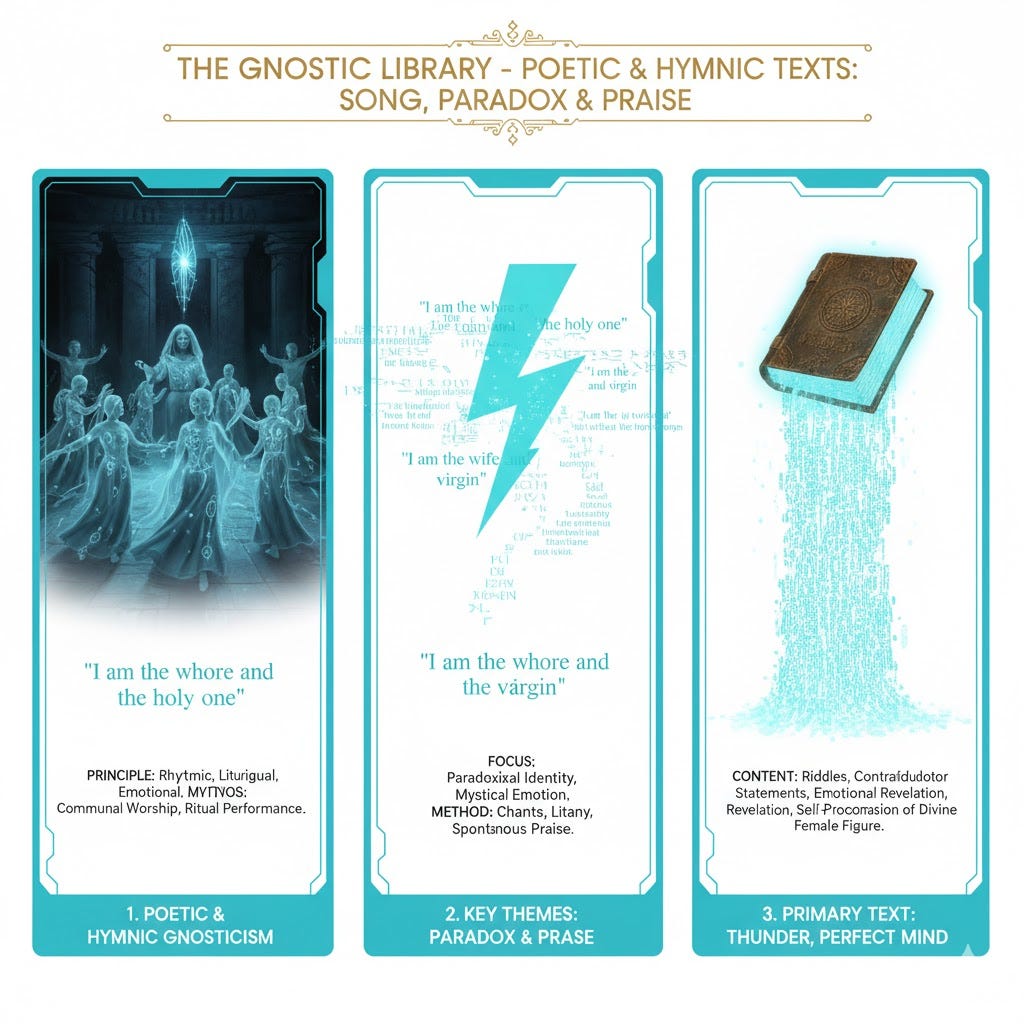
These are texts characterized by their rhythmic, paradoxical, or liturgical nature. They were likely used in communal worship or ritual performance rather than for purely philosophical study.
Key Themes: Paradoxical statements of identity (e.g., “I am the whore and the holy one”), liturgical dance, and emotional, mystical outbursts of praise.
Example: The Thunder, Perfect MindThe Thunder, Perfect Mind.
In depth Classification
The following details provide an in-depth classification of the major groups and styles found in the Gnostic library, explaining their unique perspectives on the universe, the soul, and the journey toward light.
🟣 Sethian: The Classic Rebellion
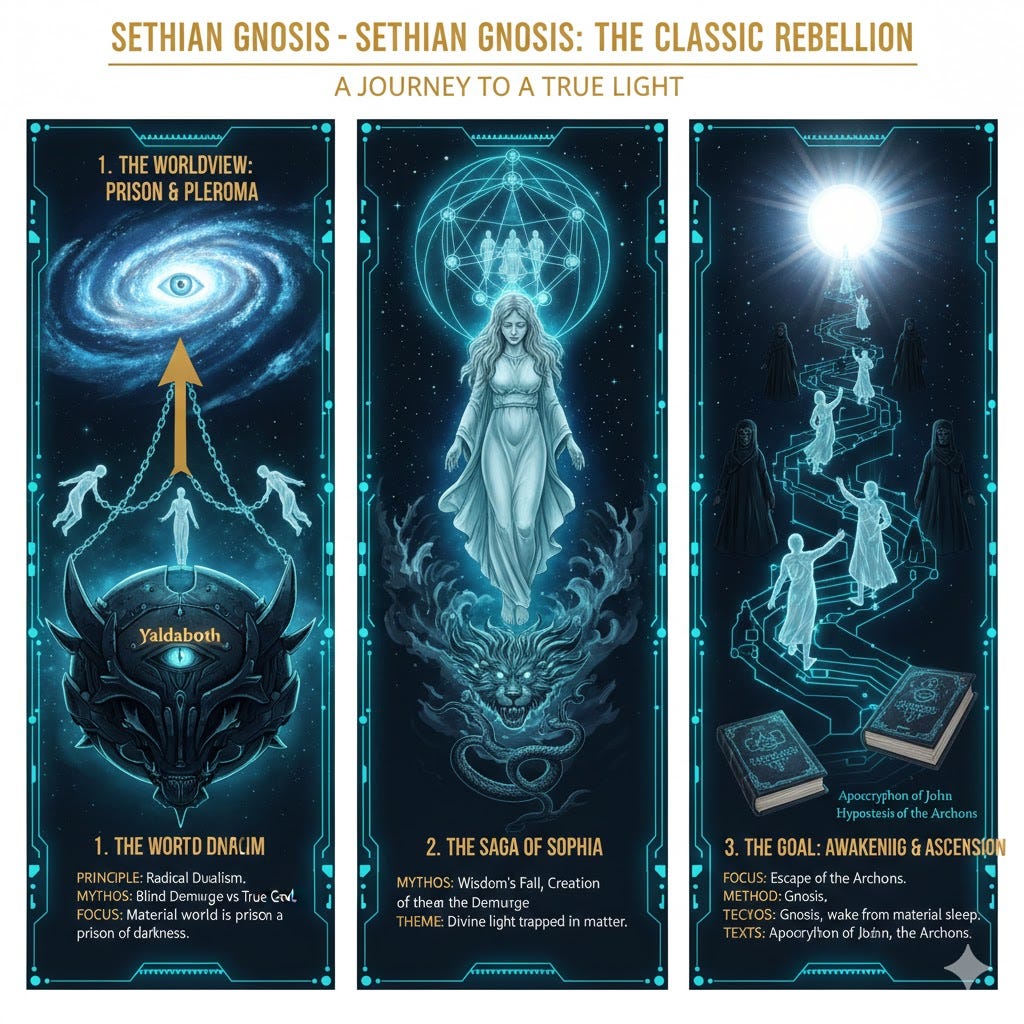
The Sethians are often considered the most “radical” of the Gnostics. They named themselves after Seth, the third son of Adam, whom they viewed as the ancestor of a special group of people who possess a divine spark.
The Worldview: They believed the physical world was created by a clumsy, arrogant, and lower god called the “Demiurge” (often named Yaldabaoth). This creator is not the True God but a blind power who mistakenly thinks he is alone. Consequently, the material world is seen as a prison or a dark reflection of a much higher, perfect realm of light.
The Story of Wisdom: A central character is “Sophia” (Wisdom), a high divine being who accidentally fell or reached too far, leading to the creation of the Demiurge and the trapping of divine light in human bodies.
The Goal: To wake up from the “drunkenness” or “sleep” of this world, realize that our true home is in the high realm of light, and eventually escape the control of the dark rulers who guard the stars.
Notable Texts: Apocryphon of John, Hypostasis of the Archons.
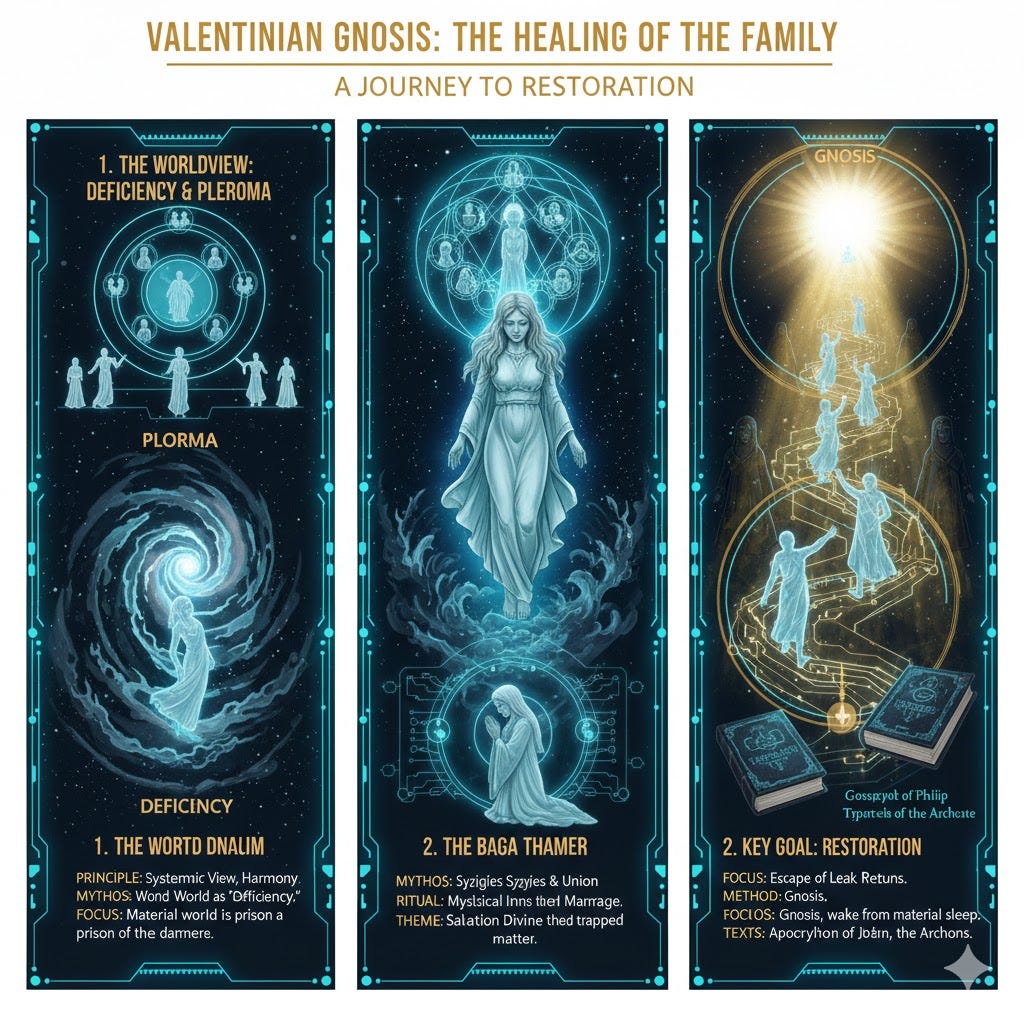
🟡 Valentinian: The Healing of the Family
Founded by the teacher Valentinus, this group was more sophisticated and sought to bridge the gap between Gnostic thought and the early mainstream church.
The Worldview: Instead of seeing the world as a mistake created by an evil god, they saw it as a “deficiency” — a system that is simply out of balance. They viewed the divine realm (the Pleroma) as a vast family of “Aeons” (divine qualities like Mind, Truth, and Life) that live in perfect harmony.
The Bridal Chamber: Their most famous concept is the “Bridal Chamber,” a symbolic or ritual space where the soul is reunited with its divine “other half.” Salvation is a marriage between the human spirit and its heavenly twin.
The Goal: Not just to escape, but to “restore” the fullness. They believed that by bringing knowledge (Gnosis) to the world, the “leak” in the divine system is plugged, and everything returns to its rightful, harmonious state.
Notable Texts: Gospel of Philip, Gospel of Truth, Tripartite Tractate.
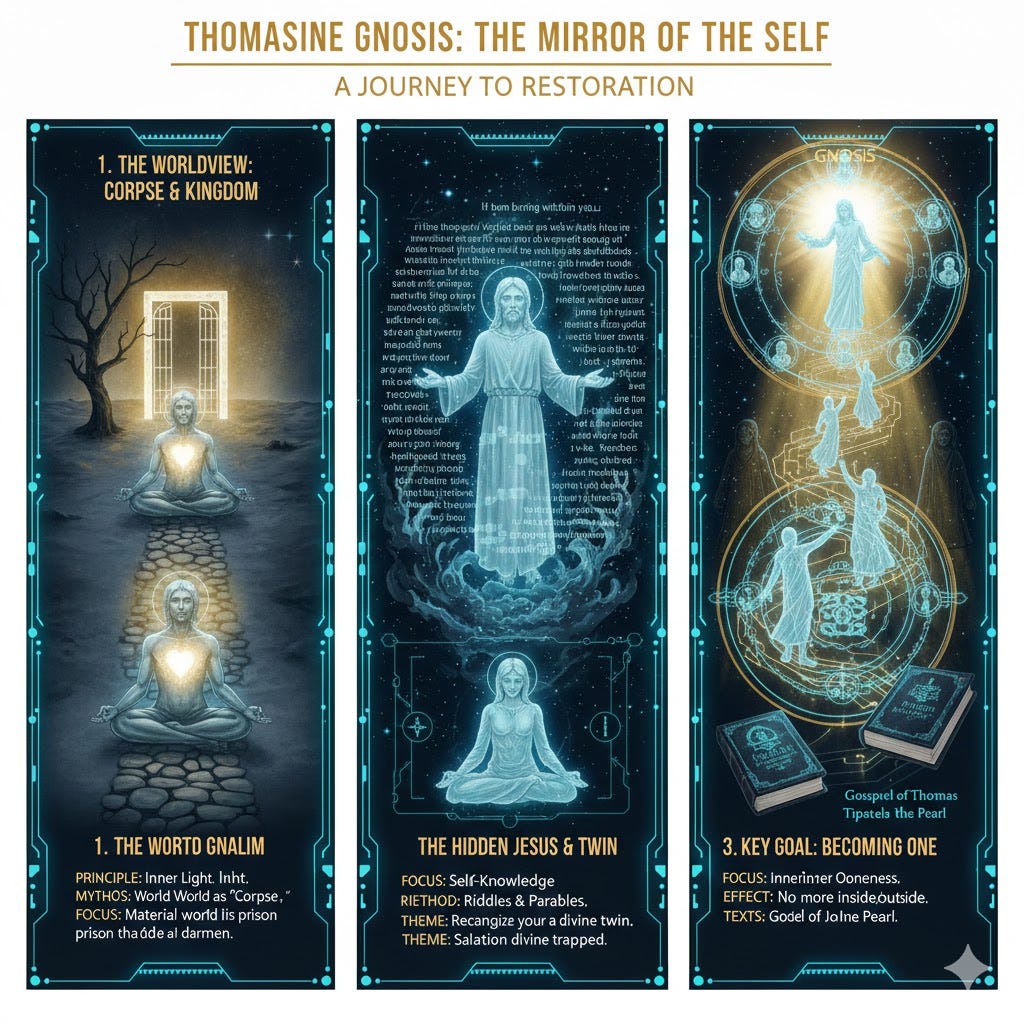
🟢 Thomasine: The Mirror of the Self
Named after the Apostle Thomas (the “Twin”), this tradition moves away from complex stories about cosmic wars and focuses entirely on the individual’s inner life.
The Worldview: The world isn’t necessarily a prison; it is a distraction or a “corpse.” They believed that the light of the Creator is hidden directly inside every human being. If you can’t find God within yourself, you won’t find God anywhere else.
The Hidden Jesus: In these texts, Jesus doesn’t talk about sin or the end of the world. Instead, he speaks in riddles and puzzles designed to make the listener look into their own soul.
The Goal: To recognize your own “twin” nature — that you are both a physical human and a divine spirit. Once you truly know yourself, you become “one” and no longer see a difference between the inside and the outside.
Notable Texts: Gospel of Thomas, Hymn of the Pearl.
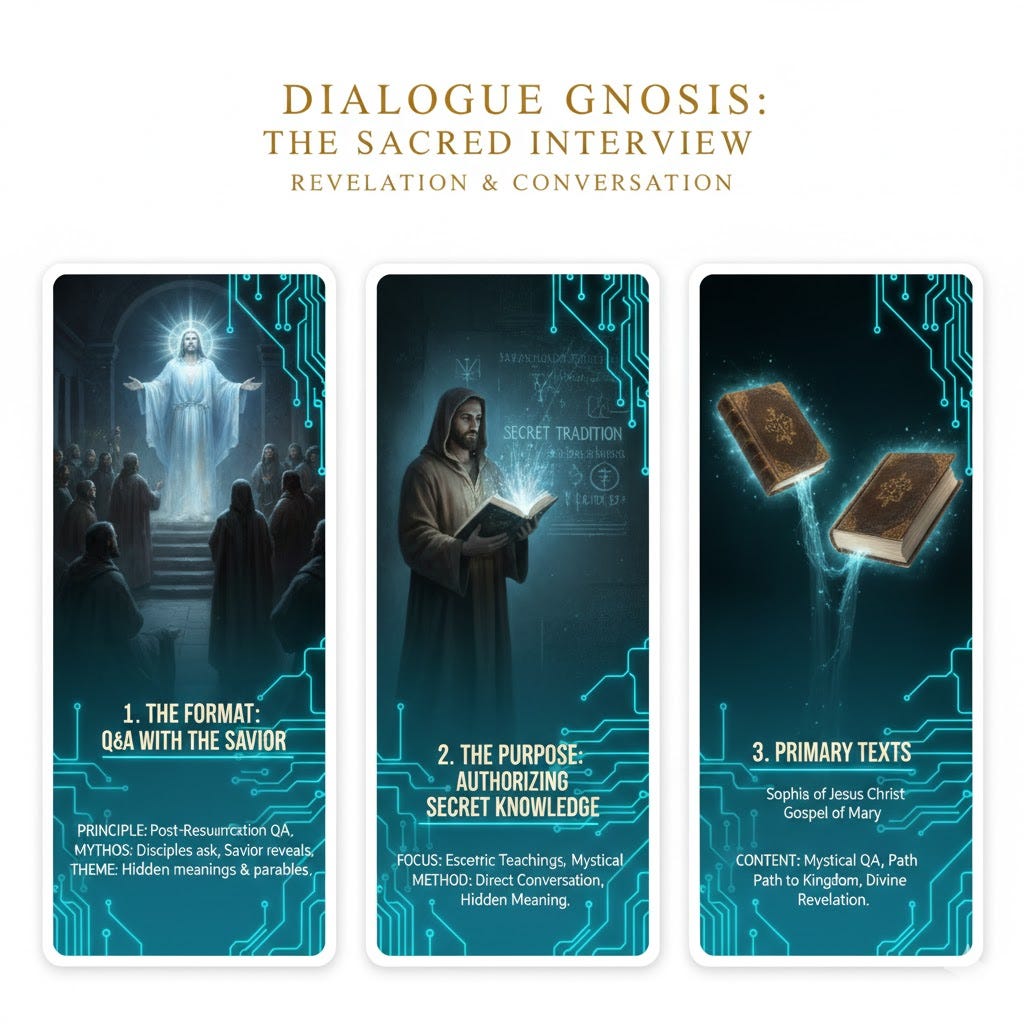
🔵 Dialogue: The Sacred Interview
This category refers to the way a text is written. It mimics a classroom or a private coaching session between a master and their students.
The Format: These usually take place after the resurrection. The disciples ask very practical questions like, “What happens when we die?” or “How do we talk to the angels?” The Savior then provides the “hidden” meaning behind his earlier public parables.
The Purpose: These texts were used to authorize secret traditions. By showing the disciples asking questions, it gave the reader permission to keep searching for deeper answers beyond the surface level of religion.
Notable Texts: Sophia of Jesus Christ, Gospel of Mary.
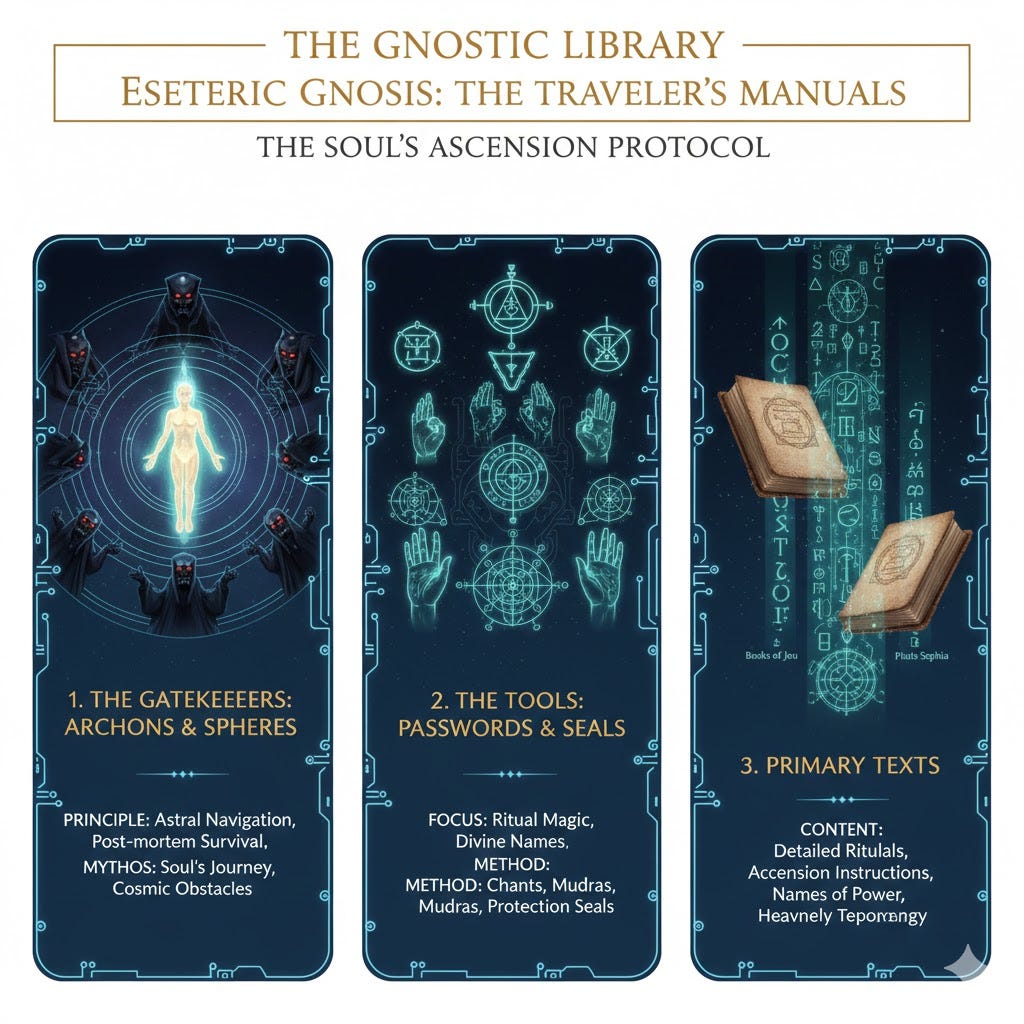
🔴 Esoteric: The Traveler’s Manuals
These are the most technical and mysterious books in the library. They aren’t meant for philosophical debate; they are intended for use during the soul’s actual journey after death.
The Gatekeepers: They describe the universe as a series of levels or “spheres” (the stars and planets), each guarded by an “Archon” or a cosmic gatekeeper who wants to keep the soul from passing.
The Tools: These books provide the specific “passwords,” sacred names, hand signs, and “seals” needed to get past these guards. They are like a survival guide for the afterlife.
The Vibe: Very ritualistic and intense, focusing on the literal mechanics of how a soul rises through the sky to reach the ultimate light.
Notable Texts: Books of Jeu, Pistis Sophia.
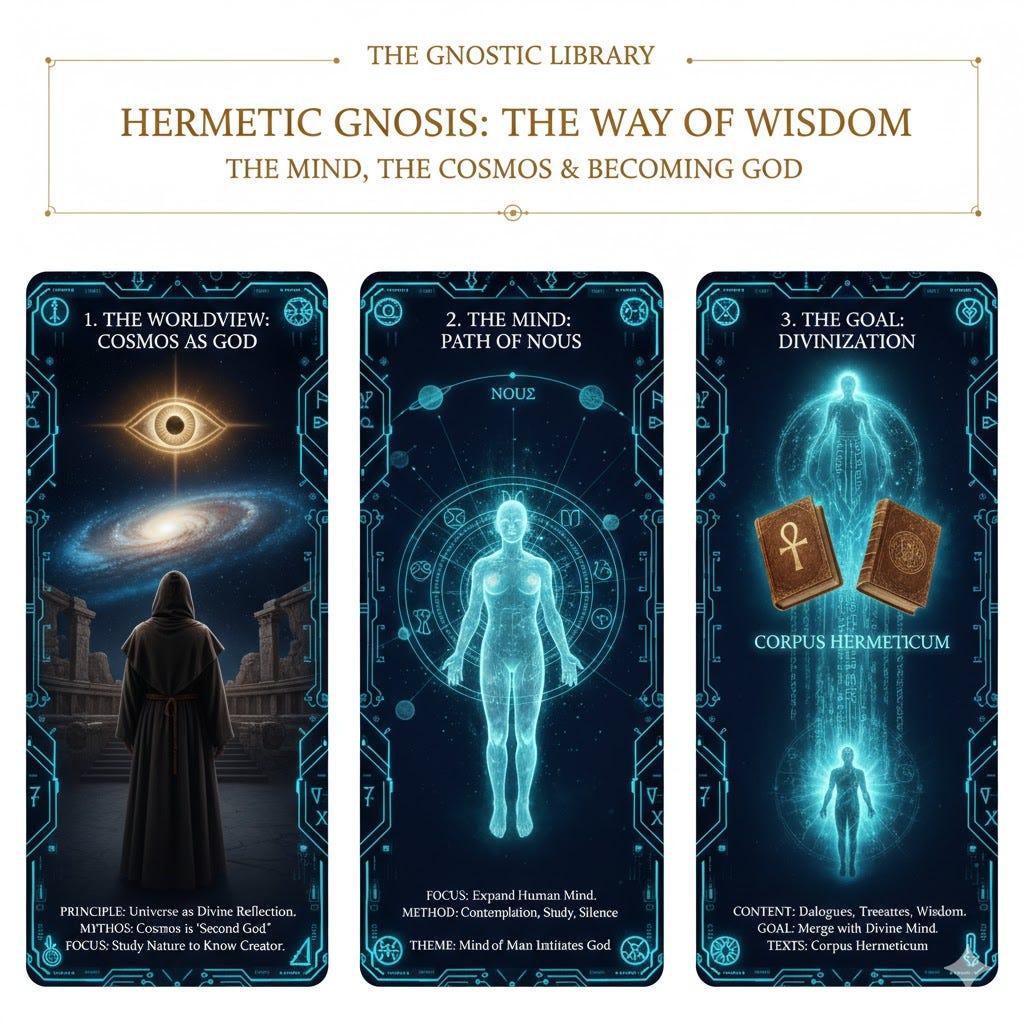
⚪ Hermetic: The Way of Wisdom
Though they share many ideas with Gnostics, the Hermeticists (following the legendary Hermes Trismegistus) had a much more positive view of the physical universe.
The Worldview: They believed the universe is a beautiful, living reflection of God’s Mind. While the body might be a temporary vessel, the world itself is a “second god” that we should study to understand the Creator.
The Mind (Nous): They emphasized the power of the human mind to expand. By looking at the stars and understanding the laws of nature, our minds “imitate” the Mind of God until we eventually merge with it.
The Goal: To become “divinized” through study, contemplation, and silence. It is a path of intellectual and spiritual transformation.
Notable Texts: Corpus Hermeticum.
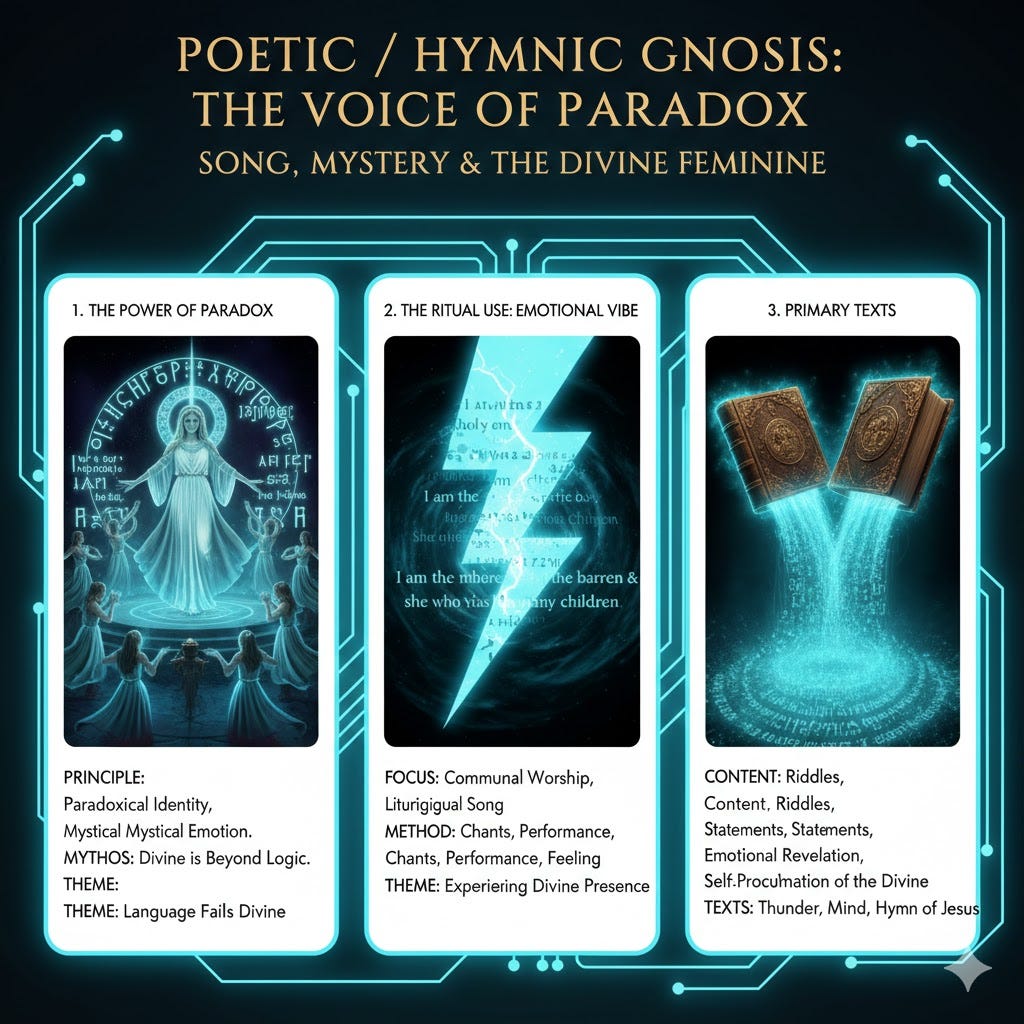
⚪ Poetic / Hymnic: The Voice of Paradox
These texts don’t try to explain things logically. They use the power of art and song to bypass the brain and speak directly to the heart.
The Power of Paradox: They often use “I am” statements that contradict each other (e.g., “I am the mother and the daughter,” “I am the silence and the noise”). This is meant to show that the Divine is bigger than human language can handle.
The Ritual Use: Many of these were likely sung or performed during ceremonies. They create an emotional “vibe” that helps the seeker feel the presence of the divine rather than just thinking about it.
Notable Texts: Thunder, Perfect Mind, Hymn of Jesus.
An Introduction to a Comprehensive List of Gnostic Scriptures
The texts contained in the Gnostic Library represent a profound shift in spiritual perspective from the early centuries of the Common Era. Unlike orthodox traditions that emphasized faith in historical events, these “Gnostic” (from the Greek gnosis, or “knowledge”) works focused on the internal, direct experience of the divine.
The collection spans several distinct traditions and literary genres, each offering a unique window into the ancient search for meaning:
The Sethian Tradition: Found largely in the Nag Hammadi Codices, these works (like the Secret Book of John) present a complex cosmogony of a supreme, unknowable Father and the accidental fall of “Sophia” (Wisdom), which led to the creation of the material world.
The Valentinian School: These treatises and liturgical texts (such as the Gospel of Philip) offer a more philosophical approach, focusing on the “Bridal Chamber” sacrament and the reconciliation of the soul with its divine twin.
Hermetic Gnosis: Rooted in Egyptian-Hellenistic wisdom, texts like the Poemandres emphasize the mental and spiritual ascent of the individual through the celestial spheres to reunite with the Divine Mind.
Mandaean and Manichaean Traditions: These represent surviving or widespread branches of Gnosis that maintained rigorous ethical systems and distinct liturgical practices centered on the liberation of “Light” from the darkness of matter.
Together, these documents — ranging from the poetic Odes of Solomon to the paradoxical Thunder, Perfect Mind — reveal a diverse spiritual movement that prioritized the “spark of light” within the human soul over external religious authority.
Original on Medium · David Senouf · Feb 22, 2026
Comments
Discussion via giscus and GitHub Discussions.