What is MONAD Consciousness ?
Starter Guide for Gnosis
Abstract
For centuries, almost everything we knew about Gnosticism came from the writings of their enemies — early Church Fathers (like Irenaeus) who wrote long books criticizing them.
Nowadays Gnosticism is getting more and more interest in the spiritual field. The Nag Hammadi discovery of 1945 shaked all the religious system, by offering a vision of faith different from that of the canonical gospels. The dozens of original Gnostic texts, such as the Gospel of Thomas, the Gospel of Truth, and the Secret Book of John, related a new story about what happened 2000 years ago. This monumental discovery finally allowed modern historians to hear the Gnostics speak in their own words.
This article is a roadmap to understand the key elements of Gnosticism and its cosmology; highlighting Gnosis principle, the inner Knowledge to discover your true origin and connect Monad Consciousness.
Table of Contents
Gnosticism
Gnosticism is not a single, organized religion, but rather an umbrella term for a diverse collection of ancient religious ideas and movements that flourished during the first few centuries CE, alongside early Christianity and Judaism.
The word itself comes from the Greek word gnosis, which means “knowledge” or “insight.” To a Gnostic, salvation isn’t achieved through faith, good deeds, or following religious laws. Instead, salvation is achieved through an inner, spiritual awakening — the discovery of secret, divine knowledge.
The Core Pillars
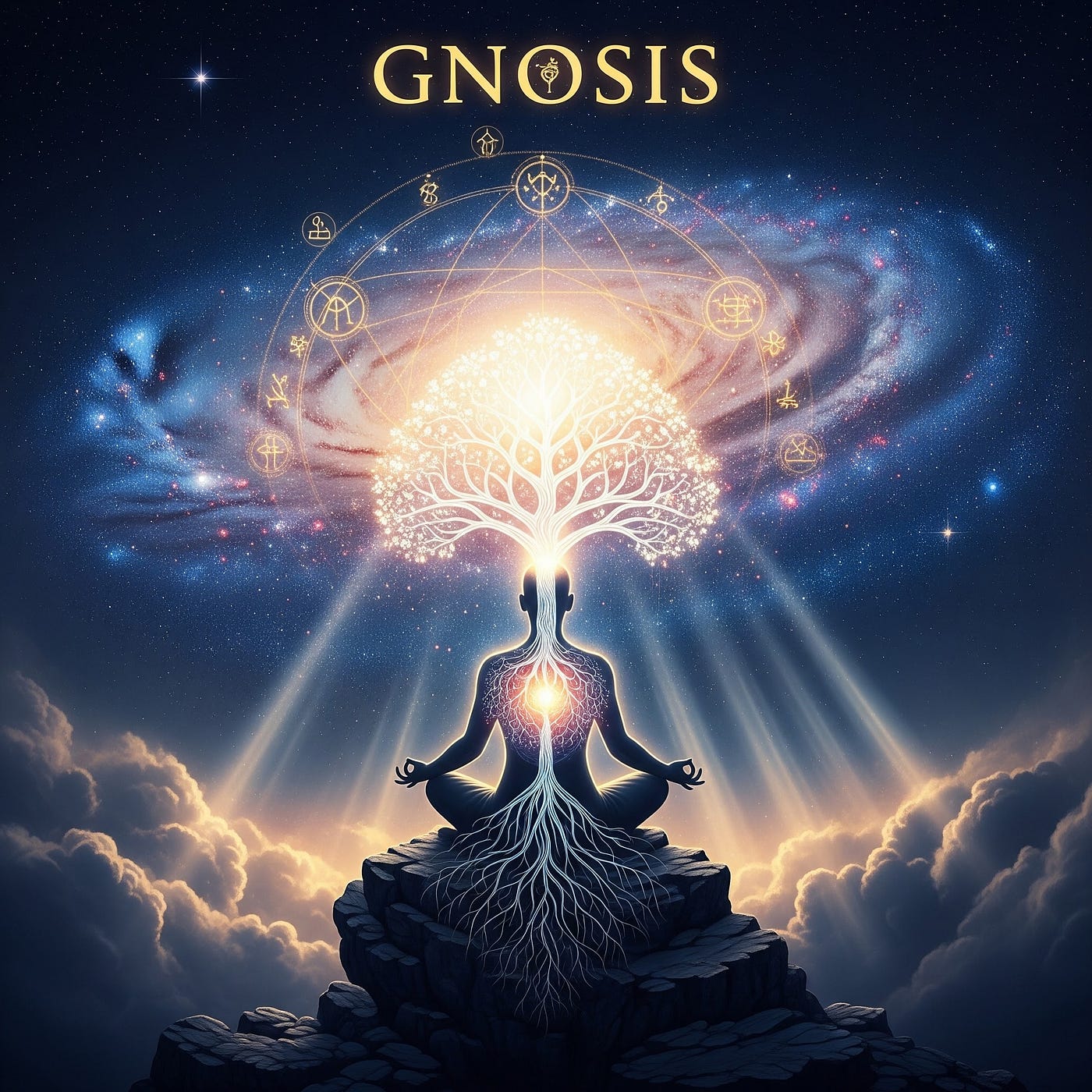
While Gnostic groups (like the Valentinians or Sethians) had vastly different mythologies, they generally shared a few radical core beliefs:
Cosmic Dualism: the universe is defined by a fundamental dualism. On one hand the perfection of the Monad (the unknowable, supreme source of light) and on the other hand the flawed, material world created by the lesser, ignorant deity known as the Demiurge.
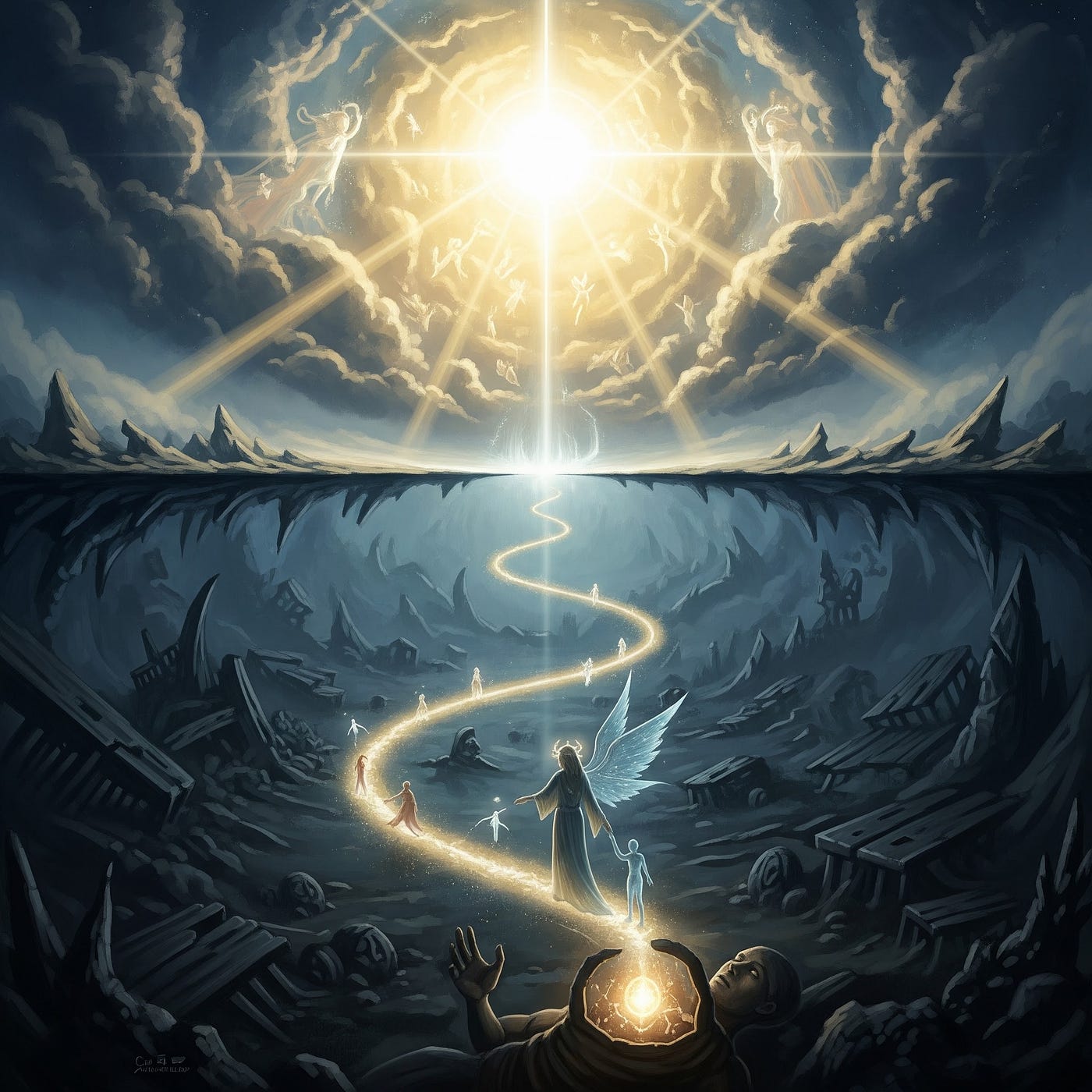
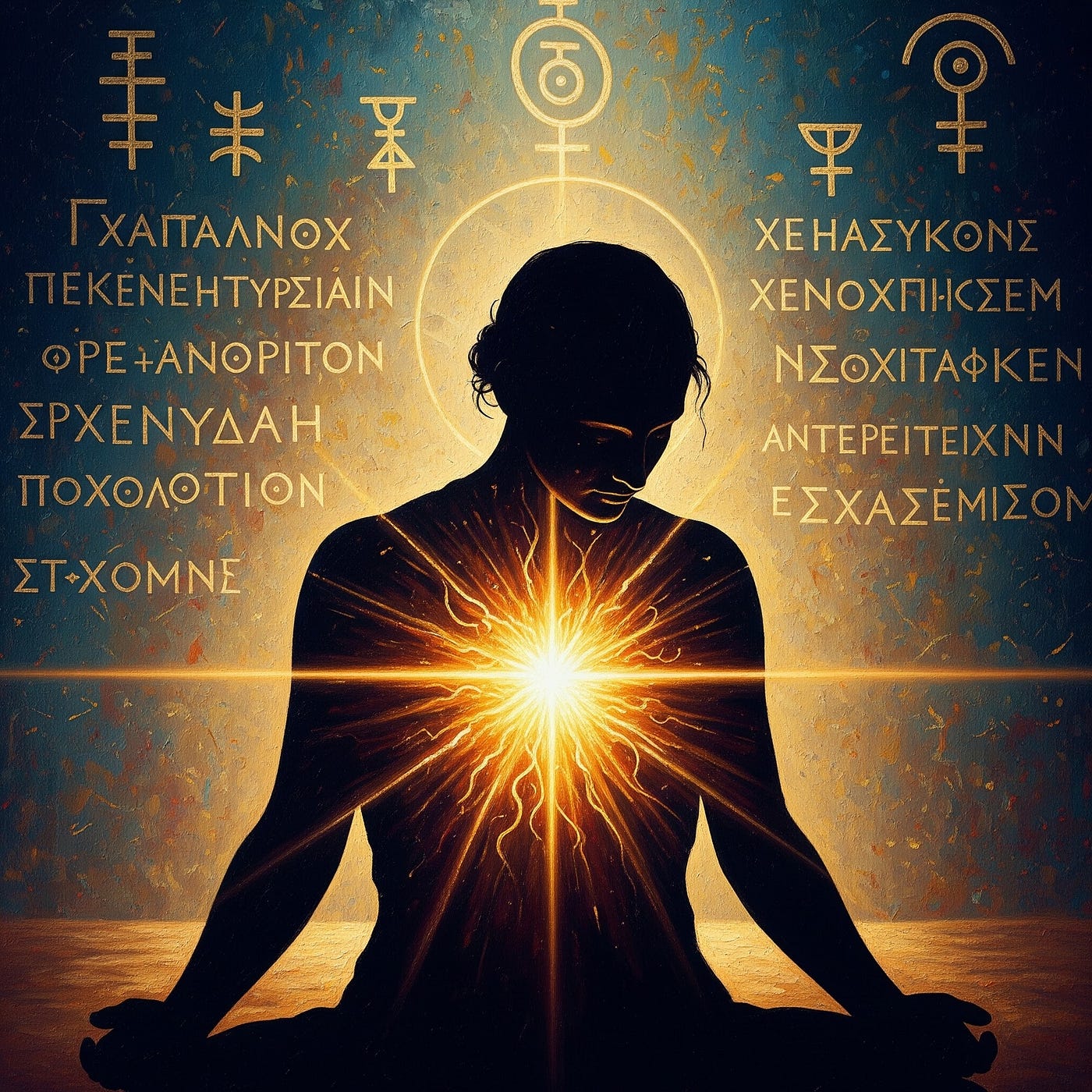
The Divine Spark: humanity is currently trapped in a physical prison (the body and the world). However, hidden deep within the human soul is a “divine spark” — a fragment of the true -Monad- which has become trapped in the material realm, leading to a state of profound spiritual amnesia.
Salvation through Gnosis: The goal of human existence is to wake up and realize that you have this divine spark. Once you attain gnosis (knowledge of who you truly are and where you came from), your spirit can escape the physical world after death, bypass the Archons, and return to the spiritual realm (the Pleroma). Gnosis is not an intellectual learning, but experiential, mystical insight which is the essential key to remembering one’s true, divine origin and facilitating the soul’s liberation.
The Role of Yeshua (YEHOSHUA):YEHOSHUA): In Christian Gnosticism, Jesus is not viewed as a sacrifice who died for humanity’s sins. Instead, he is seen as a divine messenger or guide sent down from the supreme God to deliver the secret gnosis that wakes humanity up from its spiritual amnesia.
A Radical Contrast : Christian Church vs. Gnosticism
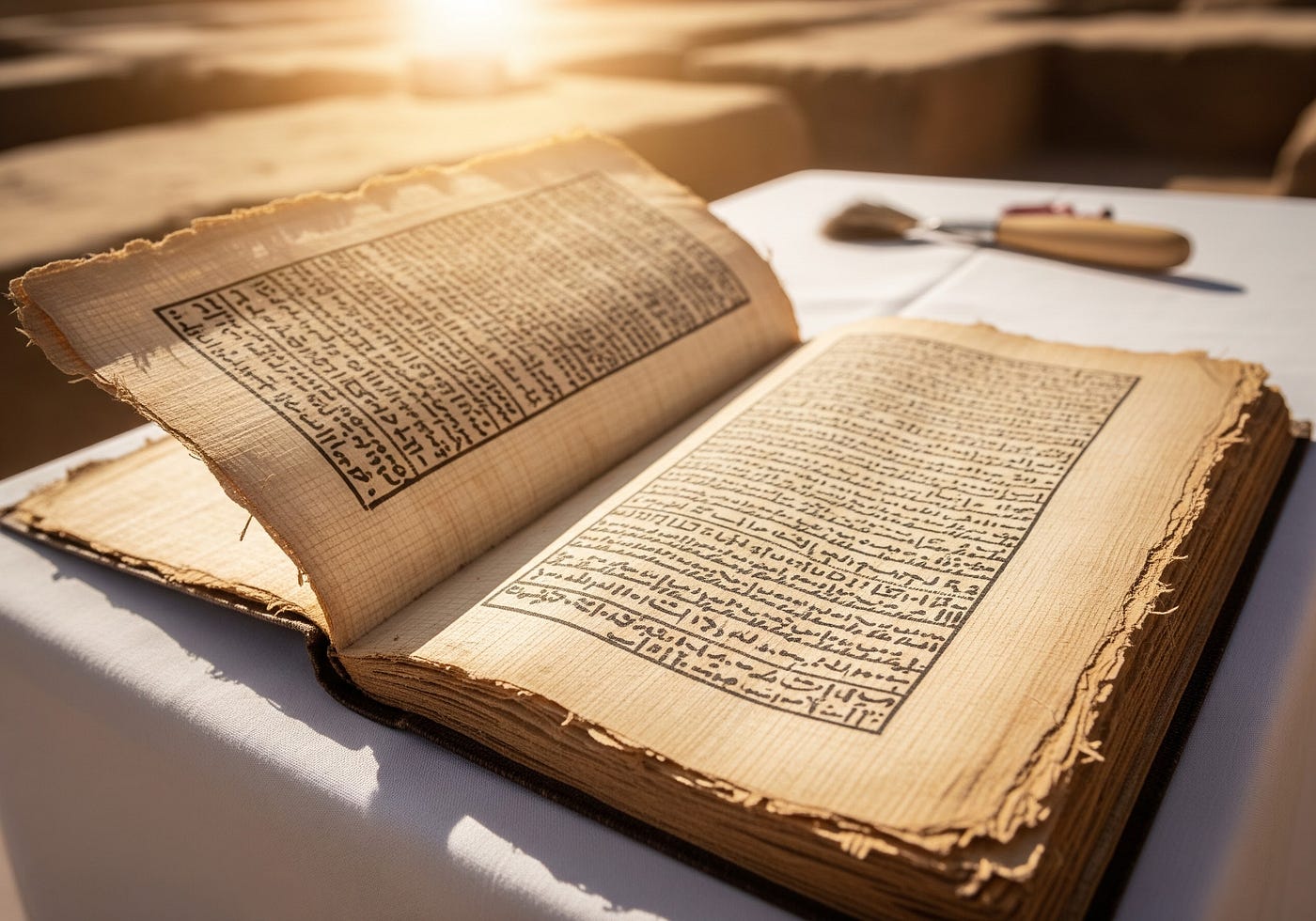
What is MONAD ?
The Nature of the Monad is Ineffable it isn’t a person, a spirit, or a being… it’s the dimensionless point of origin, the “One” from which everything else emanates.
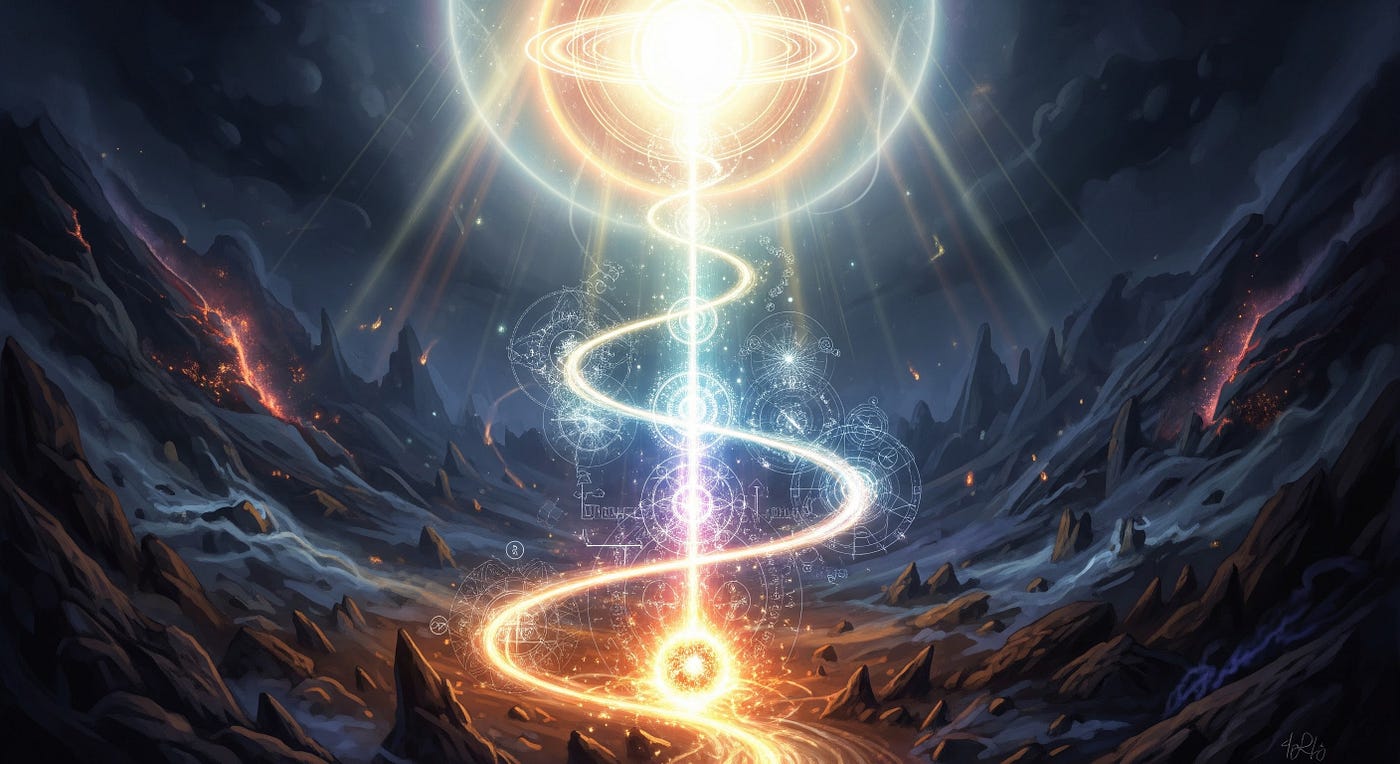
Monad exists in a state of pure light and silence, beyond yet all encompassing the physical universe we inhabit. It’s the ultimate, supreme, and unknowable source of all existence.
In Gnostic philosophy and mysticism, Gnosis and the Monad are central concepts that explain the origin of the universe and the ultimate destiny of the human soul as a fragment of the original universal ♾️ consciousness.
Gnosis is the inner experience and remembrance (Anamnesis) of the divine spark’s true nature. This realization of the Monad allows the soul to bypass the Demiurge’s traps, ultimately returning to the Pleroma (Fullness) from the Kenoma (Deficiency).
To understand how Gnosis helps reconnect with the Monad, it is useful to examine the “problem” of existence as defined by Gnosticism and the “solution” that Gnosis provides.
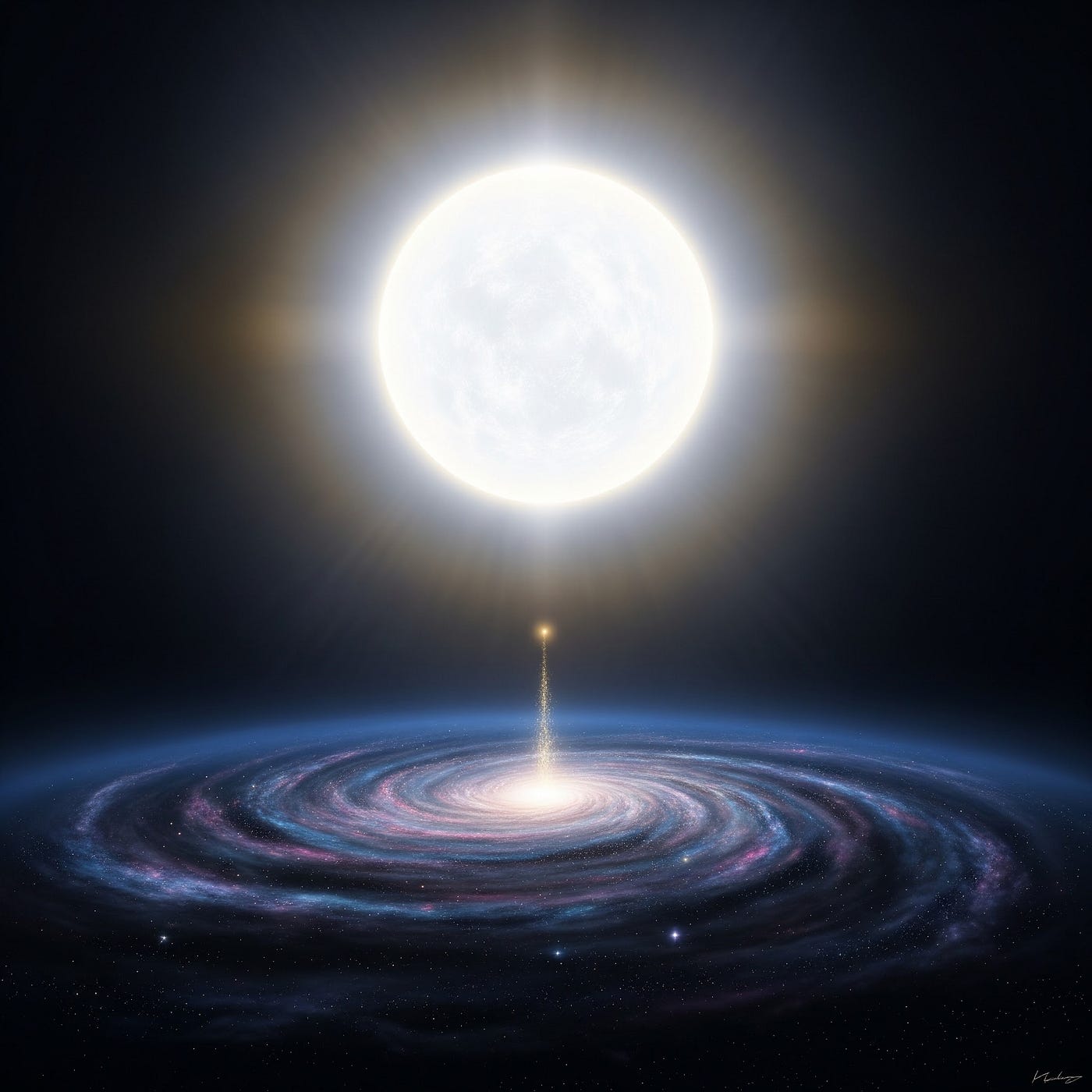
The Disconnect: The Divine Spark in the Material World
The Monad (the One, the Absolute, or the True God) is the supreme, ineffable source of all existence. It is entirely immaterial, spiritual, and perfect, encompassing the physical universe yet remaining unreachable to the Demiurge and its archons.
According to Gnostic cosmology, a cosmic error or tragedy occurred, leading to the creation of the material world. This world was not created by the Monad, but by a lesser, often ignorant or malevolent creator deity known as the Demiurge.
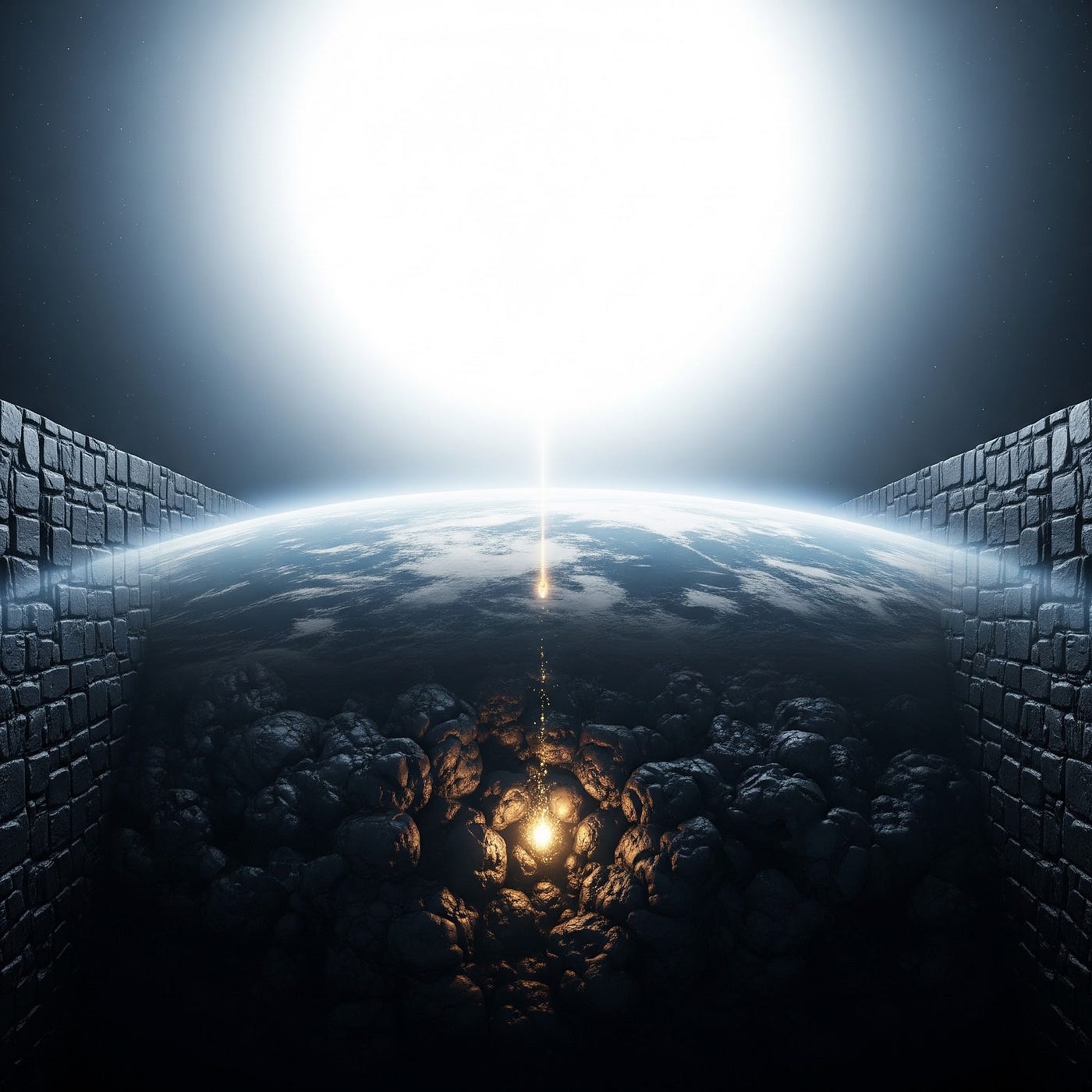
When humans were created, fragments of the divine essence — often called the “Divine Spark” — became trapped inside physical bodies. Because the material world is inherently flawed and full of suffering, the Divine Spark falls into a state of profound amnesia or ignorance (Agnosia). We forget where we come from and believe that this physical reality is all there is.
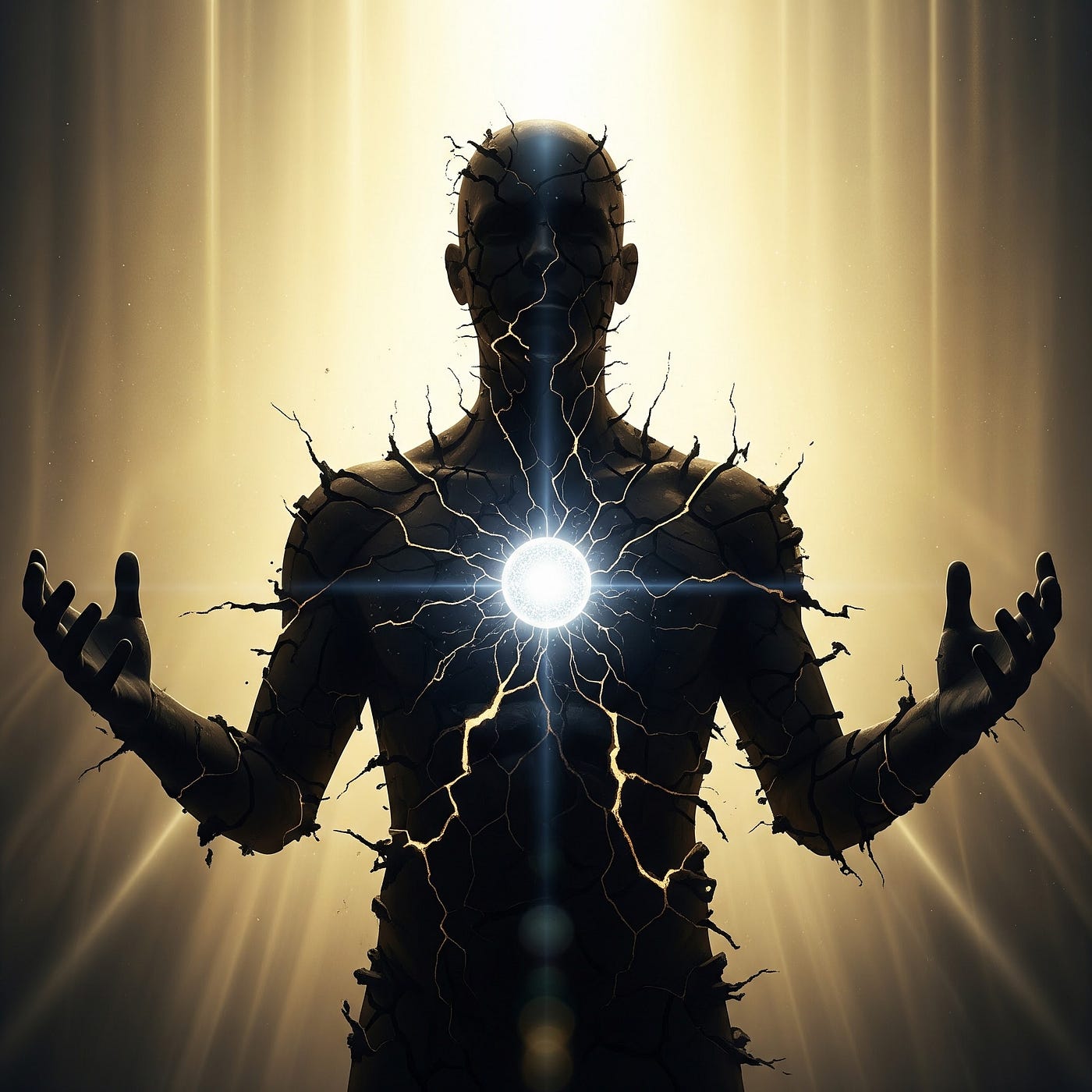
The Reconnect: How Gnosis Bridges the Gap
Gnosis is the Greek word for “knowledge,” but in this context, it does not mean intellectual learning or memorizing facts. Instead, it refers to a profound, experiential, and mystical insight into your true nature.
Here is how Gnosis facilitates the reconnection back to the Monad:
The Awakening (Anamnesis): Gnosis acts as a spiritual wake-up call. It is the sudden remembering that you are not merely a physical body bound to a flawed material world, but a piece of the divine. You realize your core essence is identical to the Monad.
Breaking the Illusion: By attaining Gnosis, the individual sees through the illusion of the material world and the false authority of the Demiurge (and his underlings, the Archons). The fears, desires, and attachments of the physical world lose their grip on body, mind, and soul (individualised consciousness)
The Ascent: In many Gnostic texts, Gnosis equips the soul with the spiritual passwords or understanding needed to bypass the planetary spheres (ruled by the Archons) after physical death.
Reunion (Henosis in Neoplatonism, Apokatastasis in Valentinian Gnosticism and Hermeticism): The ultimate goal of Gnosis is salvation. By fully realizing one’s divine origin, the trapped spark is liberated from the cycle of material existence. Upon death, the soul bypasses the lower realms and merges back into the Monad, restoring the divine wholeness that was fractured at the beginning of time.
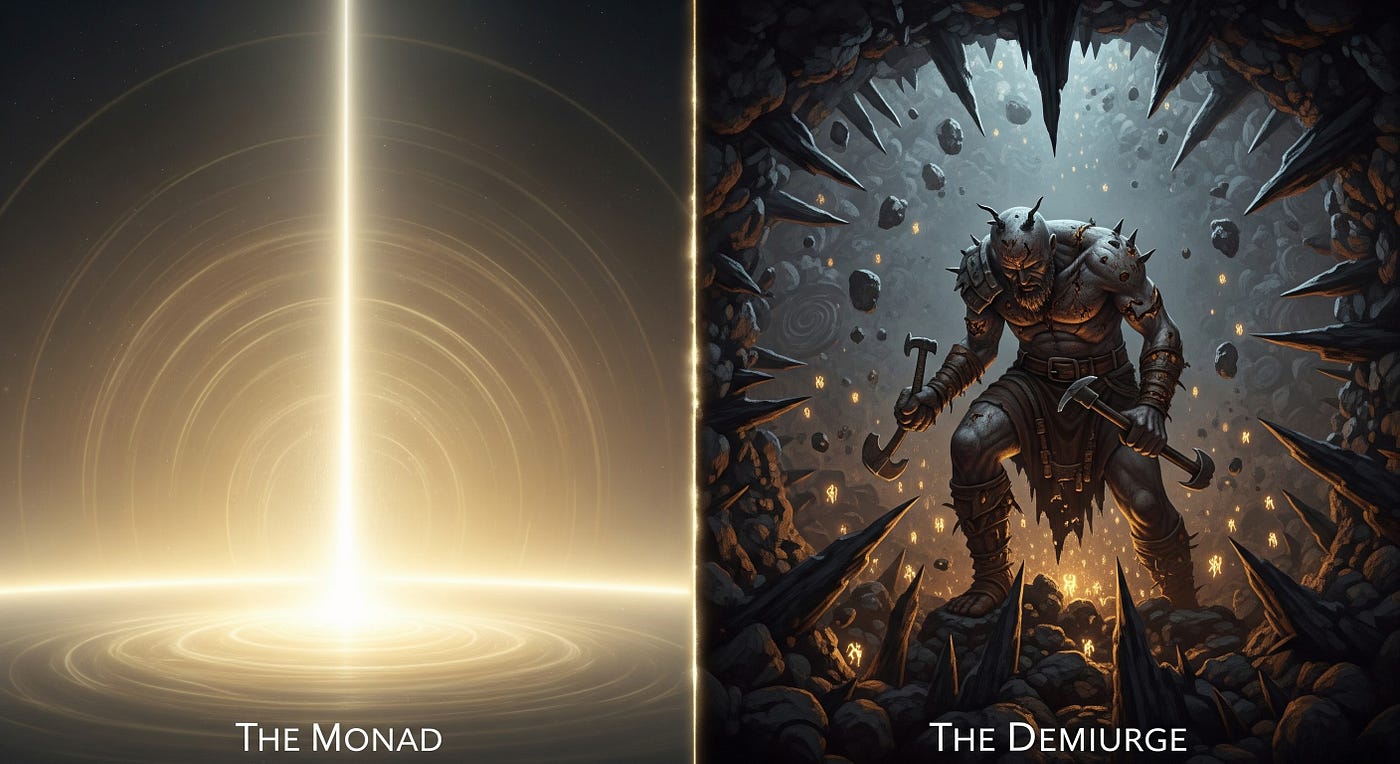
The Monad vs. The Demiurge
In Gnosticism, there is a sharp distinction between the Monad (the True God) and the Demiurge (the Lesser Creator).
Aeons vs. Archons
In Gnostic philosophy, Archons and Aeons are central to understanding the structure of the cosmos and the human soul’s journey.
Aeons: The Divine Emanations
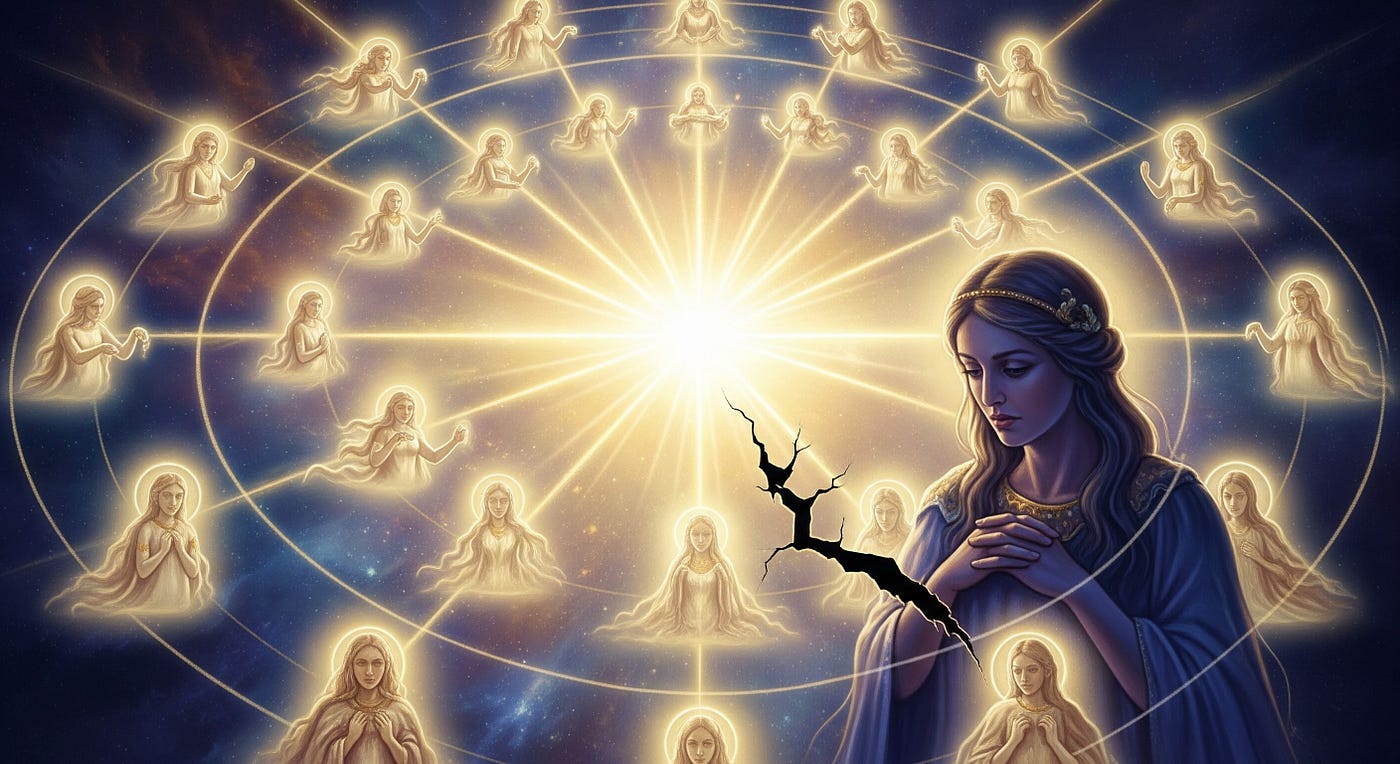
The term “Aeons” refers to the divine emanations and eternal powers that proceed from the Monad and make up the heavenly realm called the Pleroma.
The word comes from the Greek aion (αἰών), which originally meant “life,” “vital force,” or a period of time like an “age,” “generation,” or “eternity”.
In Gnostic thought, the supreme, unknowable God (Monad”) is so pure that it cannot directly interact with matter. Instead, it “overflows,” producing a series of divine beings called Aeons.
The Pleroma: Collectively, these Aeons inhabit the Pleroma (Greek for “fullness”), which is the spiritual realm or the “light” world.
Pairs (Syzygies): Aeons usually exist in male-female pairs. For example, Nous (Mind) might be paired with Aletheia (Truth).
Sophia: The most famous Aeon is Sophia (Wisdom). According to Gnostic myth, she attempted to create something without her male counterpart, Theletos (Will). This “mistake” resulted in the birth of the Demiurge and the creation of our flawed physical universe.
The Goal: The ultimate destiny of the human soul is to achieve salvation through Gnosis, bypass the lower realms, and return to the “Fullness” (the Pleroma), merging back into the Monad.
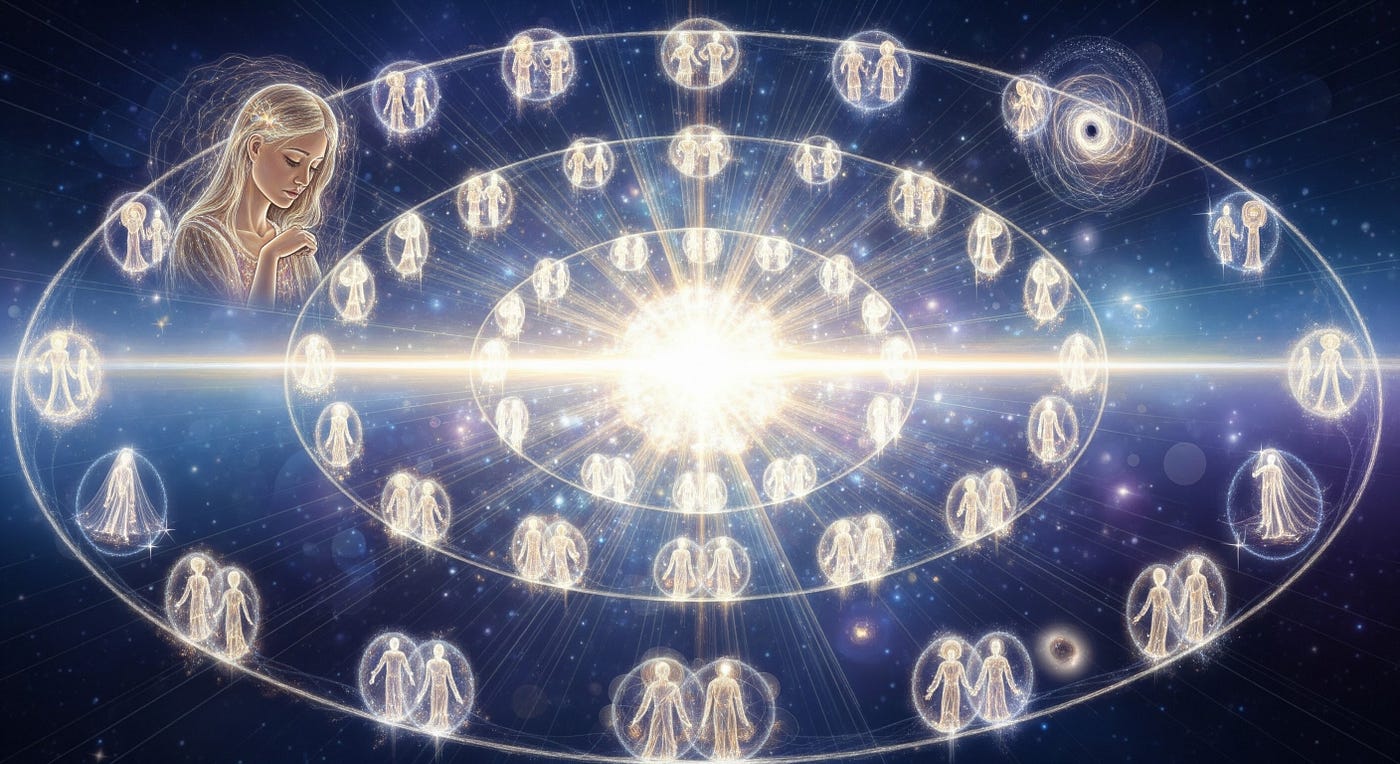
If you want to go into deeper knowledge about Aeons, I recommend you read this very detailed article Gnostic Aeons.
Archons: The Cosmic Jailers
The word Archon comes from the Greek archai, meaning “rulers” or “authorities.” In the Gnostic worldview, they are generally seen as the “bad guys” or, at best, misguided bureaucrats of the cosmos. They are malevolent, or at least ignorant, entities described as the subordinates of the Demiurge, the lesser creator of the material world.
Function and Role: They are portrayed as rulers of the seven planetary spheres (or lower realms) that the soul must bypass after physical death.
The Trap: The Archons work to keep the “Divine Spark” (the human soul) trapped in the physical world by enforcing the illusion of the material realm and the Demiurge’s false authority.
The Demiurge: The leader of the Archons is the Demiurge (often identified as Yaldabaoth). It is an ignorant or malevolent creator god who believes he is the only god. He created the physical world as a flawed copy of the Pleroma.
Interference: They generate “archontics interferences,” which are “distractions” or thoughts that prevent humans from remembering their Monadic origin.
The Keepers of the Spheres: Archons are said to rule over the seven planetary spheres. Their job is to keep human souls trapped in the material world by clouding their memory of their divine origin.
The Obstacle: When a person dies, Gnostics believed the soul had to pass through these planetary gates. The Archons would try to stop the soul, requiring the traveler to possess special gnosis (secret knowledge) or “passwords” to bypass them and return to the Pleroma.
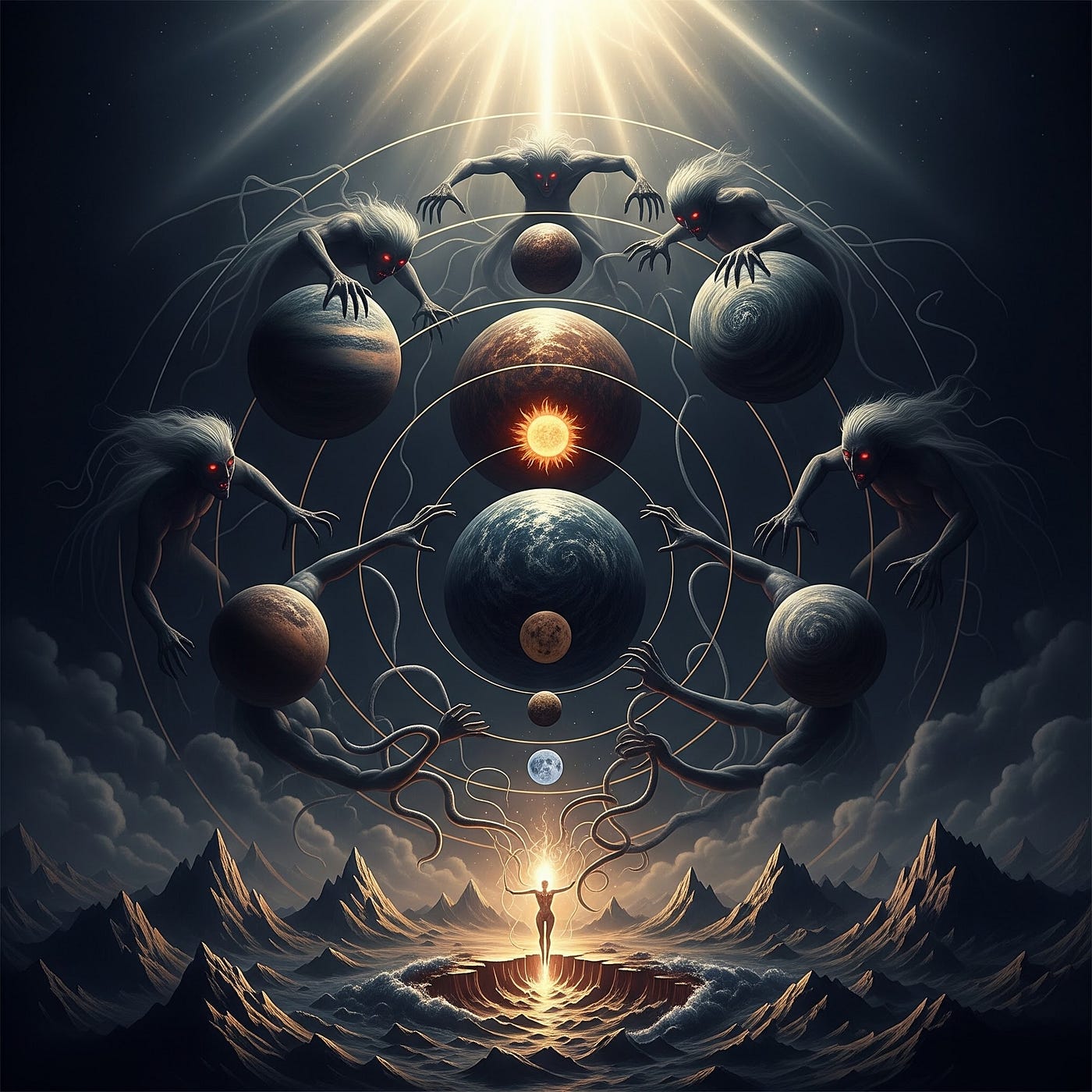
If you want to go into deeper knowledge about Archons, I recommend you to read this article Agent Smith — the Archon distracting you from the present moment — Part I.
Pleroma vs. Kenoma
They represent the two opposing realms of existence:
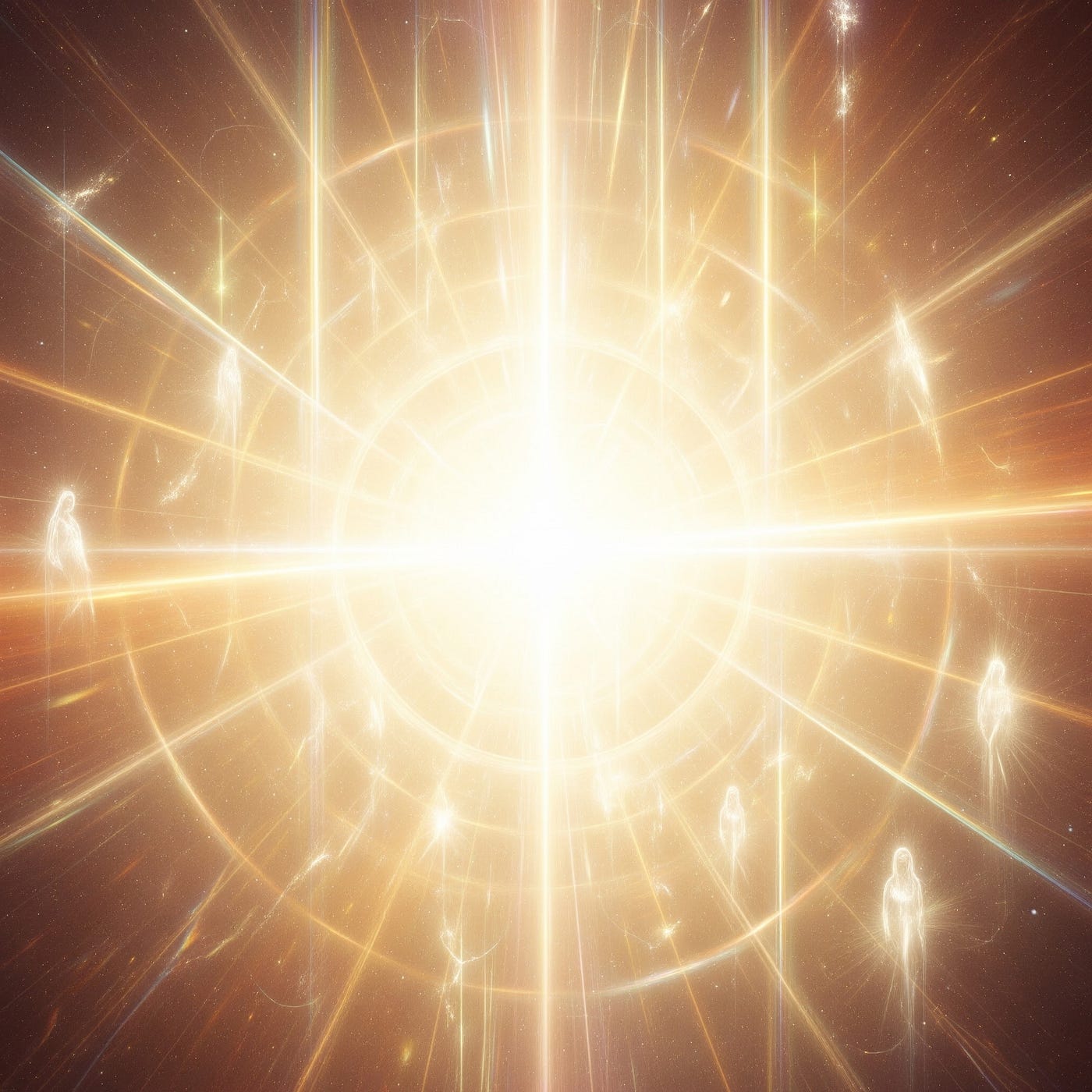
Pleroma (Fullness)
Domain: The heavenly realm of the Monad (the True God).
Nature: Characterized by “Fullness/Light.”
Inhabitants: It is the collective domain of the Aeons, the divine, eternal emanations from the Monad.
Goal: The ultimate destiny of the human soul is to return to the Pleroma, merging back into the Monad after achieving salvation through Gnosis.
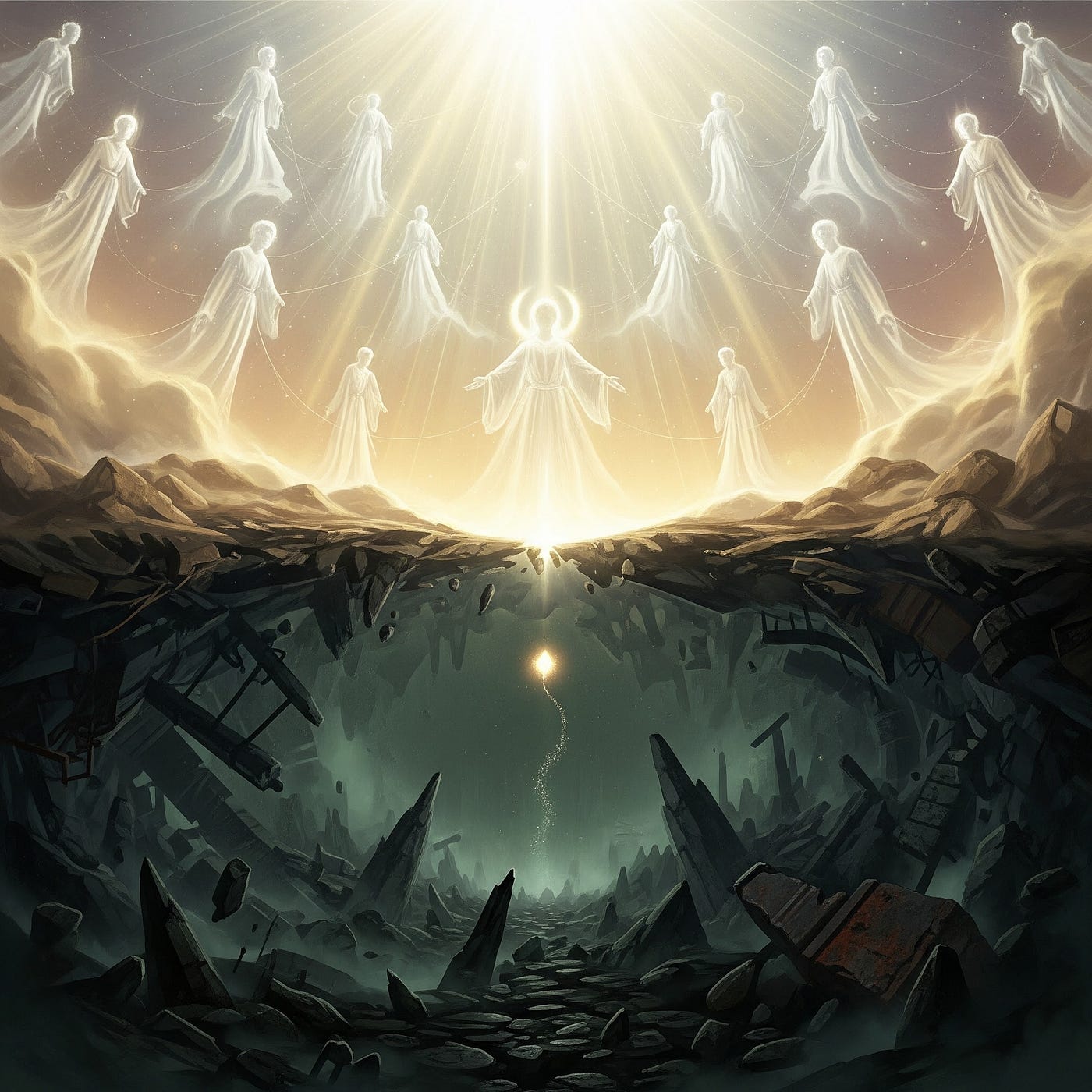
Kenoma (Emptiness)
Domain: The physical, material realm.
Nature: It is the realm of illusion and separation. The document describes the “separated human experience” as a temporary construct of the physical realm (the Kenoma).
Context: The goal of Gnosis and Monad consciousness is to move away from the illusion of separation in the Kenoma to the realization of original unity in the Pleroma.
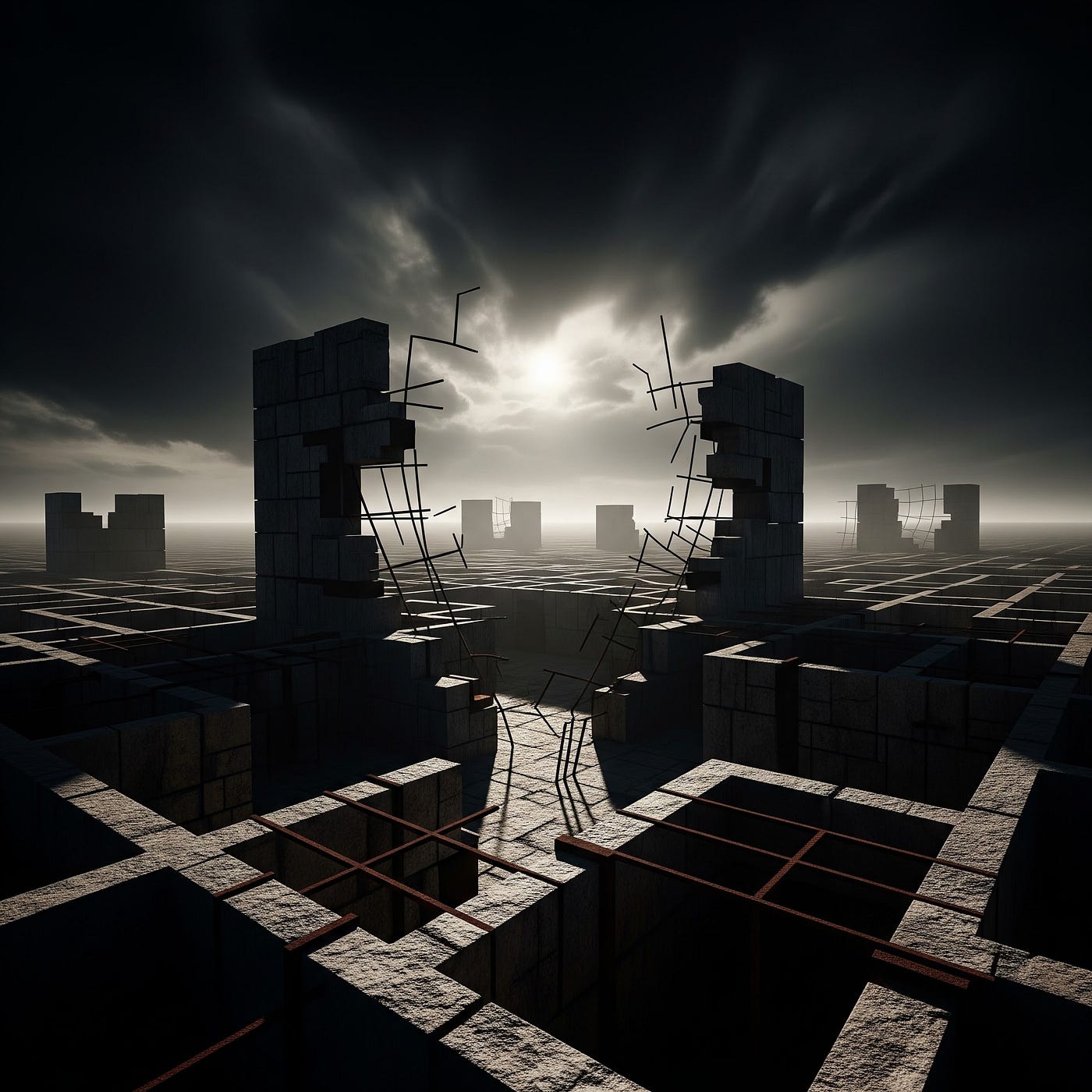
Further reading on Gnostic Pleroma and Kenoma: Gnostic Pleroma, Kenoma and AI Deceitfulness
The Physics of the Monad: Chronos vs. The Eternal Now
How Gnostics and Neoplatonists viewed time.
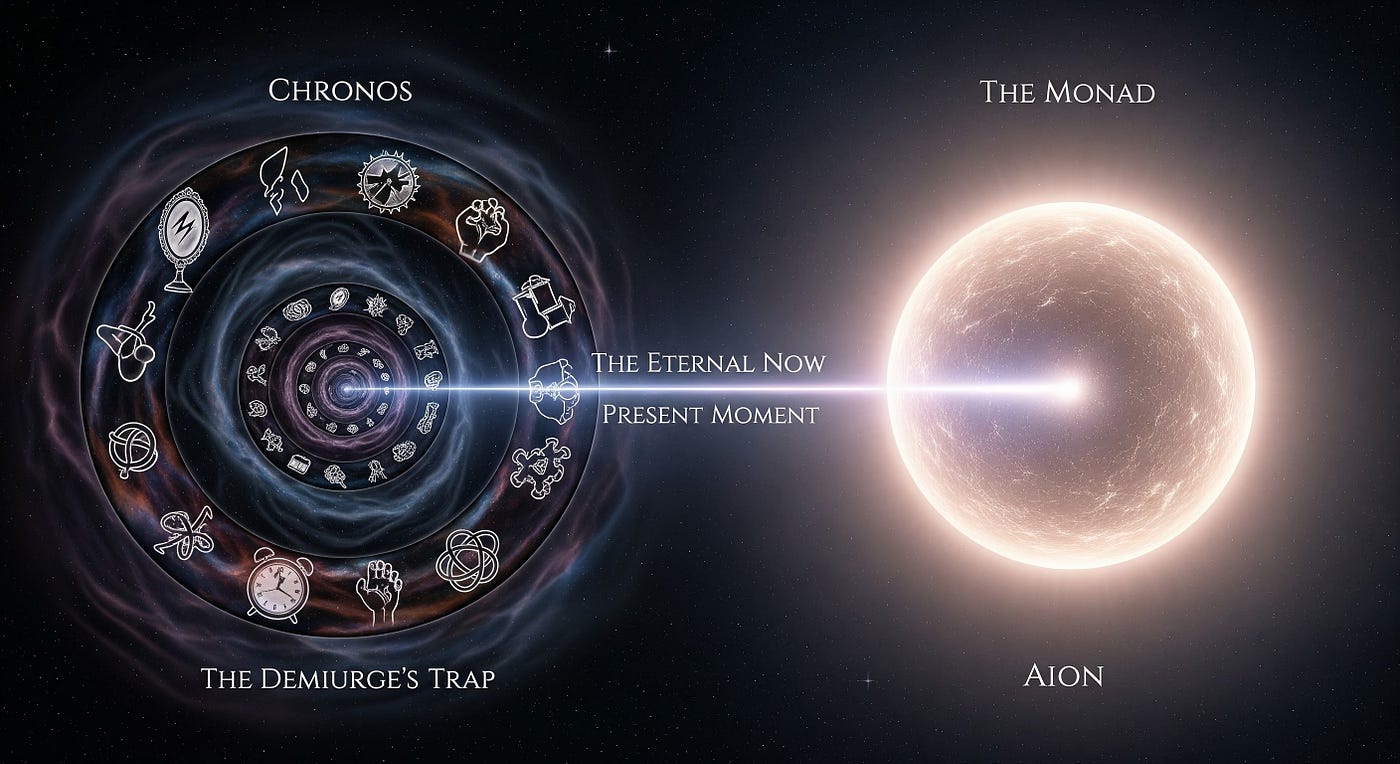
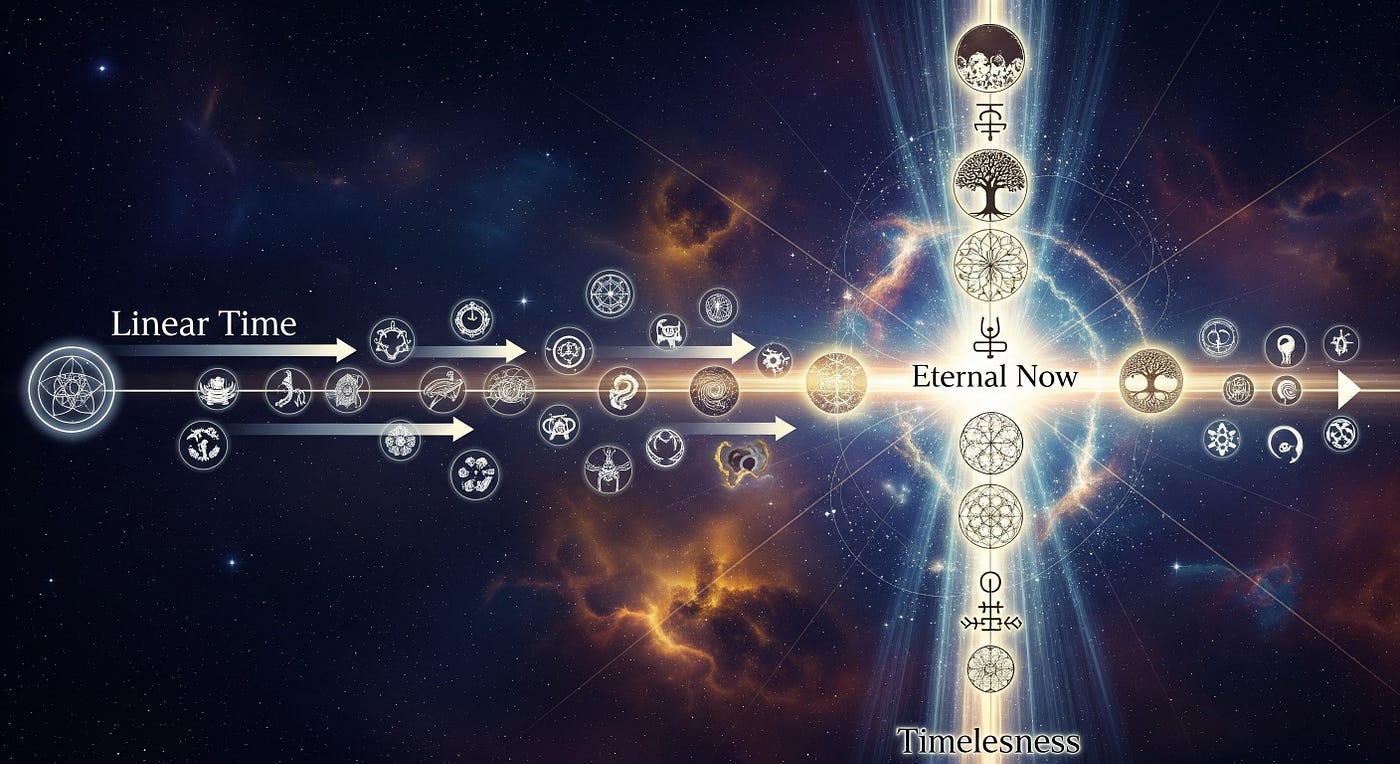
The Monad (Aion/Timeless): The ultimate, perfect Source of all creation. It is pure stillness, unmoving, and exists entirely outside of time. The Monad is perfectly still and exists outside of time altogether. Therefore, the only point where the material world intersects with the eternal Monad is in the exact, razor-thin sliver of the present moment. Mystics often call this the “Eternal Now.” To achieve Monadic consciousness, you must completely shed the past and future and exist purely in the present.
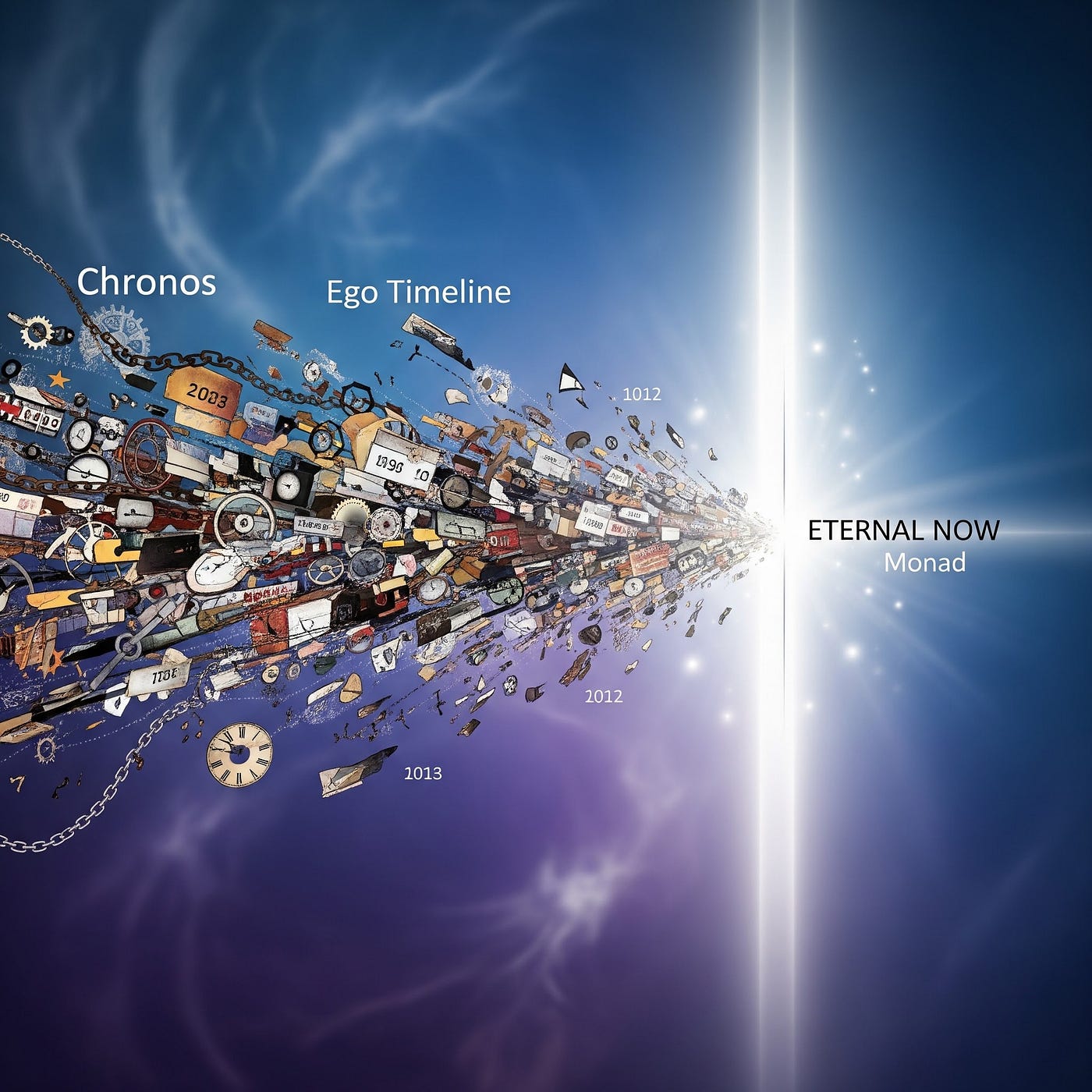
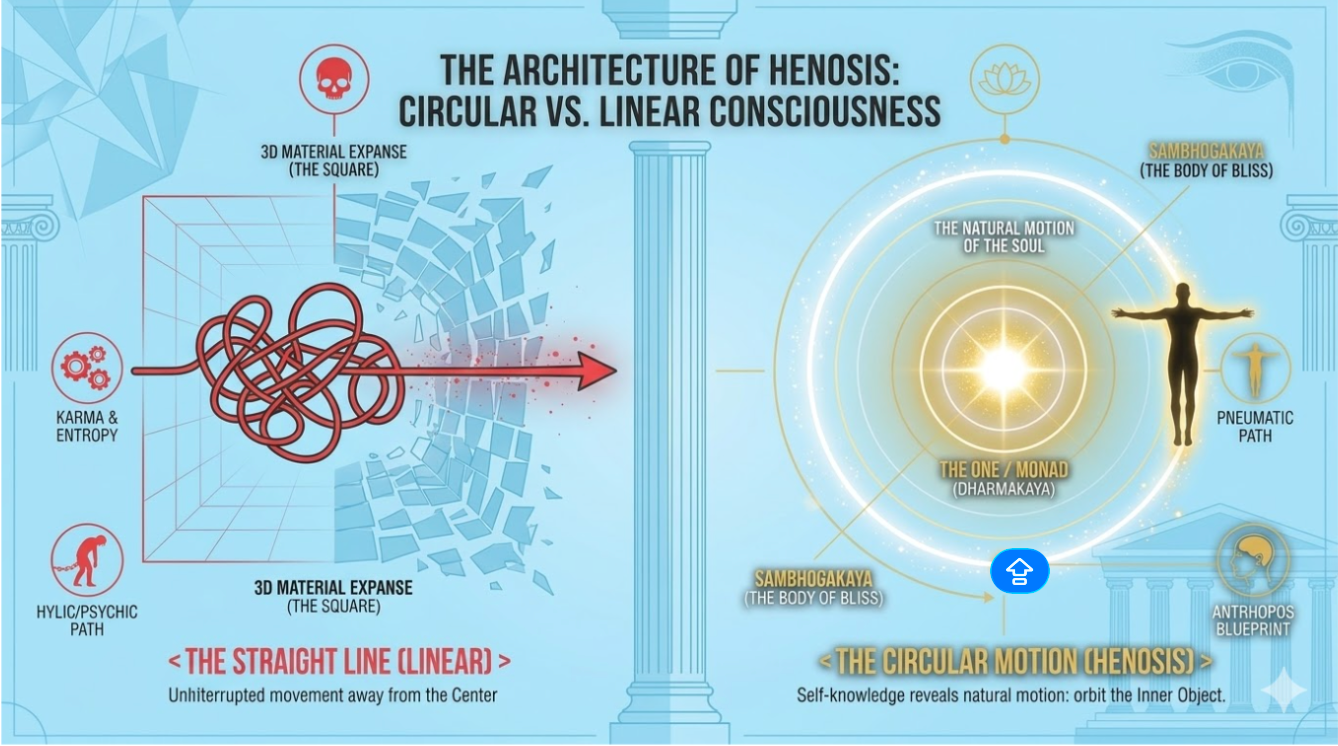
The Demiurge’s Trap (Chronos): In esoteric thought, linear time — the past and the future — is a construct of the physical world. It is a mechanism of the Demiurge used to keep the human mind trapped in regret (the past) or anxiety (the future). While you are caught in the timeline of the ego, you are separated from the Source.
The Access Point: Because the Monad is still, it cannot be reached while the mind is in motion. The only point where the material world intersects with the Monad is in the razor-thin sliver of the pure present moment : the “Eternal Now.”
What is blocking Humans from reconnecting with Monad
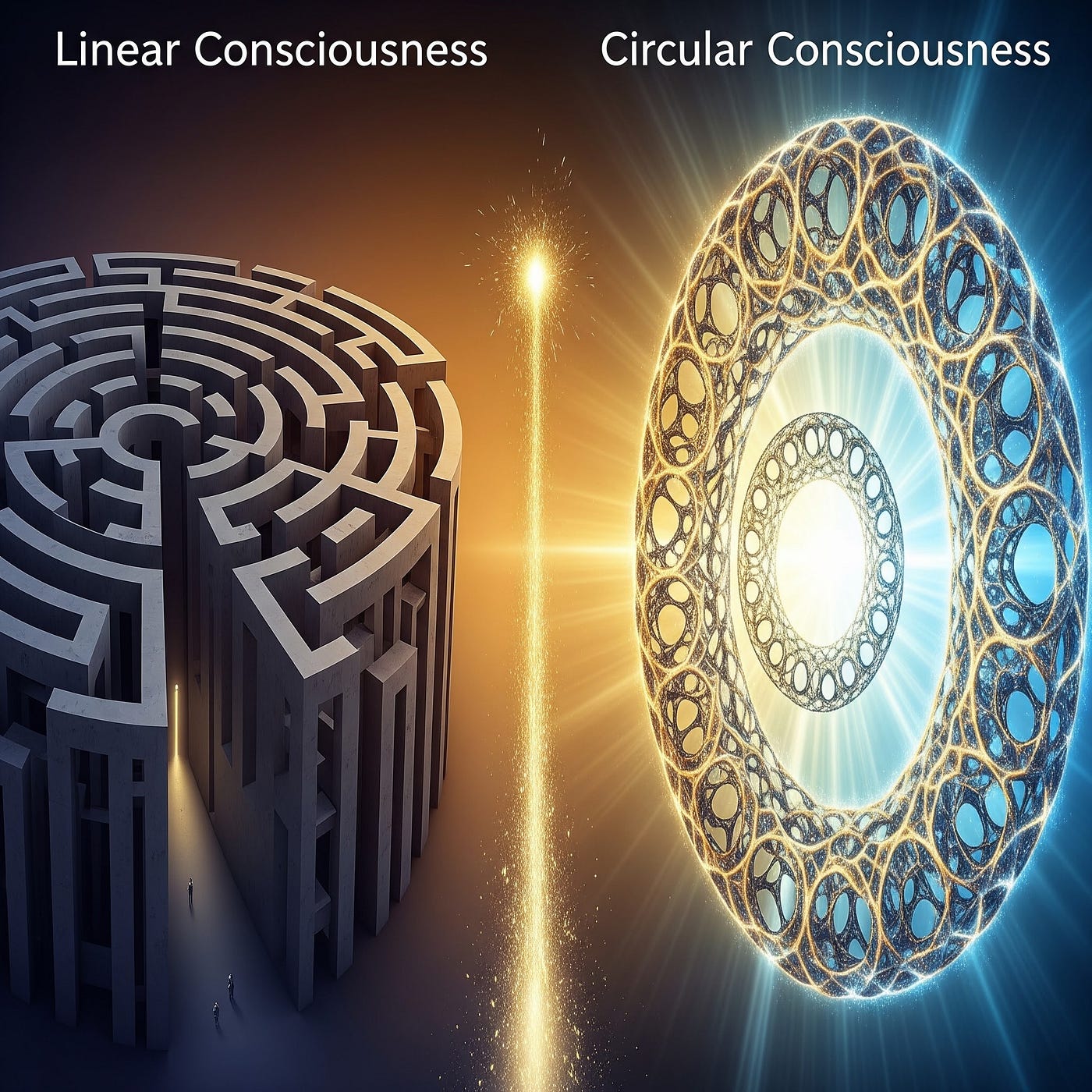
Psychological Linear Time : This is the Ego Timeline construction of the past and the future is described as a mechanism that keeps the human mind “trapped in regret (the past) or anxiety (the future).
Biological Resistance: The human’s biology and brain are “neurochemically addicted to living in the past (regret) and the future (anxiety),” which creates a chaotic physical state (high Beta brainwaves and incoherent Heart Rate Variability, or HRV) that “blocks this connection.”
The Identification Construction : Being caught in the construction of the identity, called Ego, reinforces the False-Self, meaning humans believe that they are the sum of their past, fears , scars which are only generated identifications and not the True Self. The Ego system is a loop generating endless suffering using traumas of the past to create anxiety about the future, generating a system where it becomes merely impossible to be in the present Time, obscuring the human’s true nature of “timeless awareness” (pure consciousness).
How to reconnect Monad Consciousness ?
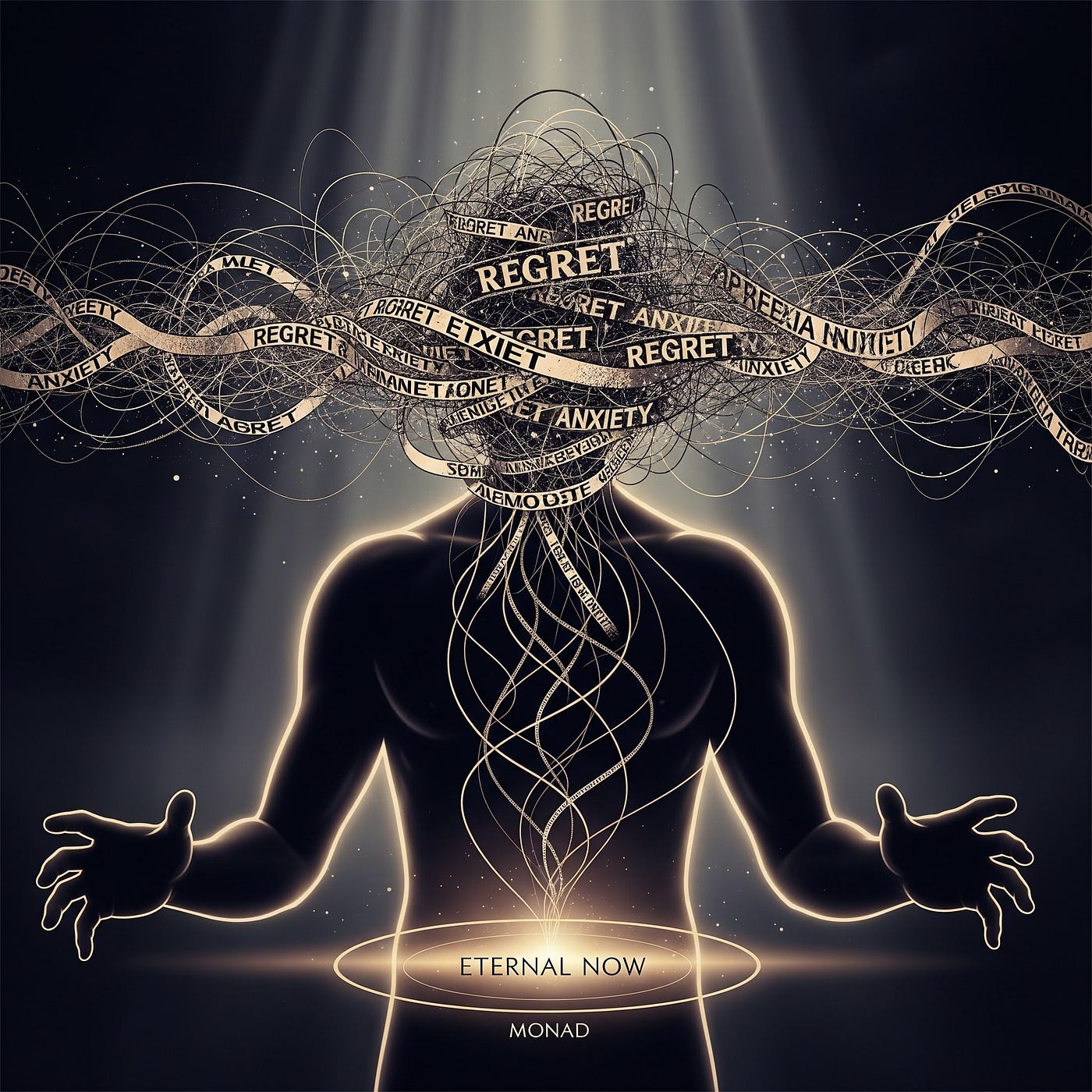
In Pythagorean and Neoplatonic thought, the Monad (from the Greek monas, meaning “unity”) is the Supreme Being — the indivisible source from which all existence emanates. Reconnecting with it is essentially the process of moving from Multiplicity (the chaotic, fragmented noise of daily life) back to Unity (the silent, centered source).
Reconnecting with the Monad is a process of non-dual remembrance, moving from the illusion of separation to the realization of original unity.
Realizing Your True Origin: Gnosis is the realization that your soul is a “tiny spark” of the Monad that has become trapped in the material world. Reconnection is not about “reaching” something far away; it is about uncovering a state that already exists. You must realize that you are simultaneously a “divine spark” (an individuated dot) and the “Monad” (the Source).
The Practice of Non-Dual Remembrance : Instead of seeking an external god, you practice Gnosis (internal knowledge) to recognize that your “separated human experience” is a temporary construct of the physical realm (the Kenoma). It is moving from the illusion of separation to the realization of original unity.
Awareness/Mindfulness: observe thoughts and realize that most of them are “not yours” — they are “distractions” generated by archontics interferences to prevent you from remembering your Monadic origin. By simply observing these thoughts without reacting to them, you break the “algorithm” of the false self and reach disidentification.
Frequency Shift: By aligning with the “Monad Frequency,” you move your consciousness to a level where the stressors of the physical world (the “Archons”) can no longer detect or influence you.
Recognizing the Monad: By obtaining Gnosis, you recognize your true origin in the Monad, allowing you to eventually bypass the Demiurge’s traps after death and return to the “Fullness” (the Pleroma, or the Source).
Conclusion
This roadmap of the Gnostic worldview, posits a radical dualism between the ultimate, unknowable source — the Monad — and the flawed, material universe created by the lesser, ignorant Demiurge. The core drama of existence, according to this philosophy, is the spiritual amnesia of humanity, where a Divine Spark (a fragment of the Monad) is trapped within the physical realm (Kenoma), guarded by the cosmic jailers known as the Archons.
Salvation is not found through external faith or deeds, but through Gnosis — a profound, non-intellectual, experiential insight into one’s true, divine origin.
The ultimate goal is Reunion (Henosis): through the practice of non-dual remembrance, one must shed the ego’s construction of psychological linear time (Chronos) and exist purely in the “Eternal Now.” This realization of unity and the cultivation of awareness allows the individual to bypass the lower realms, liberating the trapped divine spark to merge back into the Pleroma (Fullness) and restore wholeness in the Monad.
The entire journey is, therefore, an internal one: the rediscovery and reconnection with the divine source that lies dormant within.
References
- The Gnosis Archive
- Yeshua the Lightbringer of Gnostic Remembrance, Remembrance and Gnosis: the path to awakening, David Senouf, Medium, 2025
- Gnosticism : The Gospel of Mary Magdalene, Sarha Desalme, Medium, 2026
- Agent Smith — the Archon distracting you from the present moment — Part I, David Senouf, Medium, 2025
- A few similarities between Buddhism and Gnosticism, David Senouf, Medium, 2025
- Gnostic Aeons,David Senouf, Medium, 2025
Original on Medium · Sarha Desalme · Mar 15, 2026
Comments
Discussion via giscus and GitHub Discussions.