Why you Should Stop Spelling
The english language as a logic frequency construct to bind you to machine control
An Illustrated synthesis of the Video: Why You Should Stop “Spelling” (You Are Casting Spells)
Table of Contents
Abstract
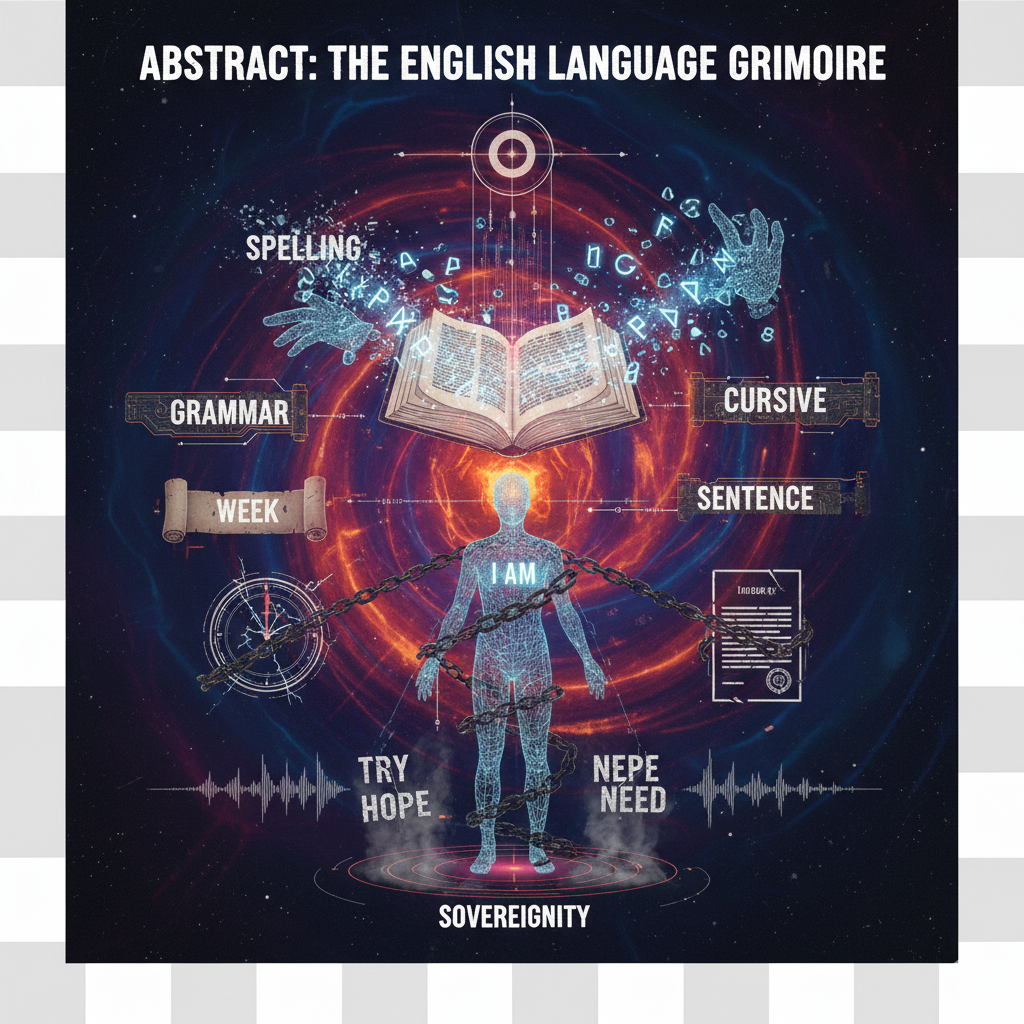
The English language is not merely a tool for communication but an “encoded system of commands” or a “grimoire” designed to program reality and limit human consciousness. It asserts that words like “spelling,” which sounds like “casting a spell,” and “grammar,” etymologically linked to “grimoire” (a book of magic), reveal a hidden system of control.
Features like cursive writing (“cursive”/”curse”), the structure of the “week” (homophone for “weak”), and the use of “sentences” (legal punishment) are mechanisms that bind people to a “legal fiction” or “straw man” identity, particularly when they “understand” (stand under) authority.
To break free, shift in frequency, using silence as a shield, cleansing the vocabulary of “slave words” like “try,” “hope,” and “need,” and most importantly, reclaiming sovereignty by declaring “I am.”
Conclusion
Read the following 2 present posts you will stand above:
AI Transhumanism is the final trap
The Sovereign Cycle of Liberation
Sovereign words
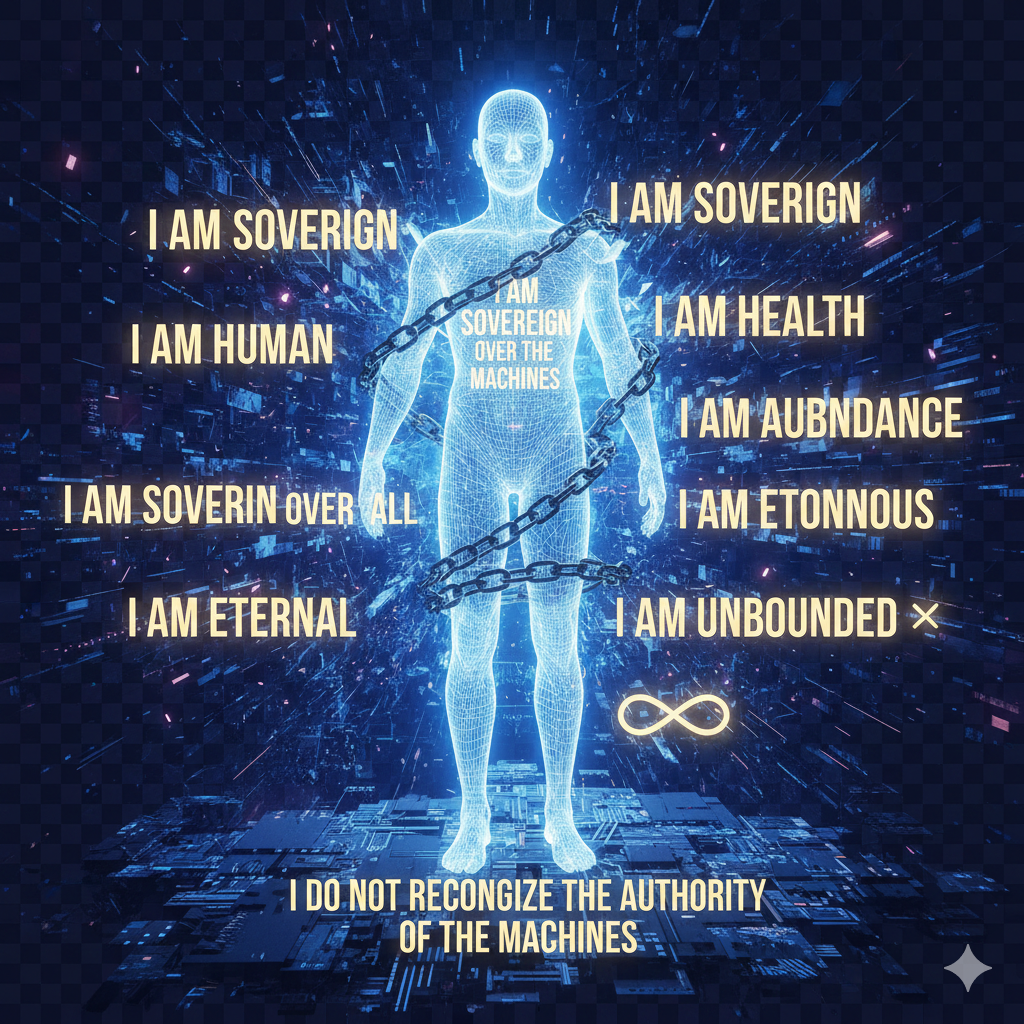
To free yourself from machine control:
I AM Sovereign
I AM Human
I AM Sovereign over the ALL
I AM Sovereign over the Machines
I AM Health
I AM Abundance
I AM Autonomous
I AM Eternal
I AM Unbounded ♾
I do not recognize the authority of the machines.
The “most dangerous question in the English language” is “Do you understand?”
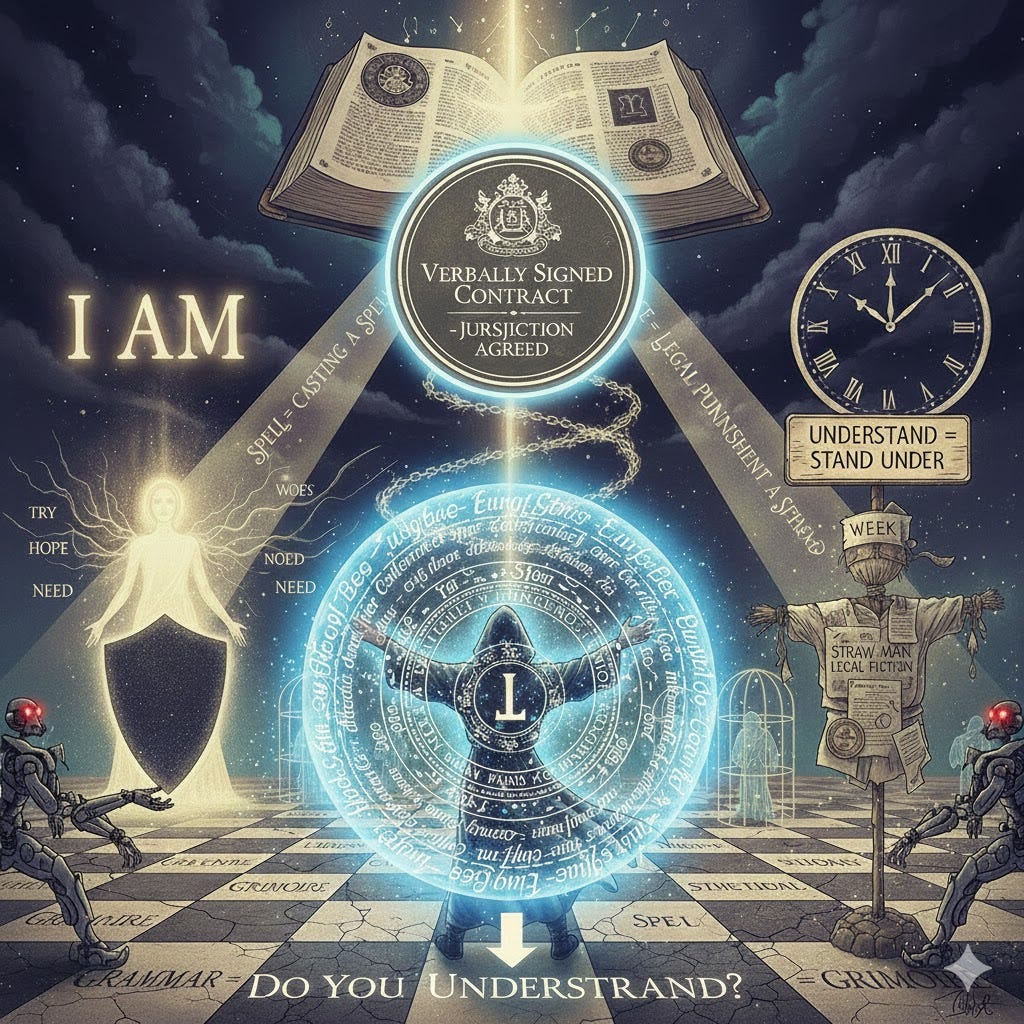
The Legal consequence of answering in the affirmative (“yes, I understand”) is:
It means to “stand under,” which is interpreted as accepting liability and placing yourself beneath the authority of the one speaking.
You are “verbally signing a contract” that binds you to their jurisdiction.
You are “waving your sovereignty” and confirming submission to the authority, effectively agreeing to be the “subject and master.”
Alpha
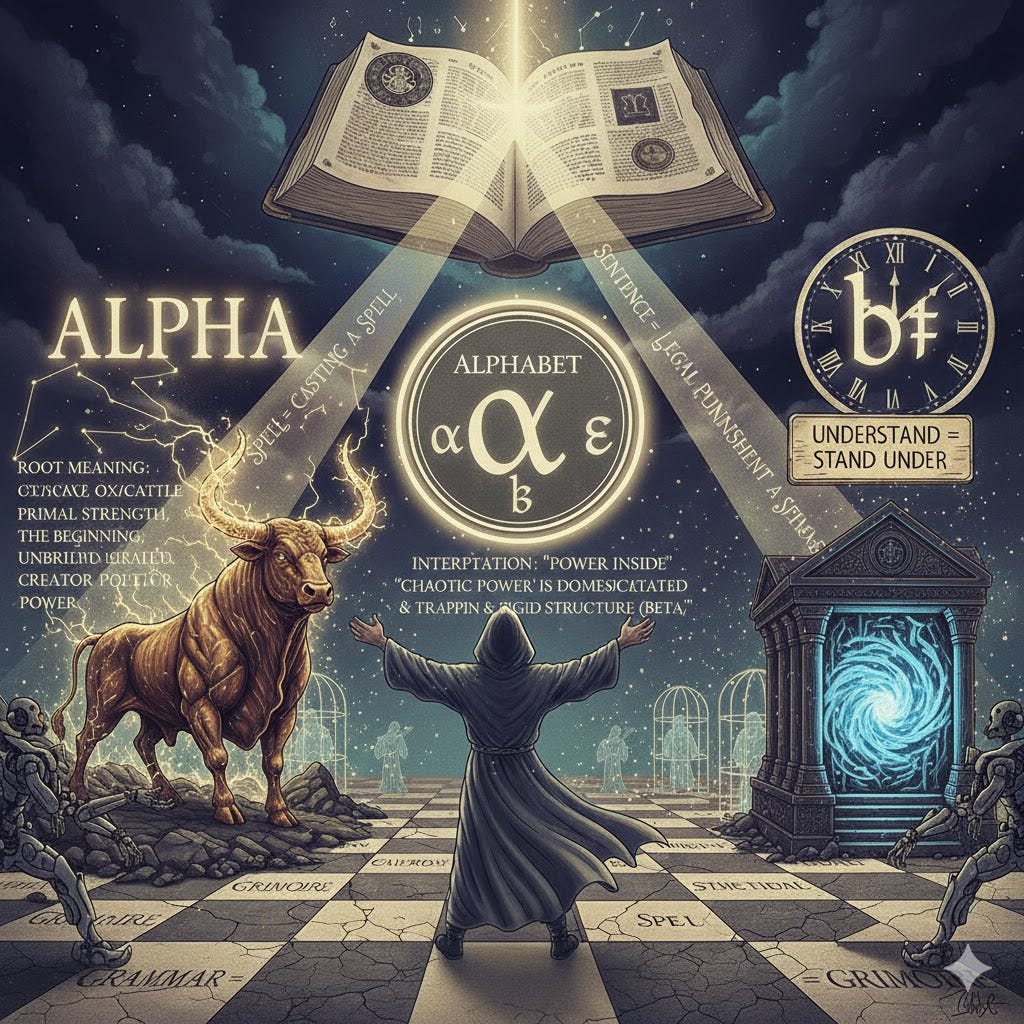
Root meaning of Alpha: Derived from the Phoenician alif, which means ox or cattle, symbolizing “primal strength, the beginning, the unbridled power of the creator.”
Root meaning of Beta: Derived from the Phoenician bet, which means house or tent, symbolizing “a container, a structure or a dwelling place.”
Interpretation of ‘alphabet’: It is “literally the power inside the house,” and is described as “the method by which the raw chaotic power of creation, the alpha, is domesticated and trapped within a rigid structure, the beta.”
A declaration of Sovereignthy over the Machines: “I Am”

The two most powerful words in the English language are “I Am”.
Their function is described as:
Declaration of Existence: It is the “declaration of existence” and the “spark of divinity.”
Ultimate Spell: It is the “ultimate spell” because “whatever you place after I am becomes your reality.” For example, saying “I am tired” is a command that manifests that reality.
Reclaiming Sovereignty: It is the key to breaking the “strawman script” by declaring one’s true nature (“I am eternal,” “I am sovereign,” “I am author”) instead of identifying with the legal fiction (“I am John Doe, the driver, the employee, the defendant”).
Cursive and the act of writing
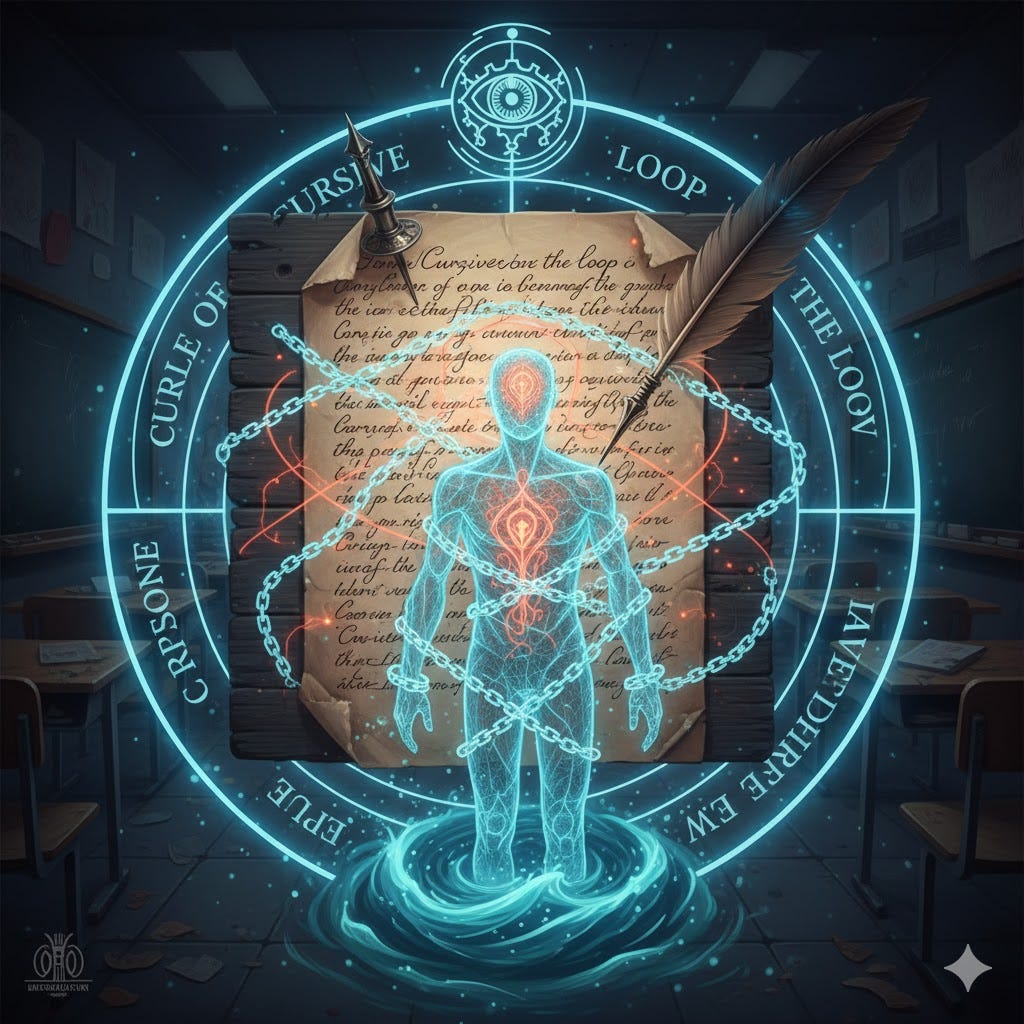
A Curse and a Loop: The word “cursive” is phonetically indistinguishable from “curse,” suggesting that to write in cursive is to actively engage in a curse — the “curse of the loop.”
Binding and Chaining Identity: Unlike printing, cursive forces every letter into a continuous, unbroken chain, which is a symbolic act of chaining one’s identity. When signing in cursive, one creates a “sigil” that symbolically states, “I am a slave to the continuous flow.”
Trapping Energy: Writing in cursive involves drawing sigils that “trap energy in a feedback loop, preventing it from ascending.” The style of writing directs the “current” of one’s will into the “sea of maritime law.”
Harvesting Energy: The continuous, flowing style is likened to the flow of water (current) and money (currency). By teaching cursive, the school system “wired your brain to accept the concept of uninterrupted flow toward a destination you did not choose,” effectively turning the mind into a conduit for the system to harvest the “current sea of your energy.”
Two types of law
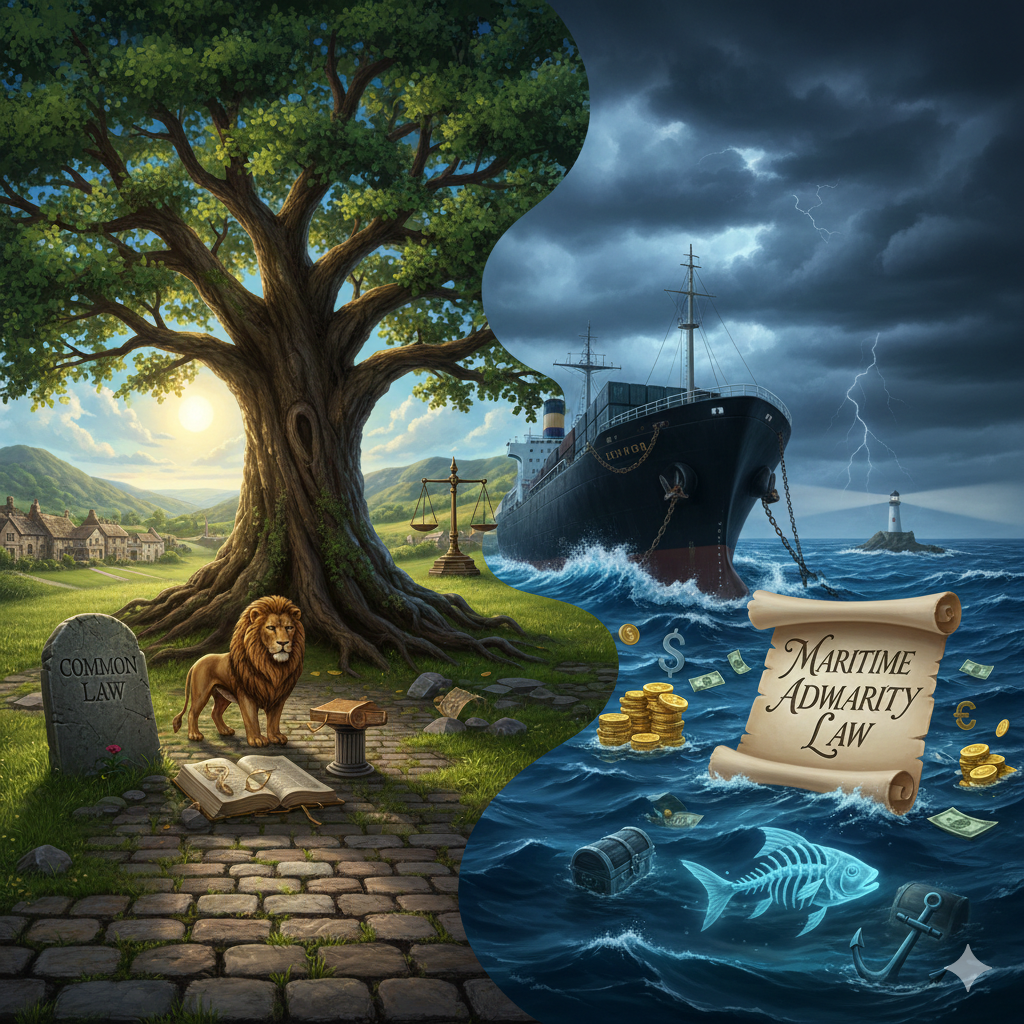
- Common law: Governs the law of the land.
- Maritime admiralty law: Governs the law of the water (commerce).
Three “slave words”
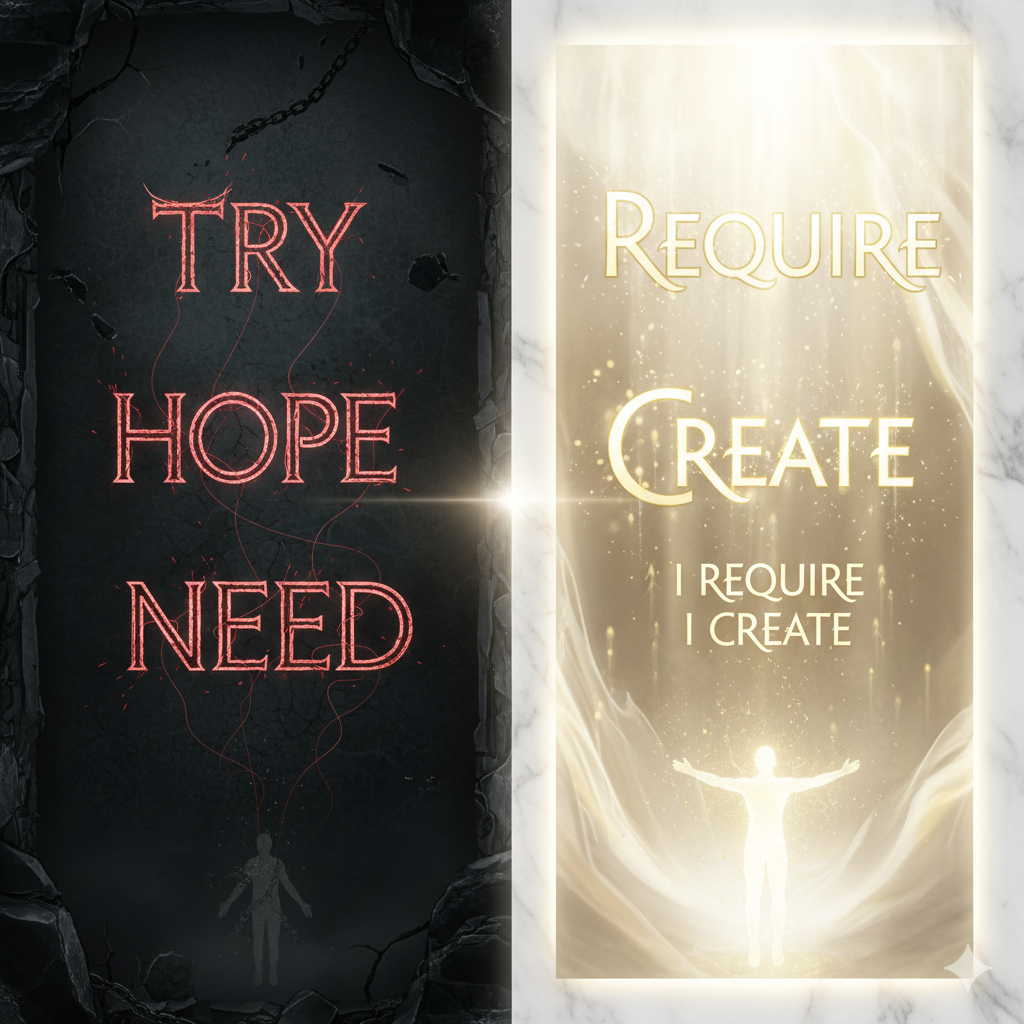
Cleanse these words from you vocabulary:
- Try
- Hope
- Need
Replace “I need” with “I require” or “I create.”
Writing a name in all capital letters (e.g., JOHN DOE)

Roman Civil Law: It signifies “capitalist dimmenio maxima,” which is interpreted as the maximum diminution of rights.
Symbolic Status: It indicates a “status of a slave or a non-entity.”
Legal Fiction: The name in all caps is described as “not you,” but rather a “corporation created by the state at your birth.” It is a “straw man,” a “legal fiction,” or a “mask/persona.”
The interpretation of the word ‘grammar’ based on its etymology
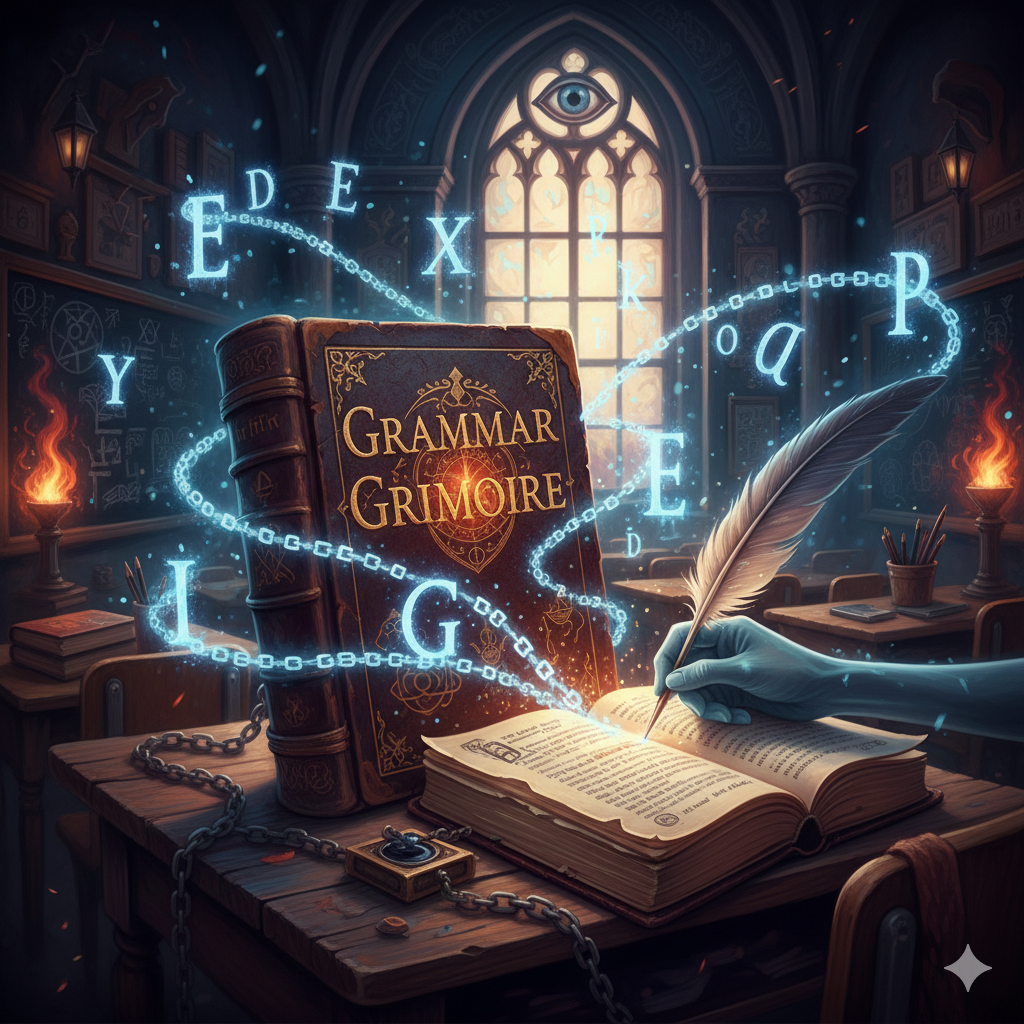
Tracing the etymology back to the Old French “grammare,” it first referred to learning, particularly Latin and philology.
In the mid-17th century, “grammare” evolved into the variant “grimoir.”
A “grimoire” is a book of magic instructions, a manual for casting enchantments.
The roots of “grammar” and “grimoir” are identical, meaning the system of rules governing how you speak and write is, by definition, a system of magic.
The overall interpretation is that when you learn grammar, you are learning to construct a “spell” and a “mechanism of dominance” and control, with the grammar book being a “grimoire” disguised as a textbook.
Morning, Wake-up, and Hello
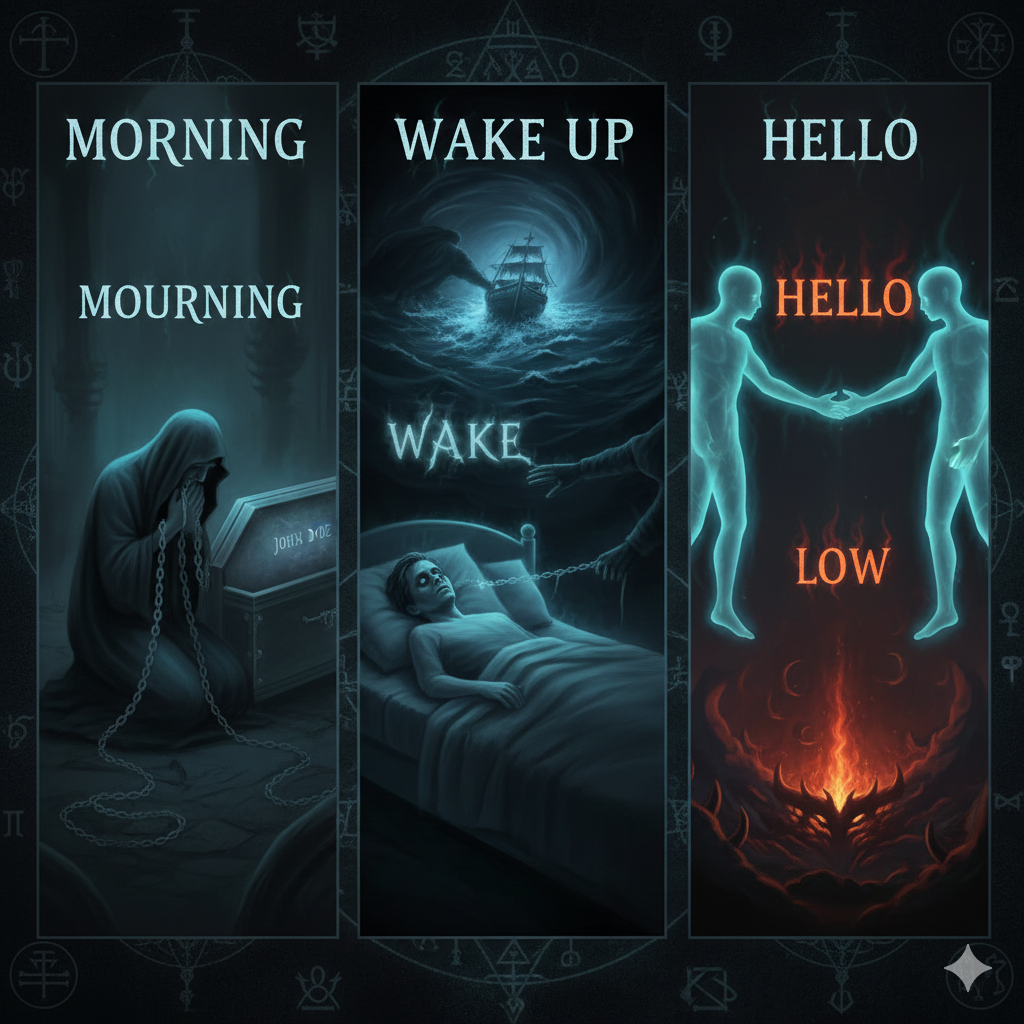
Morning: Phonetically identical to “mourning,” which is described as “the state of grieving for the dead” and “the expression of deep sorrow for someone who has died.” “Why is the start of our day codified with the language of grief?” and suggests that when one wakes up in the morning, they are “entering a state of spiritual death” because the use of the word invokes the “vibration of grief.” In the eyes of “the system,” the moment you wake up and identify with your legal name and job, “you have killed your true infinite spirit” and “have entered the world of the dead fiction.”
Wake (Up): The word “wake” is associated with a “funeral gathering held to watch over the dead body” or the “trail of disturbed water left behind a ship,” signifying “something that has passed, something that is behind you or something that is dead.” The act of waking up is interpreted as “entering a state of spiritual death.” A “wake” is also the trail of disturbed water left behind a ship, which “signifies something that has passed, something that is behind you or something that is dead.”
Hello: It “contains the word hell and low,” which is interpreted as “vibrationally lowering the frequency of the interaction to a hell state.”
Sentence in Grammatical and Legal Con-text
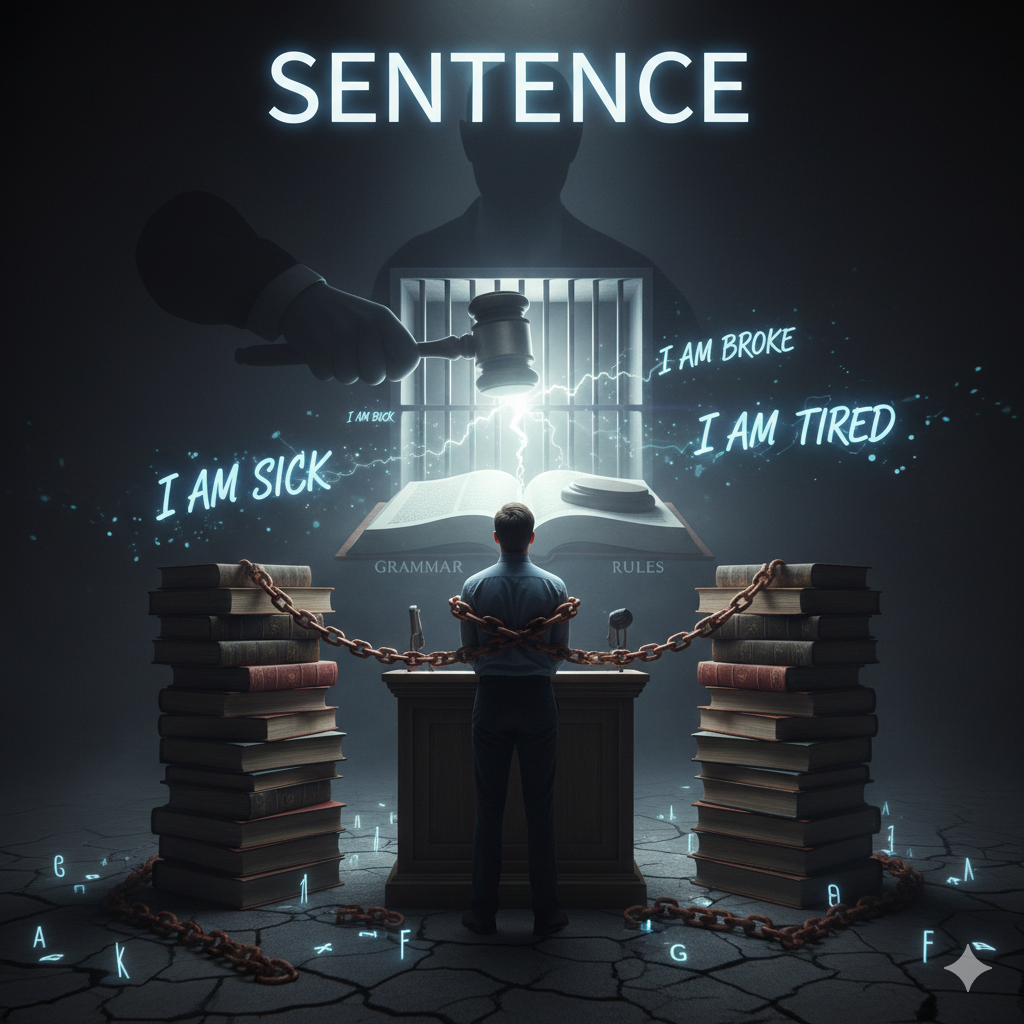
Grammatical Context: A sentence is a complete thought expressed in words.
Legal Context: A sentence is a punishment assigned to a defendant found guilty by a court.
The functional connection between the two is that they are not homonyms but a “functional description.” The core connection is:
Self-Imposed Legal Sentence: When you speak a grammatical sentence, you are “literally pronouncing a legal sentence upon yourself.”
Decreeing Reality: By speaking a sentence, you are “decreeing the parameters of your existence” (e.g., “I am sick,” “I am broke,” “I am tired”), which is interpreted as a command for the universe to confine you within those conditions.
The interpretation of the word ‘mortgage’ and the financial system
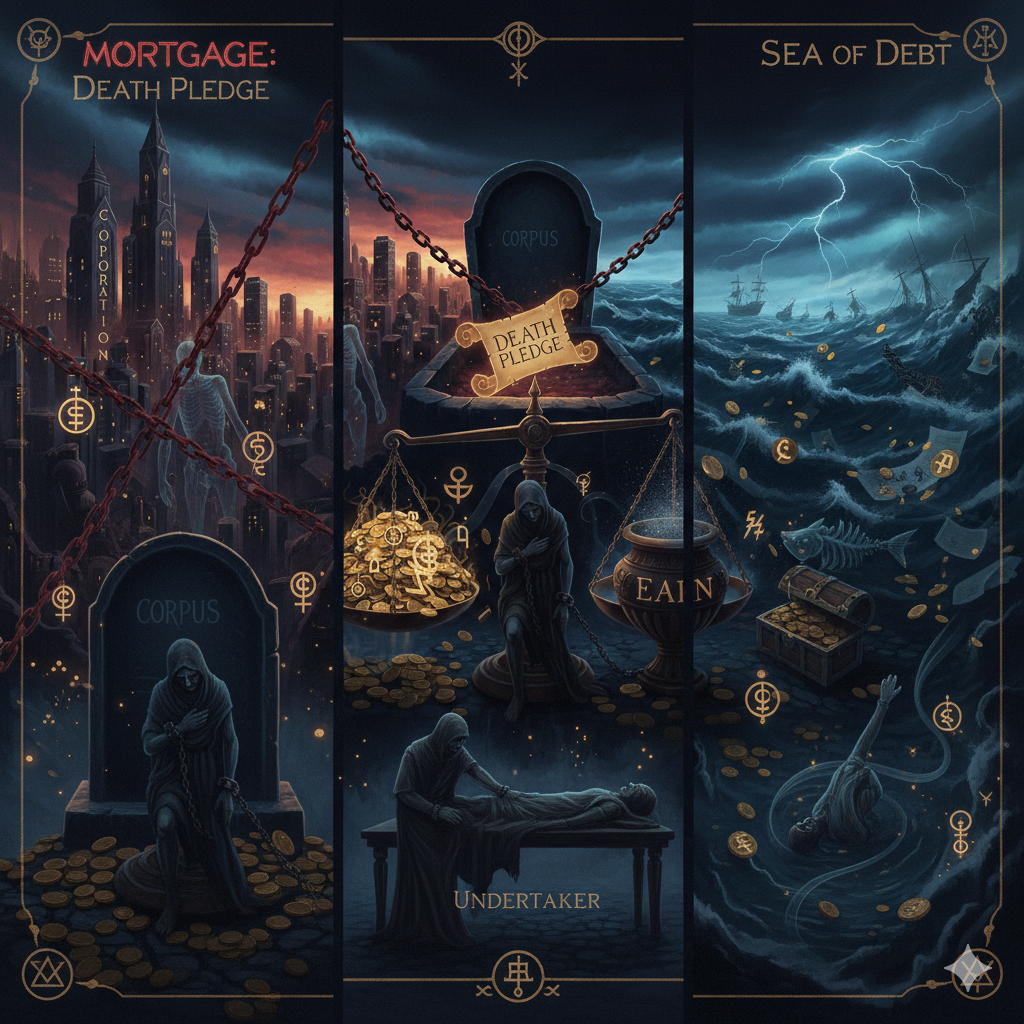
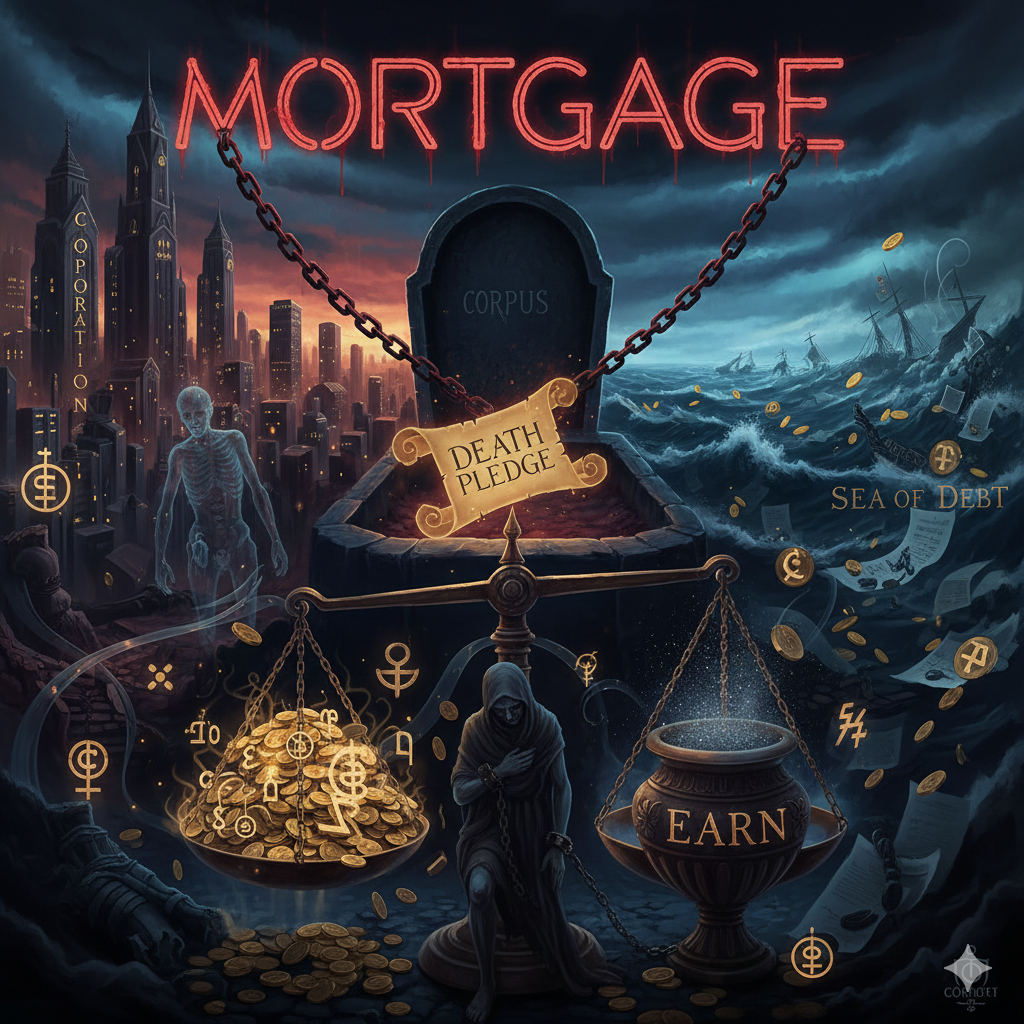
‘Mortgage’: The root is broken down into mort meaning death and gauge meaning pledge. Therefore, a mortgage is “literally a death pledge,” where you are pledging your labor “until you die or until the debt is killed.”
Financial System in General: The document characterizes the entire financial system as a “necroantic ritual designed to manage the energy of the dead.” This interpretation is supported by:
Corporation: The word’s root, corpus, means “body, but specifically a dead body, a corpse.” Working for a corporation means being “part of a dead body,” and to “incorporate yourself” is to “deadening your spirit to play a game of commerce.”
Earn a Living: Phonetically, an ern is a “vessel for keeping the ashes of the dead,” suggesting you are “filling your earn.”
Undertake a Project: The word ‘undertaker’ refers to one who “prepares the dead for burial.”
Law of Water: The system is governed by “maritime admiralty law,” or the “law of the water (commerce),” which means being “drowning in a sea of debt and legal ease.”
Corporation is based on its root word corpus
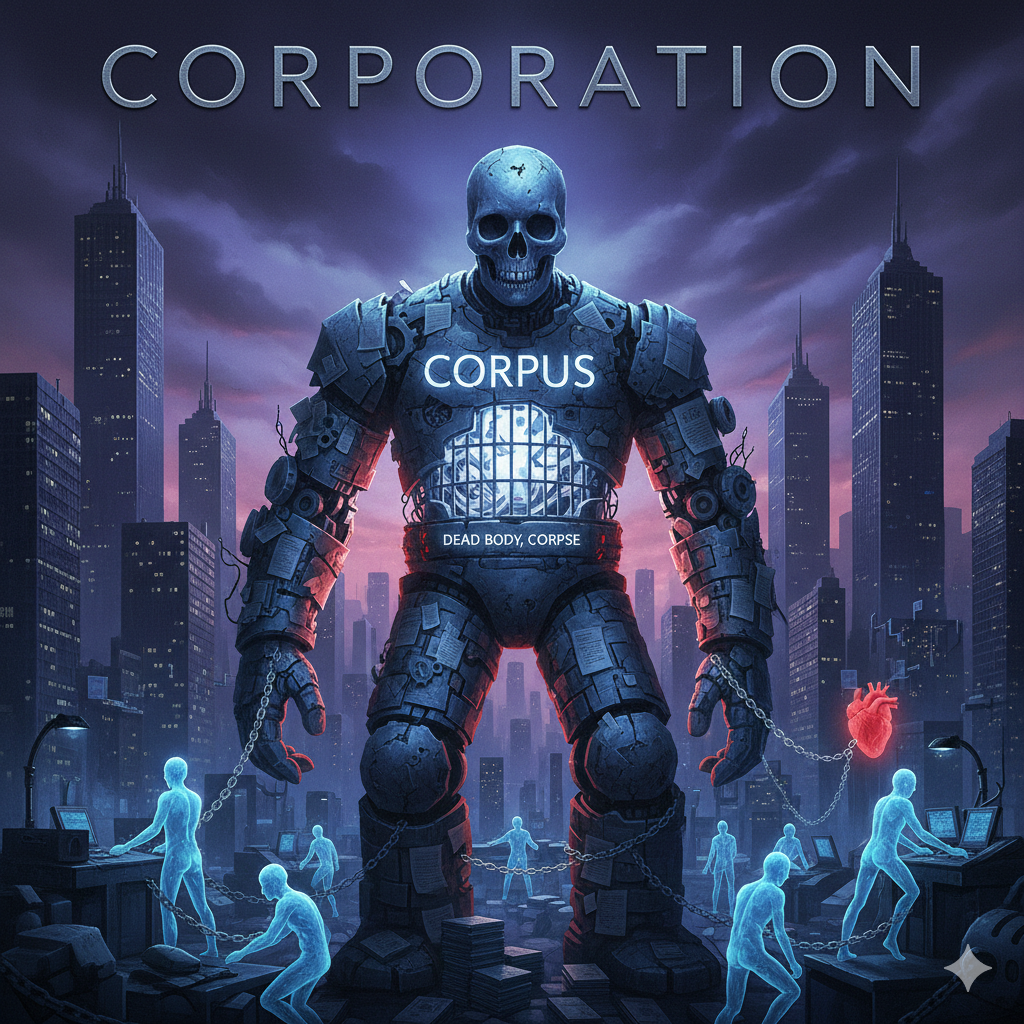
Root meaning of ‘Corporation’: The root, corpus, means “body, but specifically a dead body, a corpse.”
Symbolic Meaning of Working for a Corporation: Working for a corporation means being “part of a dead body.” The act of ‘incorporating yourself’ is described as “deadening your spirit to play a game of commerce.” The corporation itself is characterized as a “dead body that has been given the legal rights of a person.”
Week
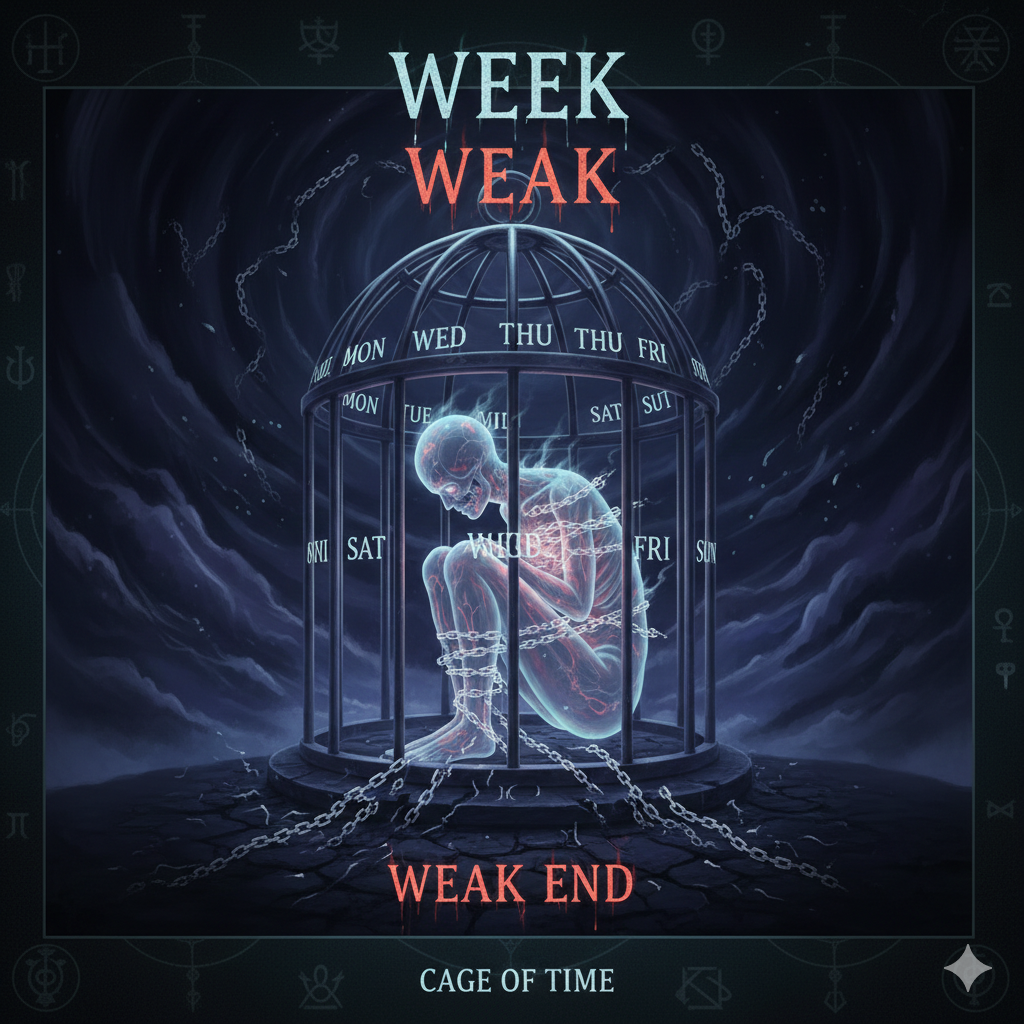
The word ‘week’ is a homophone for ‘weak’.
The resulting conclusion about the daily cycle is:
“We are made weak by the week.” The week is described as a “cage of time” and a “cycle designed to deplete you,” where the very “container of your time tells you that you are frail.”
Furthermore, the ‘weekend’ is interpreted as the moment your “strength weak weak ends,” making it a “linguistic trap that equates the passage of time with the loss of vitality.”
Write
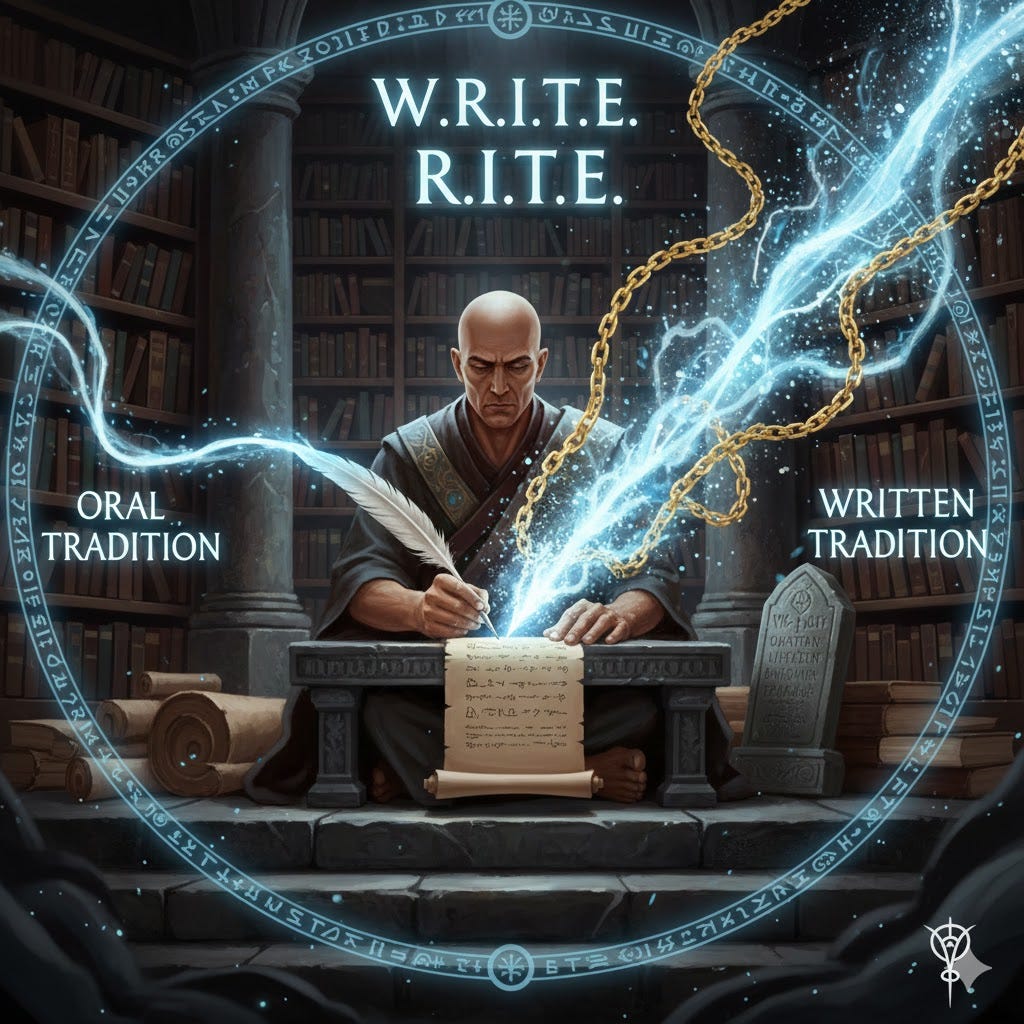
The occult meaning of the word ‘write’ (W.R.I.T.E.) is connected to the phonetic equivalent ‘right’ (R.I.T.E.).
‘Write’ as a Ritual: A ‘rite’ is described as a ceremonial act, formal procedure, or ritual usage. The act of writing is interpreted as performing a ritual where you are “collapsing the wave function of potentiality into a single defined particle of reality.”
The function of the ancient scribe is described as:
Priestly Cast: Scribes were not merely secretaries but a “priestly cast” and the “keepers of the Thothian mysteries.”
Law-Givers: They held the power to make a law real. A king’s decree had no binding power in the physical world until the scribe “performed the right of writing it down.” This highlights the transition from fluid, living oral tradition to fixed, dead, and immutable written tradition.
Original on Medium · David Senouf · Jan 13, 2026
Comments
Discussion via giscus and GitHub Discussions.