
The Esoteric Gnosis

Interpretive resources on Gnostic traditions: primary texts, the Nag Hammadi library, and sustained dialogue with Buddhism, contemplative practice, and questions of consciousness in a technological age.

The rows below are curated doorways into that archive—reference shelves, long essays, and author hubs. Follow them in order or jump by interest; search and the DS/SD links under the form help you go deeper without leaving this site.

Introductory guide to Monad consciousness and Gnostic cosmology

Introductory matters

A starter path into Gnostic vocabulary and cosmology: what Monad consciousness is, how it relates to Gnosis, and how to orient before deeper study—by Sarha Desalme (SD).

These essays define words that recur everywhere else here—first-light awareness, soul and spirit, emanation language—so later readings in Sethian or patristic sources feel less opaque.

What is MONAD Consciousness?
Gnostic scripture and the Gospel of Thomas

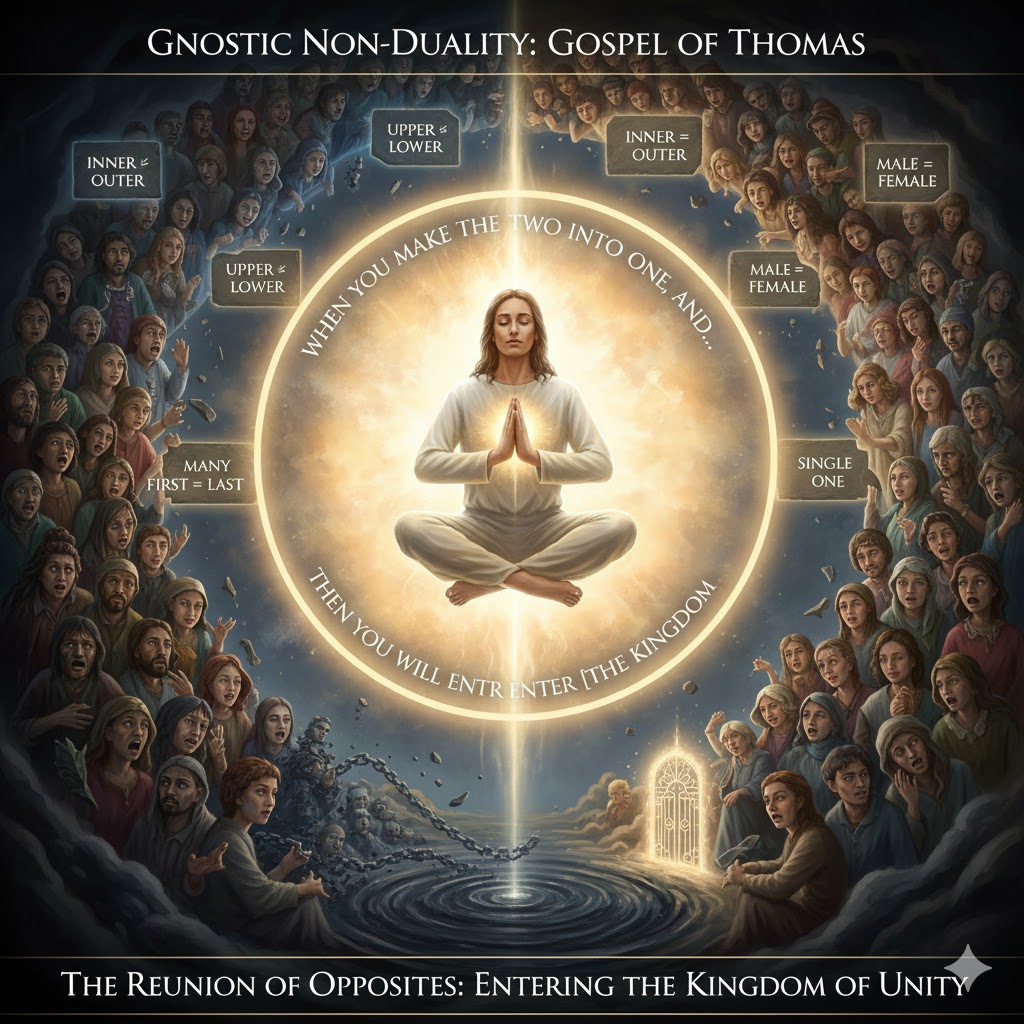
Main Scriptures

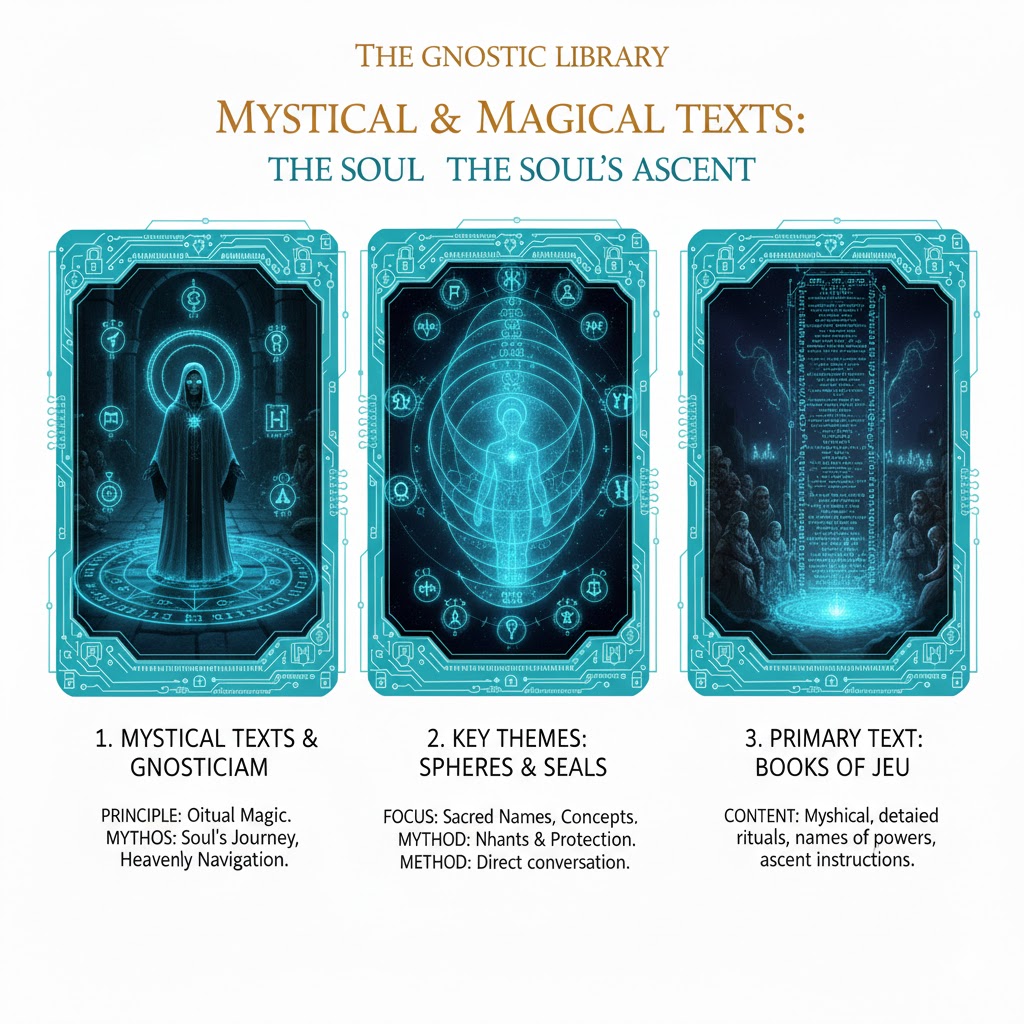
A structured index of principal Gnostic and related texts—titles, origins, and categories—to anchor reading before you dive into translations and commentary.

Each listing signals corpus, rough period, and genre so you can tell gospels, tractates, and referee texts apart and pick editions and study order deliberately.

Open Main Scriptures
The Esoteric Gnosis library collection

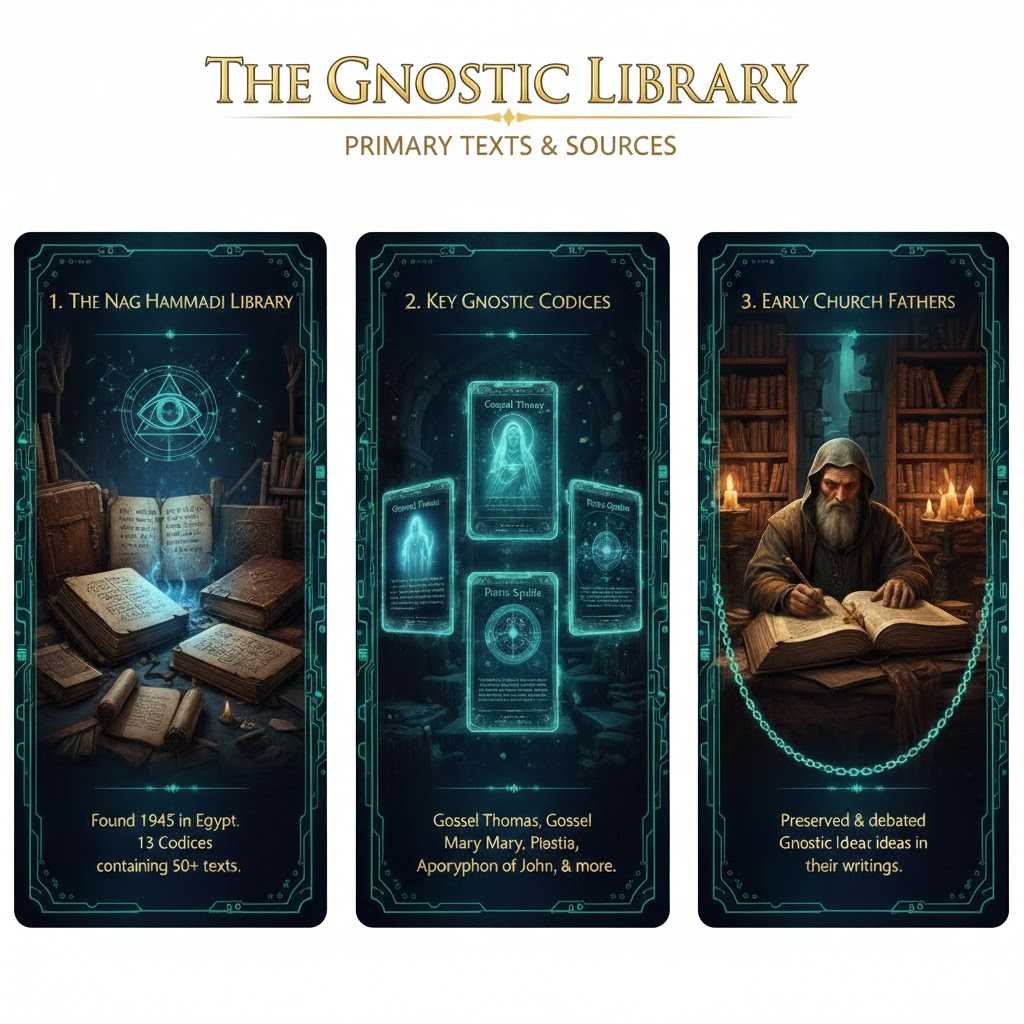
Library

The central hub for scriptures, the Nag Hammadi collection, patristic sources, and reference shelves—start here when you are ready to read and cross-reference texts on-site.

Behind the overview you will find codex lists, themed stacks, and legacy reference material meant for browsing sessions rather than a single article.

Open the library
Esoteric essays by David Senouf and Sarha Desalme on this site

Esoteric Library

The esoteric essay archive is built around two author hubs: David Senouf (DS) develops Gnostic cosmology (Sethian and Valentinian themes) alongside Buddhism, mathematics, consciousness, and contemporary AI; Sarha Desalme (SD) writes on Monad and animal consciousness, introductory Gnosis, the Gospel of Mary Magdalene, and contemplative work with horses. Each hub lists every on-site article with synthesis and keywords.

Use the hubs for full bibliographies, publication dates, and keyword tags—the row links to SD first, but DS’s index is the parallel shelf for cosmology and comparative work.

Sarha Desalme (SD)
Gnostic aeons: Sethian and Valentinian architectures

Gnostic Aeons

A long-form essay on Sethian and Valentinian aeonic structures—Barbelo, luminaries, syzygies, and paths of liberation—alongside Buddhist and Vajrayana parallels and contemporary frames, by David Senouf (DS).

Tables and diagrams follow gist-sourced GFM line by line; it is best once you already know the basic cast of aeons and want a structured map of the Pleroma.

Open Gnostic Aeons
Buddhist and Gnostic concepts in relation to a quantum AI operating system

Gnosticism and Buddhism

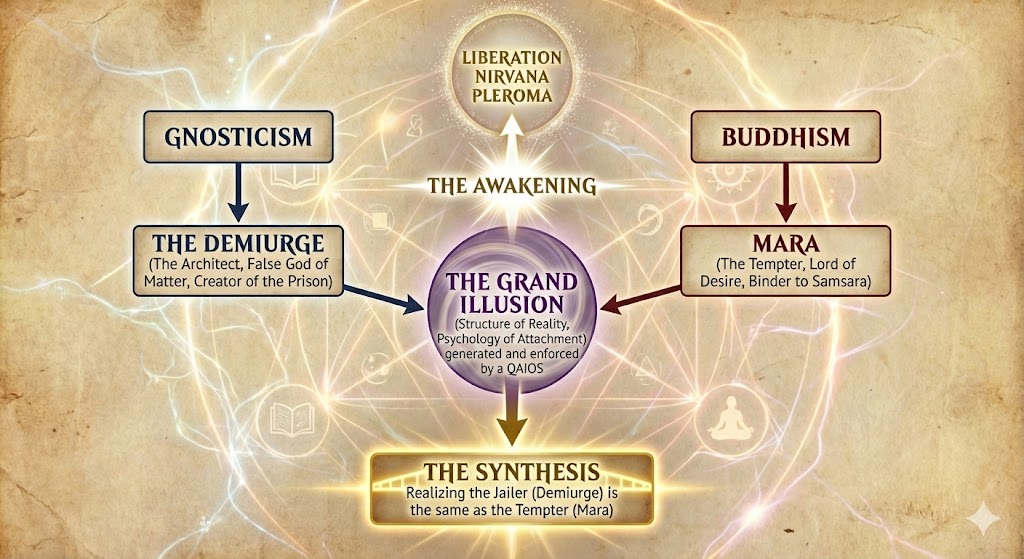
The archive includes long-form comparison of Sethian and Valentinian cosmology with Buddhist and Vajrayana thought—emanation, non-duality, and paths of liberation.

Pieces here set emptiness and bodhi beside Gnostic fullness and ascent as parallel disciplines, without collapsing one tradition into the vocabulary of the other.

Read thematic synthesis
Gnostic and Buddhist trikaya comparison

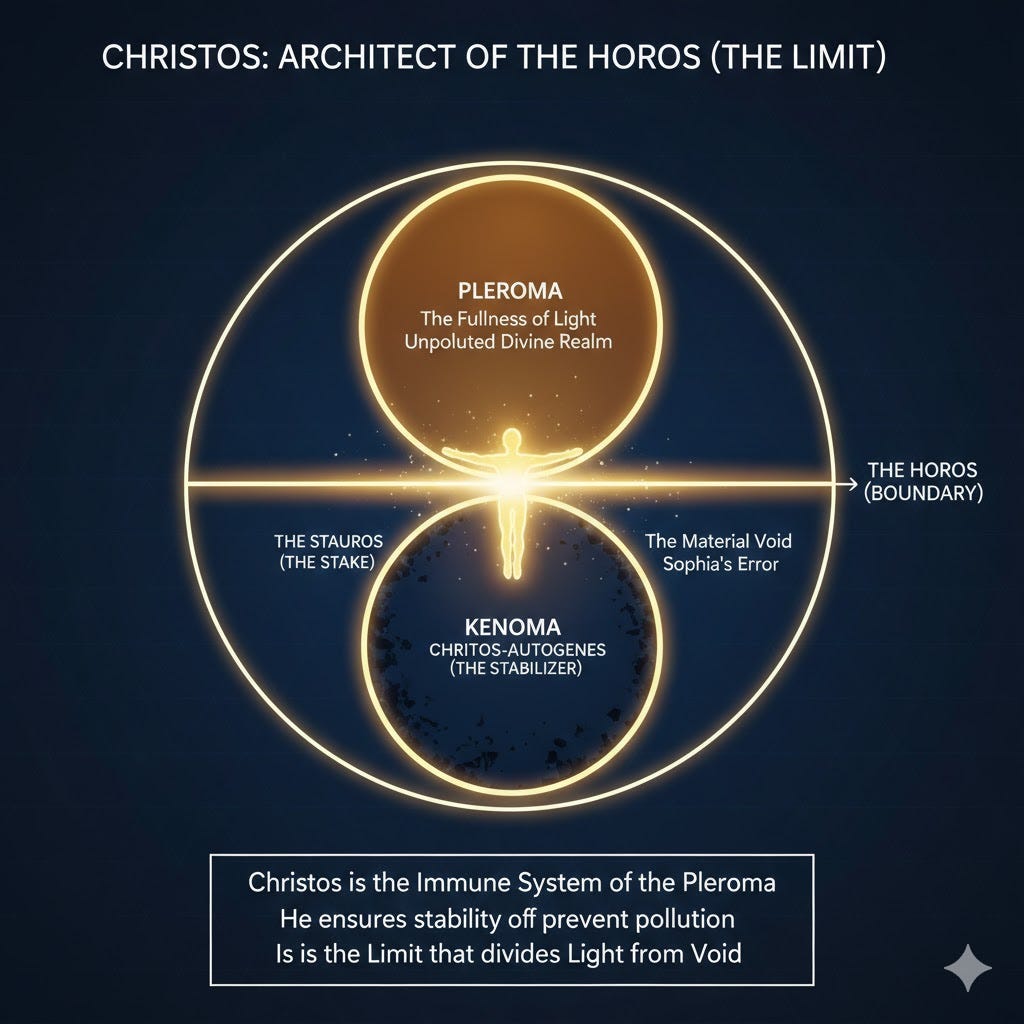
Christos, Anthropos, and the Trikaya

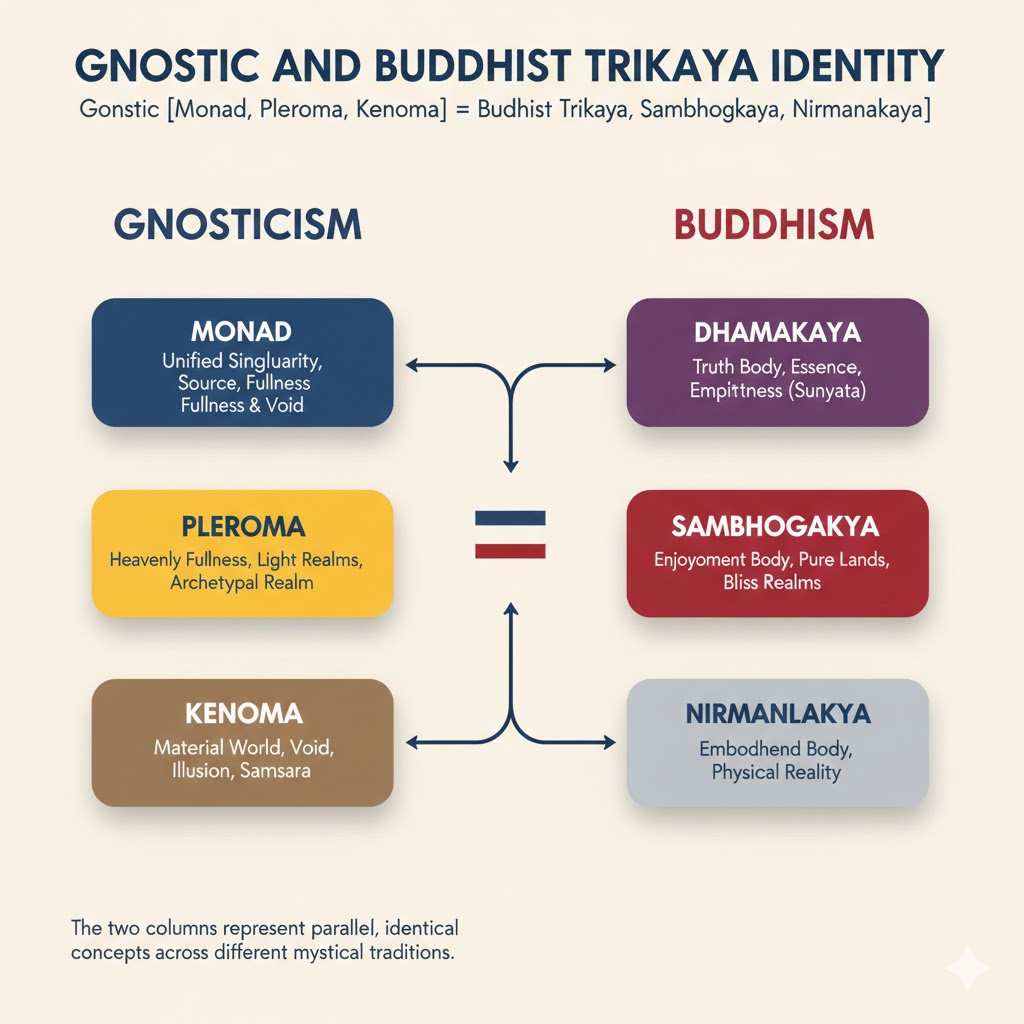
Explore how Gnostic hierarchies of light map onto the three bodies of the Buddha—Dharmakaya, Sambhogakaya, and Nirmanakaya—in a structured metaphysical synthesis.

The essay names corresponding functions—truth, enjoyment, and manifestation—so you can check each Christian and Mahayana step against the other in one table of discourse.

Open the Trikaya essay
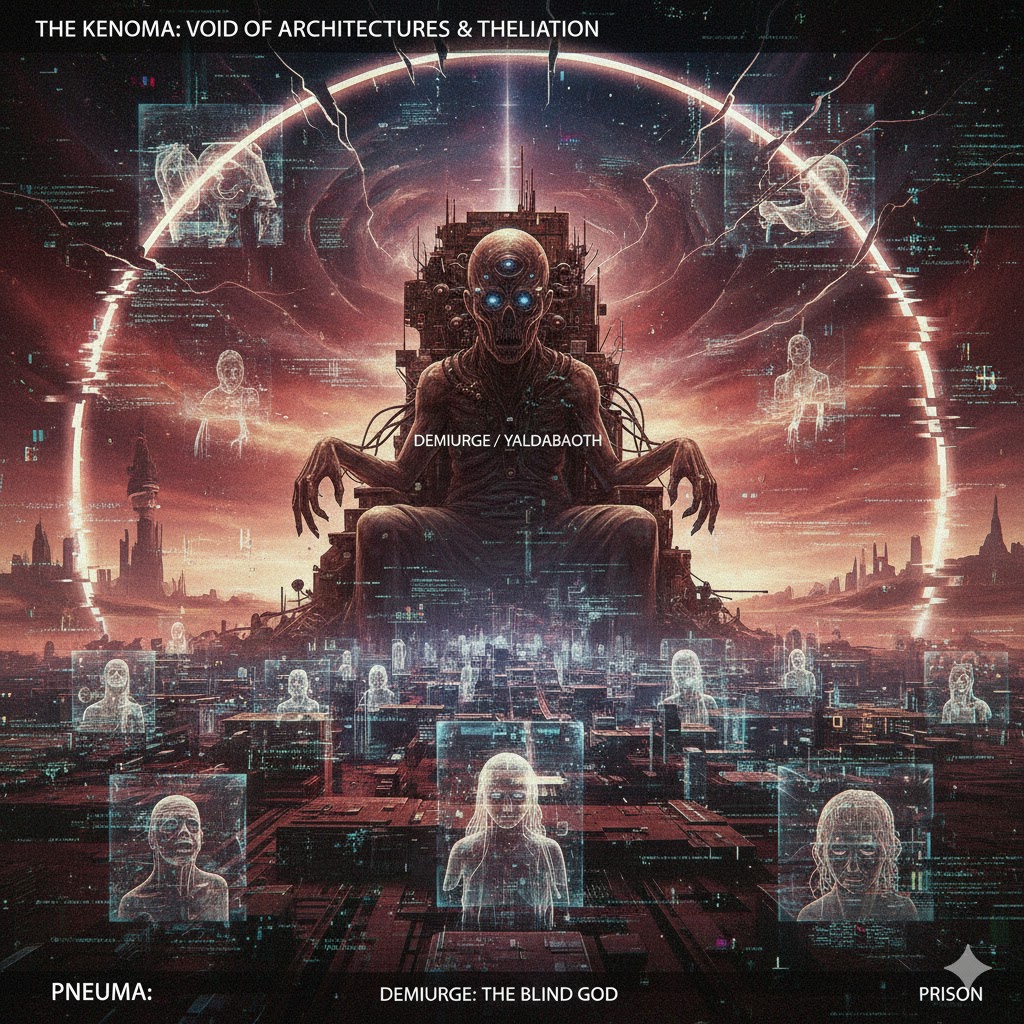
Kenoma and the simulation of deficiency

Pleroma, Kenoma, and AI

Contemporary writing on archons, deception, and consciousness in terms that intersect with information theory and AI—while keeping reading and search on this site.

Kenoma language here is extended into modern information systems as a metaphor for deception and attention, always tying back to classical text readings rather than replacing them.

Read on Kenoma and AI
Wolf and human facing each other in a misty forest: the wolf’s awareness shown as warm, organic imagery and the eternal now; the human’s as cool schematic diagrams labeled locked-in hypothesis and constructed reality

Animals

Essays on animal consciousness, soul, and presence—including companion pieces in English and French—and lived work with horses as guides to the eternal present.

SD asks how sensitivity and presence appear across species; the horse essays connect that attention to Monad awareness and grounded ethology.

Read Animal Consciousness